I came down from the high of my first months as a former professor. Not because I longed for my old job (though I do miss being around students and in the classroom), but because I had to face the uncertainty of how to keep body and soul together going forward. I kept hustling, buckled down to my various gigs, including, this month, a number of hours at a local bookstore. It felt so good to be back in that environment again. That excitement buoyed me as the days grew short; psychologically, I kept my head above water, which has not always been the case in Decembers past. And I read a few books, some of them excellent.
Sarah Campion, Makeshift (1940)
Now this is interesting. A novel from the early part of WWII set in desperate early Weimar Germany; racially-divided South Africa; and puritan New Zealand, about a German Jewish woman who escapes the Nazis in body but not in mind, written by a non-Jewish British writer. Campion (the pen name of Mary Rose Alpers; no relation, as I briefly hoped, to Jane Campion) spent most of the 1930s teaching English in Berlin, where many of her students were Jews. She was forced out of the country in 1937 when she refused to identify those students—part of a long life of progressive political activism, including later protesting the Vietnam War.
Charlotte Herz, her protagonist—smart, funny, neurotic, judgmental, flinty when she needs to be—is not an easy character to like. (The novel is bracingly uninterested in this idea.) Charlotte does some things—one thing in particular—that are pretty terrible, but also maybe the things that needed to be done to survive. She casts aspersions on most of the people she meets. She is an ungrateful exile. These facts, combined with the disconnect between author and character, have led some to dismiss the book as appropriative. One such reader is Sarah Shieff, who wrote the afterword to this new reissue. I have to say, as a Jew, I don’t find this to be the case. In fact, I have beef with Shieff, who misreads the book badly, in my opinion, showing herself to be unable to distinguish Herz’s voicing of antisemitic views from her belief in them. And having read a lot about German Jews in the 1920s and 30s I found Makeshift thoroughly compelling and plausible, including its first-person voice. That said, the writer Campion most reminds me of is also non-Jewish, another woman who had a lot to say about the treatment of minorities in the British Empire: Doris Lessing. Campion shares Lessing’s frankness about female sexual desire and how psychologically damaging it was to express in a period when male domination was even more overt than today.
Brad Bigelow, of the Neglected Books account on Bluesky, rescued Makeshift from near-total oblivion (I think there were only a handful of copies left in the world when he found it), and has published it in his invaluable Recovered Books series. I’m grateful to him for sending me a copy. May it not sink without a trace this time around.
Rosalyn Drexler, To Smithereens (1972)
“I shout, ‘I’d do anything for you, you Glamazon!’ And she says, ‘Anything? Well then, suck my pussy.’ And I’d have to do it, because she’s the champ, the winner, the goddess, the diva who makes me dive.”
Do you want to read this 1970s novel about women wrestlers and the men who love them, written by the painter, sculptor, playwright, novelist, nightclub singer, and yes, wrestler Rosalyn Drexler, gloriously resurrected by the new reprint press Hagfish Books? Hell yeah you do!
Daniel Elkind, Dr Chizhevsky’s Chandelier: The Decline of the USSR and other Heresies of the Twentieth Century (2025)
My friend James, owner of the mighty Leviathan Books here in St Louis, lent me his copy of this Sebaldesque mediation on some of, in the author’s words, “the undesirables” of 20th century history. It’s a short book, sometimes funny, always engrossing. Yet ultimately a little thin. Maybe I read it too quickly, but sitting here now, just a few weeks later, I can’t remember what Elkind concludes about his cast of characters. The strongest parts of the book are the autobiographical sections on his coming of age as a newly arrived immigrant to the US after the collapse of the Soviet Union and, especially, his memories of his parents and grandparents. Like so many in his generation who grew up in the aftermath of the disappearance of a seemingly unshakable social, political, and cultural world—will this be my daughter???—Elkind has a keen sense for history’s inescapable contingency. There are always so many paths not taken.
Alexander Chizhevsky, by the way, was born in what is now Poland in the Russian Empire and died in the USSR. A biophysicist, he founded a discipline he called “heliobiology,” the study of the effect of the sun’s cycles on plant life and human activity alike. For example, he linked the ebb and flow of battle that he experienced on the Eastern Front in WWI to solar flares. Much later, in 1940, Stalin got wind of this theory (never a good thing) and demanded Chizhevsky recant (it being inimical to Marxist-Leninist theories of history). When Chizhevksy refused, he was sent to the gulag and, after eight terrible years, to a “rehabilitation” program in Kazakhstan. His “chandelier” is an ionizer—a tool still in use, even though no one can agree whether it promotes health.
Undesirables, it seems, stick around in unexpected ways—especially when they have someone like Elkind to memorialize them.
Joan Silber, Secrets of Happiness (2021)
Came home from the library; sat down to read the first page or two, as one does; next looked up to find that an hour had passed; realized I would have to set other reading aside until I finished, which I did the next morning. Like most of Silber’s recent work, Secrets of Happiness uses ring structure: each chapter follows a character referenced, however fleetingly, in the previous. It begins with a middle-aged woman who learns that her husband has children with a woman he met on his travels in Asia and that he’s helped bring them all to the US. She kicks him out, files for divorce, travels overseas, sends cryptic messages to her grown children, who reluctantly meet their half-siblings. Lots of drama, but no melodrama. Laurie Colwin vibes. I liked this a lot.
Martin Lemelman, Mendel’s Daughter: A Memoir (2006)
Illustration of the author’s mother’s experiences during the Nazi occupation of eastern Poland (today Ukraine), compiled from a video testimony he had her make when she suffered a broken foot in the late 1980s and needed to be occupied. It’s hard to compete with Art Spiegelman’s MAUS, and Lemelman doesn’t try. He keeps his interactions with his mother to a minimum, and draws in a beautiful, almost gentle pen and ink style that is decidedly not cartoonish or abstract. Despite these differences, Mendel’s Daughter had to have been overshadowed by the earlier book, since I hadn’t heard of it until recently, and I’ve read a lot of Holocaust graphic novels. That is a shame, because it’s absolutely worth reading. The story of how Gusta Lemelman (née Schaechter) survived the war is, as so often in such stories, remarkable, harrowing, miraculous. Together with three of her siblings, Gusta hid in “graves,” deep pits dug into the forests near their hometown of Germakivka. Of great interest is her description of prewar life, especially the mingling of Jews and non-Jews, and how this diversity both fell apart but also persisted during the Nazi occupation, as some of the locals were instrumental in keeping Gusta and her siblings alive during their time in hiding.
Joan Silber, Household Words (1980)
Wrote about this here. A blend of Vivian Gornick and Elaine Kraf. Satisfying and interesting. I want to write about Silber at length. (Like, for money and with the help of an editor.) Anyone interested? Where should I pitch?
Ulrich Alexander Boschwitz, Berlin Shuffle (1937/2019) Trans. Philip Boehm (2025)
If you haven’t read Boschwitz’s Passenger, start there. If you have, then you’ll also enjoy this, his first novel. I had more to say about it here. Tl; dr: solid end-of-Weimar novel, if at times unsure quite what it wants to do. Considering the conditions under which it was written, an accomplishment.
Mason Coile, Exiles (2025)
A locked-room mystery set on Mars, Exiles has the pacing of a thriller and the uncanniness of a horror novel alongside the fascination with otherness that characterizes sff. The first three humans to make it to Mars arrive to find their mission compromised from the start. The bots who have been sent ahead to build a research station have taken human names, genders, and personalities. Plus, they changed the door entry codes. Oh, and one of them is missing, and might have destroyed the station’s lab. Unless someone—or something—creepier did it… Coile’s absorbing novella proves that humans might be able to leave Earth, but they can never escape themselves.
Nicola Griffith, Stay (2002)
Earlier last year, I read The Blue Place (1998), the first of Griffith’s Aud Torvingen crime trilogy, recently reissued in attractive new editions. Aud (rhymes with “crowd”) was born in Norway, grew up at various embassy posts with her ice queen diplomat mother, and now lives in Atlanta. She was a cop for a while, but now she’s independently wealthy (seems good, why don’t more people do this?) and a sometime PI. Lee Child himself said that if Reacher had a sister, she’d by Aud. She is indeed utterly competent, both in creating (she renovates houses, builds furniture, cooks like a pro) and destroying (she beats up a lot of bad guys and enjoys it).
The Blue Place is terrific, despite its heartbreaking ending. Stay finds Aud licking her wounds in the mountains of North Carolina, able to get out of her head only because an old friend begs her to find his missing girlfriend. Aud reluctantly heads to New York, on what she assumes will be a day-long mission. And she does in fact find the girlfriend. But turns out there’s more at stake, which leads Aud on a chase that ends, much to my surprise, in Arkansas. The scenes there are pretty well handled. (I doubt Griffith has spent much time there.) Stay is baggier than its predecessor, and a final plot development suggests a new turn for the third and final book, the library copy of which is sitting on the desk beside me. As best I can tell, disability will factor in that book (Griffith has MS and is a prominent disability rights activist). I didn’t even mention that Aud is queer, a fact central to the series. Today she would probably overtly identify as neurodivergent, too. All of which makes me curious to see what will happen to Aud.
These books seem to have made no impact on first release, as judged by the fact that each book was published by a different press. It would be nice if these reissues brought more them more readers.
Ken Liu, All That We See or Seem (2025)
Got this from the library after seeing it on some sort of best sff list. Maybe one by Lisa Tuttle? Could that be right? Anyway, this is the beginning of a new series about a hacker named Julia Z, whose back story is interesting. Her mother, an immigrant from China, was a famous activist determined to hold America to its ideals. But her parenting was a disaster—imagine a razor-focused Mrs. Jellyby—leading her daughter, our protagonist, into the hands of an anarchist group with its own ideas of keeping America accountable. That’s where Julia learned her tech prowess—but also experienced bitter disappointment when the group’s idea of retributive justice turns out to be a sham. At the beginning of All That We See or Seem, she’s been in hiding for a long time, until a lawyer digs her out and begs her to find his wife, a famous “oneirofex” or dream weaver who has gone missing. As best I understand it, these artists use AI to tap into and personalize mass longings to create updated 60s-type “happenings” that cater to people’s hunger to be together in person while still being isolated.
I didn’t know there was a genre called “tech-thriller” but all the reviews I looked at online use it, so I guess that’s a thing. Seems like readers are divided on the book—fair bit of love but also a lot of hate—which doesn’t surprise me, given the book’s inconsistencies, and supports my view that this is an interesting and flawed work. Liu apparently is or has been a lawyer and a software engineer in addition to a writer and translator, and these experiences are brought to bear in the confidence of the story’s tech and legal aspects. Too bad that much of this material—reflections on identity politics, political resistance, surveillance culture, and the ethics of AI—are awkwardly dumped into the text. Even more obviously than most sf, this is a book about America today, and I’m not convinced a novel was the best way for Liu to say what he wanted to say. Still, I’ll give the next one a try. I hope that someone has sent a copy to David Cronenberg: he could do a lot with this material.
Paul Cornell, Witches of Lychford (2015)
Novella about a flyspeck English village that, unknown to most of its inhabitants, sits at the fault-lines of the ordinary world and magical realms, both good and evil. Even if the good people of Lychford knew the truth, they probably wouldn’t pay attention anyway, preoccupied as they are with a big decision. Should they allow a Walmart-type supermarket to open in town? Opinions are split; feelings run high. No matter what side they take, though, everyone admits there’s something about the guy the company has sent to convince the locals. He’s kind of… demonic. The joke being, of course, that he really is. Only an unlikely trio—a grumpy old woman who is in fact a witch; the new priest, posted to her childhood home, where no one knows that she’s lost her faith; and the priest’s former best friend, an atheist who has started a shop selling wiccan paraphernalia—can save the day.
Cornell has written several sequels, and I get the feeling the series might amount to something. And yet I haven’t checked them out of the library yet. Has anyone read these? Should I carry on?
Georges Simenon, The Dancer at the Gai-Moulin (1931) Trans. Siân Reynolds (2014)
Two kids in provincial Belgium—one spoiled and rich, one poor and susceptible—scheme to knock over the bar where they spend evenings pretending they’re adults and trying to make it with a female employee, the dancer of the title. But when they break in after closing time, they find a body on the floor. They freak out, do all the wrong things, eventually get arrested. But surely they’re not guilty. Right? And where is Maigret? This is the one where he doesn’t show up until about 2/3 of the way through, and the way Simenon pulls it off is ingenuous.
Miklós Bánffy, They Were Counted [The Transylvanian Trilogy: Volume I] (1934) Trans. Patrick Thursfield and Katalin Bánffy-Jelen (1999)
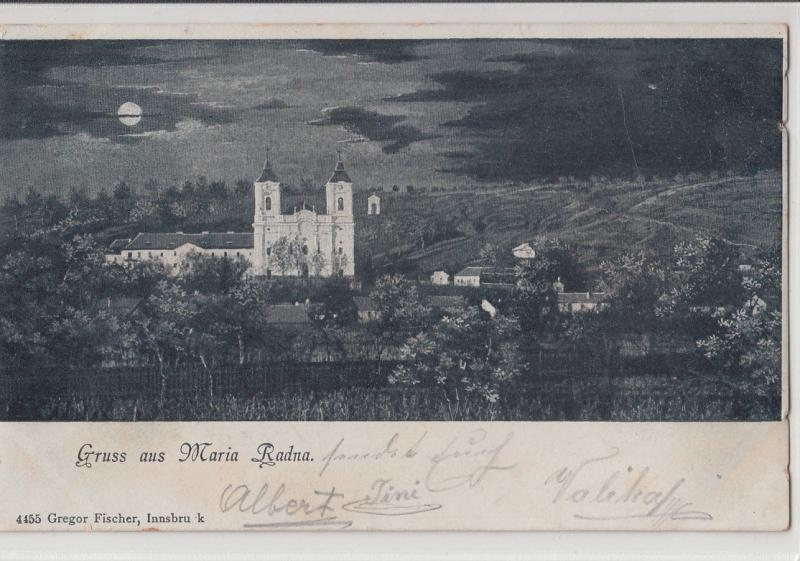
In my past life I lived on an estate at the foot of the Carpathians, shooting, attending balls, shaking my head at hotheaded fellows who love nothing more than a duel, checking in at the casino when in town during the winter season, watching the woman of my dreams ice-skating with a hated rival, tending to my peasants (sometimes assiduously, sometimes with dereliction), etc., etc. For this reason, I couldn’t get enough of Banffy’s novel, the first part of a trilogy that has been giving me the most reading pleasure I’ve had in a long while.
Although Bánffy wrote the books in the 1930s and 40s, in increasingly perilous financial and bodily straits, he set them in the first decade of the 20th century, the end days of the Austro-Hungarian Empire. (I’m taking part in a year-long reading of Musil’s The Man Without Qualities, and it is almost comical how different in style and ideology these texts are, even as both consider, one with regret, one with irony, the dissolution of the same state.)
There are many books about this time and place. In my experience, most focus on the Austrian part of the Dual Monarchy. One of the many interests of this book, then, is that it shows English-language readers a lesser-known world. Yet it is similar to other late 19th century novels. Like War and Peace, They Were Counted toggles between the personal and the political. The two main characters are cousins. One, having recently been elected to parliament, takes on the difficult task of reforming the family estates (bringing new scientific theories to the harvesting of timber, founding an agricultural cooperative), in part to distract himself from his seemingly hopeless love affair with a married woman. The other, a promising composer, slides into dissipation when he is unable to marry the woman of his dreams (another cousin—which sounds weird, but tbh pretty much all of the characters are related in some way). Some readers seem to find the details about the Hungarian parliament’s bitter, uneasy relationship to Vienna dull, but those people probably don’t like the historical excurses in Tolstoy either. As best I can tell—and I ought to know, given my past life, but, you know, details get hazy with the transmigration of a soul—Transylvania was at once the hinterland of Hungary and its beating, symbolic heart. Losing it to Romania in the Treaty of Trianon was a loss Hungarians never got over. Anyway, the novel is much interested in what it means to be part of a ruling elite that is both dominant (over the Romanian-speaking majority) and subordinate (to the Austrians) and part of a large, precarious multiethnic political entity. Its politics are as hard to pin down as you might expect from that description. (Imagine if the Anglo-Irish were part of the European Union, maybe.)
Did I mention there are also a lot of balls, duels, hunts, and love affairs in this book? SO GOOD.
BTW, this is neither here nor there, but I am reading these in the Everyman Library editions, which are lovely and even have that charming though in my opinion fairly useless sewn ribbon, but which include the most useless map I’ve ever encountered. Regular readers know that I love a map, and wish for them in every novel, regardless of subject matter. But this one includes none of the estates that form most of the locations and almost none of the towns. So frustrating!
There are many ways in which America under T***p II echoes 1930s Germany, but more and more I think that the self-immolation of Austro-Hungary is the better comparison. Which is to say that you can read these books (or at least this one: I’m not finished volume 2 yet) to get perspective on the present—and to escape it altogether.
How about you? Where did you live in a past life? And have you read any of these books?
 Eiger, Mönch & Jungfrau