James Morrison’s Year in Reading, 2023

Excited to once again present reading reviews from some of my favourite readers. Kicking things off is the one and only James Morrison, back for his third installment. James lives and works in Adelaide, Australia, on unceded Kaurna Country. For many years he has written about book design as the Caustic Cover Critic. He has too many books. He’s online at @Unwise_Trousers (Twitter) or @causticcovercritic.bsky.social (Bluesky). His first novel, Gibbons, or One Bloody Thing After Another, was published in 2023 by Orbis Tertius Press.

‘Tonight too / does my woman’s pitch-black hair / trail upon the floor / where she sleeps without me?’
Masayuki Miyata

[We push through the crowded train station and step up into the carriage, compulsively checking you have your ticket several times in the process. You find a seat and open your mouth to speak, but I suddenly launch into a monologue.]

So, yes, it was a tremendously crappy year, both personally and globally, but at least I got some books read. Indeed, that’s pretty much all I did. I scythed through 296 books, and only a few of them were terrible, so that’s some sort of achievement right there. Right? Right??? [Ed. – Holy shit yes.]

DENSE SLICES OF TIME

Two of the most fascinating non-fiction books I read this year both took the same approach—densely researched group portraits of the lives of interconnected writers and artists over the period of a month or so—applied to two very different eras. Alethea Hayter’s A Sultry Month (1965) covers the world of literary London in June 1846, from Robert Browning and Elizabeth Barrett planning their elopement to Jane and Thomas Carlyle driving each other round the bend, all joined together by the last acts of now-forgotten artist Benjamin Robert Haydon as he prepares his suicide. Uwe Wittstock’s February 1933: The Winter of Literature, translated by Daniel Bowles (2021/23), uses the same close focus on the writers, filmmakers, dancers and actors of Germany in the first month of Hitler’s power, from Joseph Roth wisely fleeing, via Thomas Mann being unbelievably naïve, to Gottfried Benn enthusiastically Nazifying himself. It’s chilling and depressing in equal measures, what with [points helplessly at everything]. [Ed. – *nods glumly *]

As a pendant to the Wittstock, Lion Feuchtwanger’s The Oppermanns (1933), translated by James Cleugh, is hard to beat, detailing the rise of the Nazis through the story of a successful Jewish Berlin family. Written when the events it details were still ongoing, and with much worse to come, it is a perceptive and still timely book. [Ed. – Amen]
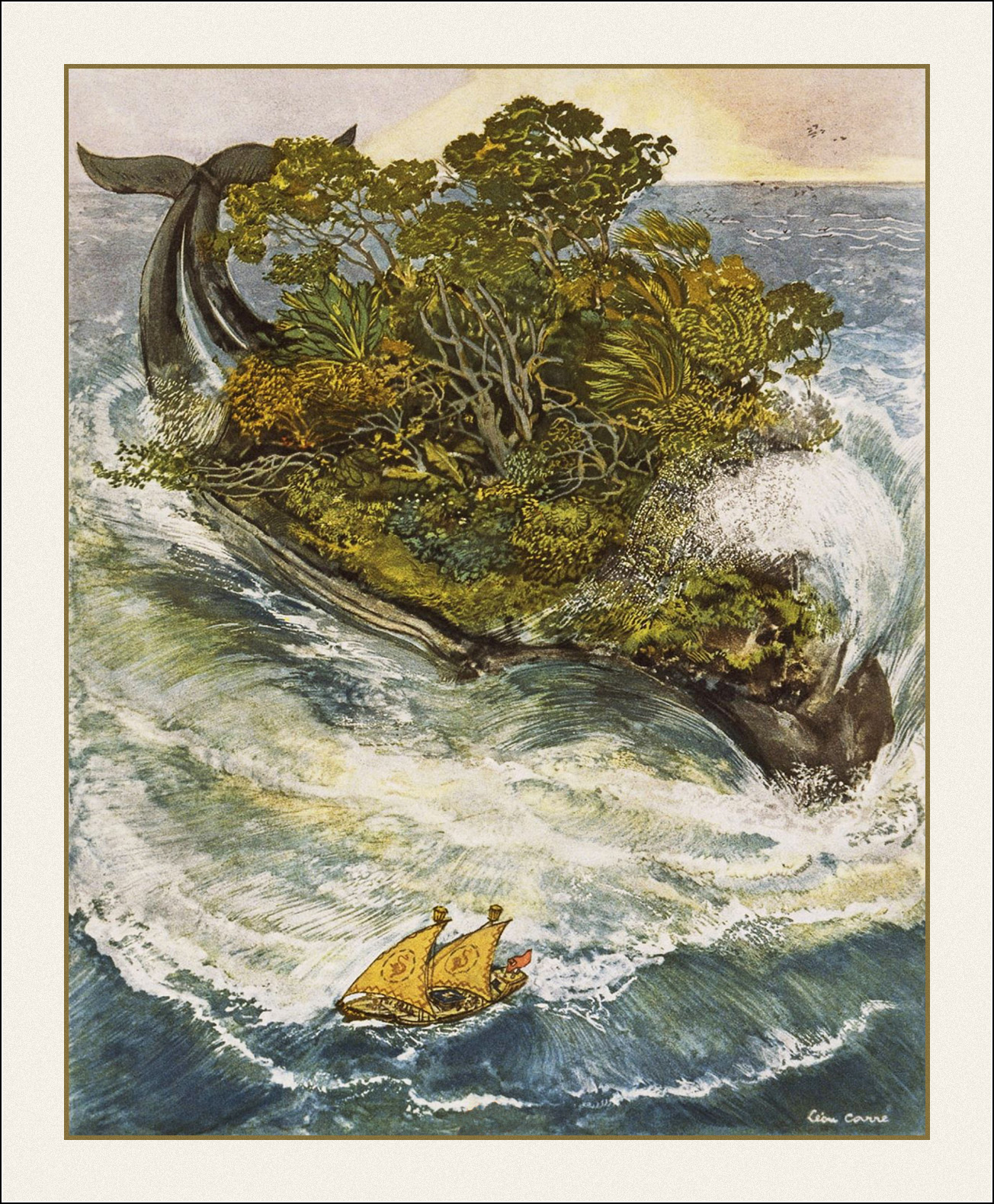
From ‘The adventures of Sindbad’
Leon Carre

AUSTRALIANS

It’s wonderful to have been one of the many readers who finally got hold of the books of Jen Craig this year, and fell in love with them. Intensely, almost claustrophobically, looping narratives of communication breakdowns, troublesome families, injuries, art, eating disorders, and the irritation of being named Jenny Craig when that’s the name of the country’s most famous dieting pyramid scheme. The experience of reading each book—Since the Accident (2013) and Panthers and the Museum of Fire (2015)—is something like peering closely at the back of an incredibly detailed tapestry, trying to guess at the structure, and then with the last few pages suddenly flipping it over to discover a masterpiece. I also read her third novel, Wall (2023), but that was earlier this month so just imagine me saying something similar in 12 months about that.

Susan McCreery’s All the Unloved (2023) is a wonderful novella about the inhabitants of a block of flats in 1990s beachside Sydney, centred on a teenaged girl’s coming of age. Amanda Lohrey’s Vertigo (2009) is another small gem, the story of a traumatised couple fleeing to a new home on the rural coast, and ending in bushfire and terror, told in an engagingly odd way. The two most recent collections of Greg Egan’s short stories, Instantiation (2020) and Sleep and the Soul (2023), demonstrate with impressive depth just why he is widely regarded as one of the world’s best science-fiction writers, especially at this length—story after story will use an amazing idea that a lesser writer would spend a 1200p trilogy on, and then move on to something else even more mind-boggling in just a couple of dozen pages.

Adam Ouston’s Waypoints (2022) is a splendid example of one of my favourite genres of book—an obsessive monologue by an unreliable narrator, in this case somewhat pinned to reality through the disappearance of airliner MH370 in 2014 and Harry Houdini’s attempts to be the first person to fly an airplane over Australia in 1910. Finally, Tommi Parrish’s newest graphic novel, Men I Trust (2023), is a drably beautiful exploration of parasitic friendship, and I really am trying to get over the fact that they mistakenly include a Walmart in an Australian setting. [Ed. – Oh I just picked this up—had no idea it was Australian!]

[The conductor passes down the corridor, bellowing in a monotone. “This train is about to depart, all visitors please leave! Ticketholders only!” A small, relieved smile passes over your face as I step down from the carriage onto the platform, still talking.]

HUNGARIANS

Anyone who has read one of my year-in-readings before knows how I go on about the Hungarians. And here I am doing it again. The best Hungarian literature I read this year was Magda Szabó’s The Fawn (1959/2023), translated by Len Rix, the story of the career and personal life of increasingly enraged actress through Hungary’s tumultuous mid-twentieth Century. Spadework for a Palace by László Krasznahorkai (2018/2022), translated by John Batki, is another tremendous example of the obsessive monologue/unreliable narrator mentioned above. And Ágota Kristóf’s Yesterday (1995/2019), translated by David Watson, was sadly the last book of hers I had left unread: an illegitimate small-town child flees his past by moving to the city, but the reappearance of his now-married childhood love throws everything into chaos.

‘Hare 2’
Jan Pypers

OUTER SPACE, INNER SPACE

Samantha Harvey’s Orbital was just my cup of tea, a quiet and thoughtful 24-hour slice of the lives of six people at work, where said work is in the International Space Station in its final days. In Ascension by Martin MacInnes goes further afield, from the ocean depths to the Oort Cloud, in search of First Contact, strange dreams, and the dawn of life. I loved it, but not unreservedly—there were occasional weird glitches, like MacInnes’s childlike idea that as you travel through the Solar System you pass the planets one by one in a neat line, the way they are drawn in a kids’ encyclopaedia. [Ed. – Wait, that’s not what they’re like???]

The This (2022) by the always interesting, and ludicrously underrated, Adam Roberts, is a hugely entertaining extrapolation from the near into the far future, taking us from the Next Big Thing in social media to humanity as a hive mind. And an end-of-year treat was the new collection Selected Nonfiction 1962-2007 (2023) by J. G. Ballard, a chunky and tremendously entertaining mix of reviews, articles, memoirs, lists and rants.

[The train begins to move, very slowly at first. I’m standing at your carriage window, still talking, and I begin to walk along the platform, keeping pace with the train. You glance at your fellow passengers, blushing.] [Ed. – Ugh shit like this is sooo embarrassing… What a weirdo right I don’t even know that guy!]

ENDS

There were lots of excellent cataclysms in this year’s reading. How I’d taken this long to read David Markson’s Wittgenstein’s Mistress is both mysterious and an indictment on me, but this beautiful book from the point of view of possibly the last woman on Earth is full of gorgeous writing and vivid images. [Ed. – Is she thrilled to be free of bros at long last?] I absolutely loved it. I also loved Oana Aristide’s Under the Blue, a particularly well-done plague-and-after novel, so I was very sad to get in a fight and end up blocking the author online because of her being an anti-trans bigot. Why are authors all so unpleasant?

Pink Slime (2020/2023) is an Uruguayan novel of toxic miasma and slow societal collapse by Fernanda Trías, translated by Heather Cleary, another weird case of a book being written pre-COVID that foreshadows and refracts the weirdness we all then went through. Rebecca Campbell’s Arboreality (2022) is a Canadian novel in stories that takes us further and further into our future of rising waters and collapsing ecosystems, offering no cheap false hope but still providing a glimpse of something worth being alive for. [Ed. – I keep hearing about this book. Gotta check that out.]

And turning from global to personal cataclysm, there was Lorrie Moore’s I Am Homeless If This Is Not My Home (2023), where one of the two main characters is very, very dead. But readers of Anagrams will know well that a character doesn’t have to exist for them to be vividly, hilariously rendered by Moore.

STORIES

There were so many resurrections and collections of great short story writers this year. Among the best were Rattlebone (1994) by Maxine Clair and Lover Man (1959) by Alston Anderson, both beautifully observed interconnected collections about Black American communities. No Love Lost (2023) collects the incredible novellas of Rachel Ingalls, and if there’s a richer, stranger book than this out there, send it to me now!

Jean Stafford’s Children Are Bored on Sunday (1945) is as brilliant as the title promises. [Ed. – Great fucking title.] I also read her novel The Mountain Lion (1947), and fucking hell could she write. Weird misfit children, unhappy loves, badly behaved artists. Have at it!

Tessa Yang’s The Runaway Restaurant (2022) and Madeline Cash’s Earth Angel (2023) were two of the best new story collections I came across this year. Both are peculiar and fizzing with ideas, completely happy to depart reality for the depths of weirdness at the drop of a hat, and very moving—imagine George Saunders if he was actually as good as everyone thinks he is. [Ed. – Heh, you’re not wrong, James…]

And then there was The Collected Works of Jo Ann Beard (2023), which was an absolute revelation. Stories, autofiction, memoir, reportage, not of it conventional, all of it astonishing in its quality and death-haunted eccentric brilliance.

[The train accelerates. You try to pretend the man running along at the window, now bellowing, has nothing to do with you. Not paying attention to where I’m going, I run full-tilt into a metal bin with a resounding clang.] [Ed. — *snort *]

‘Nature Takes Over’
Thomas Strogalski

RANDOM OTHERS

Some books you just can’t shoehorn awkwardly into a category, and there are still too many good ones left to mention. In brief:

Elspeth Barker’s O Caledonia (1991) pairs perfectly with The Mountain Lion, a black comedy about a strange and unloved daughter.

James Hannaham’s Didn’t Nobody Give a Shit What Happened to Carlotta (2022) is a delicious exercise in capturing a voice, in which a trans woman gets out of prison and tries to reconnect with her family and normal life.

Szilvia Molnar’s The Nursery (2023) is an unnerving and convincing novel of fear-of-everything from the point-of-view of a new mother.

Nigel Balchin’s Simple Life (1935) starts off like a mild comedy mocking get-back-to-the-land types, but quickly turns into a fascinating and alarming study of a fraught ménage à trois in a cottage in the middle of nowhere.

And finally, the complete Diaries of Franz Kafka, translated by Ross Benjamin (2023): a monolith of a book, a treasure trove, a heartbreaking testament.

From ‘L’Ange’
Patrick Bokanowski

[You glance back, caught between relief and embarrassment, as I leap to my feet and charge like a maniac after the repeating train, still yelling. Then I reach the end of the platform and plunge into the shrubbery, vanishing from sight. You exhale, and pull out your book to start reading in blessed peace.] [Ed. – Not true, I’d do almost anything to spend a train ride talking books with you, James!]

James Morrison’s Year in Reading, 2022

I still hope to write up my reflections on my 2022 reading year. (Though look how well that worked last year…) In the meantime, I’ve solicited guest posts from friends and fellow book lovers about their own literary highlights. First up is James Morrison, an Australian reader and editor (sadly, not of books) who tweets at @unwise_trousers and blogs (increasingly infrequently) at http://causticcovercritic.blogspot.com. His novel Gibbons, Or One Bloody Thing After Another will be published later this year by Orbis Tertius Press

Look for more reflections from a wonderful assortment of readers in the days to come. And remember, you can always add your thoughts to the comments.

Woman committing suicide by jumping off of a bridge – George Cruikshank [1848]

First, a bit of throat-clearing. When I started to try to work out what my favourite books that I had read in 2022 were, I had a list 84 books long, out of nearly 300 read. This is obviously insane, possibly even psychopathic, so I have winnowed it down a bit. Secondly, I have now learned that two of my favourite books were also on Barack Obama’s list, which means after this I presumably need to become a boring centrist and do some war crimes. In any case, I’ve tried to force things into various fairly elastic categories in order to give this article the illusion of clarity.

[Audience: Get on with it!]

THE BIG BASTARDS

I finally joined the people-who-have-read-James-Joyce’s-Ulysses club this year, something which was ridiculously overdue. And what can I usefully say about this astonishing, hilarious, brilliant, occasionally tedious (hello, ‘Oxen of the Sun’) and quietly heartbreaking book? “It’s great!” I could tell you, unhelpfully, but you already knew that. It’s also one of the most amazing evocations of being embodied, of living a human fleshy existence with all its joys and ills and excrescences, that has ever been written. I also read Terence Killeen’s Ulysses Unbound, and found it to be a hugely welcoming, informative, and wise companion.

Another massive tome was Jon Fosse’s Septology (translated by Damion Searls), which the publishers and many reviews will tell you is really seven short novels, which is, in turn, a lie (though one which makes tackling such a big book seem much more approachable). It’s more accurately described as seven periods of minutely annotated consciousness, from waking to prayerful drowsiness, full of repetitions and art and small acts of kindness and weirdly commingling parallel universes and a (frankly bonkers) girlfriend. I didn’t find it to be the transformative work of art that many others did, but I did enjoy it tremendously.

The third giant was Osebol: Voices from a Swedish Village, by Marit Kapla (translated by Peter Graves), a polyphonic oral history in prose-poem form of a dying Swedish village, drawn from interviews with every inhabitant. It’s a book that takes a simple idea that somehow has never been had before, and applies it perfectly.

GINZBURG & CO.

More than any other writer, Natalia Ginzburg was the one I kept returning to this year. She is just phenomenal, and I devoured a bunch of her shorter books like popcorn. The Road to the City (translated by Frances Frenaye), Voices in the Evening (translated by DM Low), Valentino and Sagittarius (both translated by Avril Bardoni) are all near-as-damnit perfect novellas, mostly about Italy during or just after World War II, full of frustrating families, political activism and romantic fuck-ups. 

Two other writers I read multiple books by were Maylis de Kerangal and Gwendoline Riley. De Kerangal’s Birth of a Bridge is something like an Arthur Hailey blockbuster condensed to 300 pages and written by a genius [Ed. – sold!]: an exploration of all the people and organisations and objects involved in the construction of a massive bridge project, while Eastbound is a compact novella about a fraught encounter between a Russian fleeing conscription and a French tourist on the Trans-Siberian Railway. Both these books were translated by Jessica Moore. Riley’s most recent novels, First Love and My Phantoms, are perfect, hilarious [Ed. – uh that is uh weird, James] examinations of the awfulness of families and relationships.

Self Portrait on Statue, Gouges – Polly Penrose [2020]

MY BODY BETRAYED ME

Anna Deforest’s A History of the Present Illness is a startling novel about grief and the terrible things that can happen to a human body, told from the point of view of a student doctor. Szilvia Molnar’s The Nursery (due this coming March) is a fine addition to the ‘new mothers who may be losing their minds’ library. What Are You Going Through by Sigrid Nunez is a brilliant, telegraphic novel about helping and failing to help a dying friend have a good death. Imogen Binnie’s Nevada is a simultaneously hilarious and dispiriting book about gender dysphoria and about being a well-meaning but really terrible wise elder trying to help someone else deal with their trans-ness. Abi Palmer’s Sanatorium is a fascinating diary/essay about her experiences dealing with physical rehab in both a Budapest thermal bath and a crappy inflatable pool in London

And then there’s Naben Ruthnum’s Helpmeet. If Edith Wharton had started one of her excellent wintry ghost stories, but then been overcome by the body-horror vibes of a time-travelling David Cronenberg without losing any of her prose style or piercing insights, this is the novella she might have written. [Ed. – Hell to the yeah!] Strange but true.

IMAGINED WORLDS, FUCKED-UP PHYSICS

Writing a high-concept science-fiction airport thriller is not something you expect a President of the Oulipo group to do, but that’s exactly what we have in The Anomaly by Hervé Le Tellier (translated by Adriana Hunter). And it’s really good! A passenger jet survives a storm and lands safely. Then, months later, the exact same jet (and all its passengers) lands safely again, introducing hundreds of duplicate people to the world. The weirdness spirals from there, but Le Tellier plays it dead straight.

Simon (or S. J.) Morden is a British science-fiction writer quietly producing a fascinating body of work. His newest novel, The Flight of the Aphrodite, is an excellent dark tale of an exploratory ship crew going to pieces in the face of the possibility of First Contact, and an older book, Bright Morning Star, is a moving novel about an autonomous alien AI drone landing in the middle of a Ukraine forest as Russians invade [Ed. — !].

I was predisposed to ignore the work of ‘qntm’ because, let’s face it, that pseudonym is extremely irritating. Annoyingly, I have to report that There Is No Antimemetics Division is kind of brilliant: a group of specialists are charged with stopping malignant alien antimemes, which are ideas and concepts and things which by their very nature cannot be communicated or remembered.

Julia Armfield’s Our Wives Under the Sea is a scary, absorbing story of loving someone who is going through a very horrible change after suffering an accident on an exploratory deep-sea dive. Humidly, damply intense. And finally, there’s Audrey Schulman’s The Dolphin House, which is fiction about science being done, rather than science-fiction, and both completely convincing and compelling.

THE TUMOUR AT THE HEART OF HUMAN HISTORY

The Investigation: Oratorio in Eleven Cantos by Peter Weiss (translated by Alexander Gross) is a play based on the testimony Weiss observed at the Frankfurt Auschwitz trials in the mid-1960s. Riveting and horrifying and an excellent one-book summary should you ever need to rustle up evidence for use in damning the entire human race. Ernst Weiss’s The Eyewitness (translated by Ella R. W. McKee) is a posthumous novel about a psychiatrist called in to treat a young Austrian ex-soldier, initials A.H., which seems to have been based on Hitler’s actual psychiatric reports, which Weiss had brief access to.

James Kestrel’s Five Decembers is, despite its pulpy cover, an unexpected and thoughtful crime novel about regret and missed opportunities, through the prism of the attacks by and on Japan during World War Two. Clouds Over Paris by Felix Hartlaub (translated by Simon Beattie) is perhaps the most self-effacing diary ever, as well as being beautifully written. Hartlaub was a reluctant and mildly embarrassed Nazi stationed in newly Occupied Paris. He was still a Nazi, though, despite the prose quality, so let’s shed no tears over his death and disappearance in 1945.

Lacertilia [Lizards] – Ernst Haeckel [1904]

[Audience: He does fucking go on, doesn’t he?]

GRAPHIC!

The fact that several of the best graphic novels I read this year were about adolescents having much more interesting times than I ever did should not be taken as an indicator that I am having a mid-life crisis or am extremely boring. [Ed. – Ah good that you said that, because I was thinking _exactly* that…] Skim by Gillian and Mariko Tamaki is about a Japanese-Canadian Goth failing to fit in at a Catholic School. Giulia Sagramola’s Summer Fires (translated by Brahm Revel) is about a group of teenagers connected to a pair of fractious sisters in a Spanish summer where the landscape keeps bursting into flames. And Andi Watson and Simon Gane’s Sunburn perfectly captures being old enough to be involved in adult’s relationship game-playing, but not old enough to know what the hell you’re doing.

Sara Del Giudice’s Behind the Curtain (translated by M.B. Valente) is a gorgeously rendered story, all pale colours and intricate fabric textures, about Jewish sisters in Paris as the Nazis take over, with a nasty kick in the guts at the end. And last of all there’s Ducks by Kate Beaton, her big, funny and moving memoir of working in the Canadian oil sands, with all the awful sexual pressure and violence that involved.

From ‘A.C.2020’ – Mirko Ilic [2020]

POEMS THAT MOSTLY DON’T RHYME

Verse novels, baby, that’s where it’s at with the cool kids these days! If you want to fit in at the top table, why not read Sickle by Ruth Lillegraven (translated by May-Brit Akerholt), a tiny family saga about inheritance, books and change set in nineteenth-century Norway. Or for something far more depressing [Ed. – pretty rich, given this list so far], let me recommend Greg McLaren’s Camping Underground, in which a former undercover political provocateur gives her fragmented testimony about the terrible things that have reduced a future Australia into a scavenger-economy wasteland. It has some really good jokes!

Lisa Robertson’s The Baudelaire Fractal is a prose-poem-novel-something about a woman who wakes up one day to find she’s the author of Baudelaire’s collected works. Body Braille by Beth Gylys is a beautiful collection about how bloody hard it is to live in a body, with sections for each of the senses.

And then there’s The Lascaux Notebooks, ostensibly by Jean-Luc Champerret and translated by Philip Terry, which claim to be a series of translations of Lascaux cave paintings into poetry. It’s mad and clever and fun and I fell for it for much longer than I should have.

TINY WEE HUNGARIANS [Ed. – That’s nice, isn’t it? They don’t get much, the wee Hungarians.]

The three best books from the literary wonderland that is Hungary that I read this year were all tiny. Agota Kristof’s The Illiterate (translated by Nina Bogin) is a compressed, bleak and reliably brilliant memoir of moving from Hungary to France and trying to learn a new and unrelated language. The Manhattan Project (translated by John Batki) is a slender but oversized thing of beauty, full of photos by Ornan Rotem, in which László Krasznahorkai meanders through the work and worlds of Melville, Lowry, and Lebbeus Woods. And In a Bucolic Land by Szilárd Borbély (translated by Ottilie Mulzet) is a brilliant and autobiographical posthumous collection of poems describing the author’s childhood as part of a despised family, being raised by parents who would later be violently murdered. 

MEDIUMN-SIZED JAPANESE

The book I was looking forward to most in 2022 was Woman Running in the Mountains by Yūko Tsushima (translated by Geraldine Harcourt), which takes the Tsushima constants (young single Japanese mother, awful mother, vanished father, deadbeat ex) and yet again spins them into gold. Her ability to get infinite artistic variety from the same initial ingredients remains amazing.

Mieko Kawakami continues her series of novels about Japanese misfits with All the Lovers in the Night (translated by Sam Bett and David Boyd), which manages the rare feat of making the story of a withdrawn person with an uneventful life absolutely compelling.

[Audience: Sweet fancy Moses, shut up!]

(REACHING DESPERATELY) UM, BOOKS WITH PLANES ON THE COVER [Ed. – Oh come on!]

Gertrude Trevelyan is one of those nearly lost writers I had never read before, but on the basis of Two Thousand Million Man-Power I am now seeking out the rest of her work: this novel is told in an experimental/modernist-yet-highly-readable voice, swooping from the frenetic global to the low-key personal, sometimes multiple times a sentence, with vertiginous ease. And Elleston Trevor’s Squadron Airborne is a quietly impressive and downbeat novel about the RAF in WW2, a spiritual forerunner to the work of the still-alive but still-neglected Derek Robinson. No Churchillian Imperialistic bullshit to be found here.

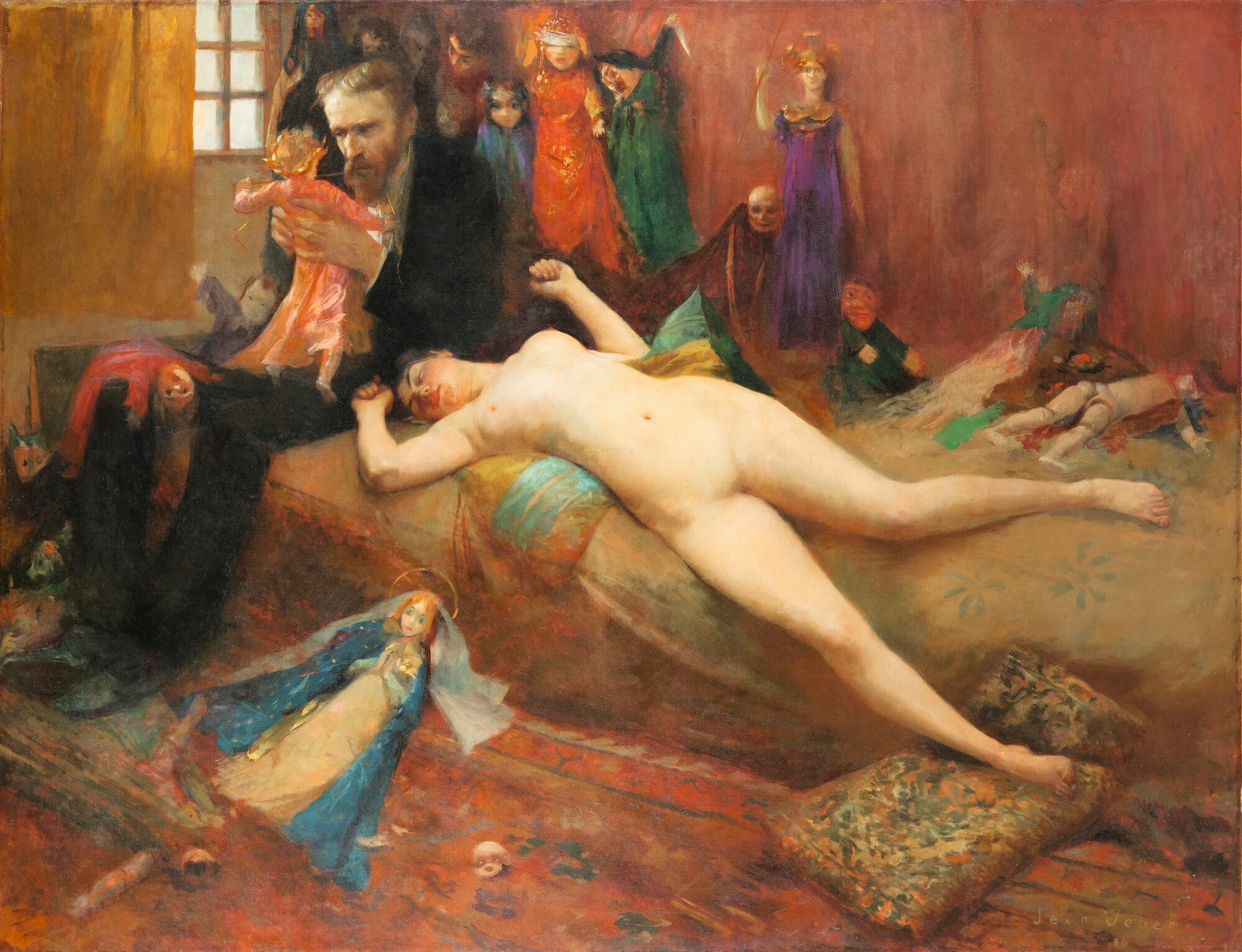
The Doll Man – Jean Veber [1896]

WON’T FIT INTO ANY ARBITRARY CATEGORY WITH EACH OTHER [Ed. – At least that’s honest.]

Squarely in the Olivia Manning/Elizabeth Jane Howard sweet spot is the Good Daughters trilogy by Mary Hocking (Good Daughters, Indifferent Heroes, Welcome Strangers), following three sisters from the 1930s to the years after WW2. They’re basically Platonic ideal books for people like me who reflexively buy the old green-spined Virago Modern Classics on sight.

The Friendly Young Ladies by Mary Renault was delightful: a wonderful 1930s summery sexy atmosphere, beautifully written, and nobody was punished by the plot for being gay. (In fact, someone wrecked their life by not being gay enough.) [Ed. — *nodding sagely * seen it happen many a time.]

Keith Ridgway’s A Shock is brilliant and sui generis; a sporadically sinister set of linked stories in multiple styles—a worthy follow-up to his Hawthorn & Child, though shooting out in completely different directions.

Awake by Harald Voetmann (translated by Johanne Sorgenfri Ottosen) is fragmented, which I have seen some people complain about, saying it doesn’t add up to a story. I guess that’s true, but I really didn’t care. A novel about Pliny the Elder, his nephew, and his slave, it’s great on the sentence level, and so interesting. And deeply, deeply horrible.

Hagar Olsson’s Chitambo (translated by Sarah Death) deserves to be much better known: a modernist Finnish masterpiece about a young girl whose life is wrecked by a father who is at first her ally in an imaginative world, and who then loses interest in her as he moves on to other, madder utopian schemes.

[Audience: GET HIM OFF! GET HIM OFF!]

The Trouble with Happiness is a collection of short stories by Tove Ditlevsen (translated by Michael Favala Goldman), and is as good as you’d hope from the author of the Copenhagen Trilogy. The Devastation of Silence by João Reis (translated by Adrian Minckley) is an exemplary example of one of my favourite genres of novel—the mildly unhinged monologue from a monomaniacal narrator, in this case a Portuguese POW in a German camp in WW1. Helen DeWitt’s The English Understand Wool is a really funny novella of subverted expectations. And Ed Yong’s An Immense World is a brilliantly and subtly written survey of the latest science in animal perception, including senses that humans cannot even begin to rival. OK, OK, I’m going, what is that thing, a crook, you do know they don’t actually use them to haul people off the stage anym–

[Ed. — Don’t tell James, but I could have read even more from him!]