Short Fiction 2015 Week 3: Nabokov & Malamud

Labour Day made for a short week. Wednesday saw us conclude the first unit of the course on narrative event with Vladimir Nabokov’s wonderful, too-little known story “The Fight” (1925). Today saw us begin a unit on character with the first of several stories we’ll be reading by Bernard Malamud, the enigmatic “The Mourners.”

Once again I’ve assigned Malamud’s third book, The Magic Barrel (1958), one of the few story collections ever to win the National Book Award. We’ll be returning to it regularly this semester. I love this collection and I was really pleased last time I taught the course that students liked it a lot too. I really wasn’t sure that would be the case. They’re very Jewish, these stories, and my students are not. That last group was much more Humanities oriented than this one seems to be, but at least reading a single author in some depth will help them as they prepare for the final essay, in which they’ll examine the formal and thematic preoccupations of an author as they are manifested in four or five stories from at least two collections.

feature_794_story

I spent some time at the beginning of class telling the students a little about Malamud. Normally I don’t do this, we just don’t have time, but it seemed worth doing today. The result, however, was that, after describing Malamud’s childhood in Brooklyn with parents who had escaped Tsarist Russia—real Fiddler on the Roof stuff, I said, and was shocked by the sea of blank faces: only two students had ever seen it—a childhood that was poor, the parents working long hours at a small grocery of the sort that appears so often in Malamud’s fiction, and difficult, the mother institutionalized after a failed suicide attempt (she was found by Malamud himself) and a brother similarly plagued by schizophrenia, a childhood that Malamud escaped by becoming a teacher, an occupation he continued through his marriage to a Catholic (bitterly contested by both families), a stint at a land-grant university in Oregon, and a fellowship year in Rome before landing a permanent gig teaching college writing at Bennington College in Vermont, where he painstakingly worked on his highly polished sentences, a determined, almost monastic life made famous in Philip Roth’s lightly fictionalized, and overtly hostile representation of Malamud in The Ghost Writer (1979)—after saying all this we only had about 40 minutes left to discuss the story.

Moreover, we spent so long analyzing the first sentence—“Kessler, formerly an egg candler, lived alone on social security”—that we didn’t have time to say everything I wanted to about the story. But I thought it worth lingering on that sentence for two reasons: one, I always love beginnings, and two, I think this one is quintessential Malamud. His economy is evident, as is his lack of patience with extended exposition. We considered two things in this sentence that are present at the beginning of almost all his stories: the use of last names, and the reference to occupations.

I was relieved that most students had found out what an egg candler does. (I hate it when students don’t look up words.) When I asked them what images came up in their google searches, they described various machines, devices, or contraptions that involved a light source. Not, I observed, any pictures of guys looking at eggs. This led them to conclude that egg candling must not be done by people any more. Which might mean what? Maybe that it’s boring, repetitive, the kind of thing people don’t do as well as machines. Kessler, on that reading, would be a superfluous man. That proves to be true, in a way, yet we also learn, in the next sentences of the story, that Kessler had been fired by “more than one egg and butter wholesaler” not because he was a bad worker—“he sorted and graded with speed and accuracy”—but because he was “a quarrelsome type and considered a trouble maker.” There are plenty of quarrels in the story (one reason I wanted to pair it with the Nabokov), but Malamud’s phrasing leaves open the possibility that he might not really be a troublemaker, he might just be mistaken for one, and thus perhaps not a bad guy, or as bad a guy as he seems.

At any rate, we learn here in passing something important: that the job of egg candler, which might seem dull and repetitive, actually requires discernment, even finesse (all that sorting and grading). Those qualities are important to keep in mind, since they might make us feel more kindly towards Kessler later on. For our opinion of Kessler quickly takes a nose dive, since we learn that thirty years ago he suddenly abandoned his wife and children, merely because he is “unable to stand” them—they had been, the story chillingly tells us, “always in his way.”

The distance we soon feel towards Kessler is intimated already in the use of last name, which students pointed out removed the characters from us—and from each other. Through my prompting, they noted that this story—set almost entirely in a single tenement building in which people live on top of each other—is filled with characters who hardly know each other, and don’t seem to like each other much when they do.

Kessler gets into a fight with the janitor in his building; the janitor tells the landlord, one Gruber, a big sweaty man with high blood pressure caused from his desire to wring as much money out of his run-down building as possible. Gruber gives Kessler notice, but Kessler won’t leave. Gruber has Kessler evicted, but Kessler sits in the snow on the sidewalk until his neighbours take pity and file the lock off the door and carry him back upstairs. Kessler asks Gruber plaintively, “‘What did I do, tell me? Who hurts a man without a reason? Are you a Hitler or a Jew?’” As he does, he is all the time hitting his chest with his fist, an allusion to the prayers of atonement Jews offer on Yom Kippur, the striking of the chest with the fist metaphorically suggesting how much we must take the task to heart.

The next day—after the landlord spends a restless night worrying over how to get Kessler to leave, just one of several references in the story to Melville’s marvelous “Bartleby, the Scrivener” (1853)—Gruber ascends the stairs of the building only to find Kessler still in the apartment. Now Gruber sees Kessler as a mourner, and indeed we learn that Kessler is thinking about what he has apparently been thinking about ever since being evicted to the sidewalk, namely, his having abandoned his family.

At the end of the story, Gruber, who has a sudden vision of falling down the stairs that are referenced so often, becomes convinced that Kessler is mourning him. The final paragraph reads:

At last he could stand it no longer. With a cry of shame he tore the sheet off Kessler’s bed, and wrapping it around his bulk, sank heavily to the floor and became a mourner.

What exactly the two are mourning, and why they mourn rather than, say, repent, is just one, though perhaps the most important, of the story’s many enigmas.

IMG_0210

As a way to solve those mysteries, I asked the students to free write for a couple of minutes in answer to the question: “Who does the story ask us to sympathize with?” (I later introduced the term “identification”—a fancy way of describing our tendency to model ourselves on others, which involves looking for others that we want to be like.) I thought this was a good question to ask of “The Mourners” because it has no obvious answer. I’ve often found that asking students to write for a bit half way through class leads to good results: sharper thinking, more nuanced answers. That was true this time, too, as became evident when I asked a few of them to read their responses. Most answered Kessler, one Gruber. No one, I noticed, but only to myself, there just wasn’t time, though I see now it would have been helpful to bring it up, said the old Italian woman, Kessler’s neighbour, who shrieks and shrieks when she sees Kessler on the street without pause until her grown sons carry him back up to the room. I don’t understand this moment, really, but it’s one of the only times when someone in this story cares for somebody else.

Perhaps the old woman sees her own fate in Kessler’s. After all—and I regret that I didn’t say this in class—the other piece of information in the story’s opening sentence is that Kessler lives on social security, an unremarkable fact to readers today, especially eighteen-year-olds, but more remarkable given the time of the story’s writing and its setting, which is never directly named but seems to be a few years earlier. But social security only dates to 1935, and it wasn’t offered as a regular monthly sum until 1940. This historical fact connects to the story’s interest in what it means to care—or not to care—for others. One way to understand social security is as an affirmation that we will all care for each other, even those we don’t know (by “all” I mean Americans: proving one’s bona fides as an American is an abiding concern in these stories, filled as they are with Jewish immigrants). It’s a way of generalizing responsibility. I don’t think the story disputes that social security is good, even very good, but I think it might be suggesting it’s not enough. Maybe the idea is that each of us must take responsibility for our friends, loved ones, and neighbours. Perhaps this failure is what is mourned. For the accusation Kessler levels at Gruber—“Who hurts a man without a reason?”—could be asked of Kessler himself. After all, that’s what he did to his family.

Things got rushed at the end of class, just as they are here. We didn’t have time to really grapple with these ideas of responsibility. The period didn’t feel wasted, but it didn’t feel as satisfying as I’d have liked. “The Mourners” is remarkable, though, and I urge you to read it, especially now, on the eve of the Jewish High Holidays.

I haven’t time or energy to say much about “The Fight,” the other story we read this week. It too is wonderful. Nabokov’s stories are underrated, especially the ones from his time in exile in Berlin in the 1920s. “The Fight” has an odd structure. It begins with a lengthy description on the part of the first person narrator—an émigré in Berlin, presumably someone like Nabokov himself—of the excursions he regularly makes to a lake on the outskirts of Berlin, perhaps some place like the Wannsee, which would later take on such a sinister associations because of the decision taken at a villa there in 1942 by top Nazis to exterminate European Jewry. At the period of Nabokov’s story, though, the lake is merely a place to swim and sun. The narrator regularly sees an older man there, a man with whom he can only haltingly converse, but who seems genial and pleasantly anarchic. For example, he warns other bathers of the arrival of the hated dogcatcher with a piercing whistle and a glint in his eye.

Only later does the narrator discover more about the man, when he happens to enter a bar in an unfamiliar part of the city that turns out to be owned by him. The narrator begins to drop in regularly, watching the goings on of the regulars, especially the love affair between the daughter of the man—his name, we learn only relatively late in the story, is Krause—and a young electrician. The last part of the story tells what happens one day when the weather is sultry and a storm just about to break. The electrician stops by the bar, pours himself a drink, and makes himself on his way. Krause demands that he pay; the man refuses, saying that, after all, here he is at home. Matters escalate rapidly and in a matter of a sentence or two the men are fighting with bare fists on the street, to the glee of a crowd that has gathered seemingly from nowhere. Krause knocks the electrician out. The narrator vainly, rather heartlessly, attempts to comfort the girl with a kiss. And that’s it. The story’s over.

For me, “The Fight” is a parody of the chart known to every high school student, the one that details initial exposition followed by gradually rising action that leads to a climax and then comes down to a resolution. Instead of those hoary conventions, this story asks instead: In what way does a climactic action need to be prepared for? What happens if that action isn’t resolved?

Wednesday was the first rainy day of the semester, and I knew the students would be listless. So I divided the students into groups and gave each a question I’d prepared beforehand. In lieu of any interpretation of the story—read it, it’s about five pages, and fabulously Nabokovian with its disturbing first-person narrator, you won’t be disappointed—I’ll simply list them here. I’ll take your answers in the comments below.

  1. Why is this story called “The Fight”? After all, the fight doesn’t take up much of its length. What is the fight like? What does it lead to? What is the story telling us about it?
  2. We could divide the story into three parts: pp 141-3//143-4//144-6. What do the parts have to do with each other? Why all that stuff about swimming at the beginning?
  3. What is the narrator like? What do we learn about him, even if indirectly?
  4. What does the story tell us about bodies?
  5. How does the anecdote about the dogcatcher function? What’s it doing here?
  6. How does the final paragraph affect our understanding of the story?

Another short week next week, what with Rosh Hashanah. And the demands of the semester are really tightening. But I’ll do my best to report back here again when we turn our attention to two much more recent stories.

Short Fiction 2015 Week 2: Balzac, Chekhov, Kipling

I’m still uncertain what kind of a group I’m dealing with. A smaller one than last week, at any rate. Two students dropped—one had been a strong contributor to discussion and we’ll miss her—and now we’re reaching the point where the class won’t work if everyone doesn’t pitch in. It doesn’t help that there are almost no humanities students in the class. That can bring its own rewards, but it doesn’t help my department’s goal of using classes like this one as a way to generate majors. And although the students have been willing to work with me so far, I sense that they simply aren’t sold yet on the value of close textual analysis. I worry that if even a few of them decide to check out, our conversations will become strained and artificial.

What a shame that would be: the material is so interesting! I would say that of course, but I really don’t see how anyone could fail to be intrigued by the stories we studied this week: Balzac’s “Sarrasine” (1830), “Kipling’s “Mrs. Bathurst” (1904), and Chekhov’s “The Kiss” (1887). They happen to be the three oldest stories on the syllabus, as well as some of the longest. No doubt those things contributed to some of the students’ difficulties. But in general we persevered.

I wanted us to consider in particular these questions: What sorts of things should happen in a story, and how should they be told? To this end I introduced the distinction made by the Russian Formalists in the first decades of the twentieth century between fabula and syuzhet, or story and plot. Although readers sometimes use these terms as synonyms, narratologists make a useful distinction between them. Story is the chronological order of events; plot is the arrangement of those events into the order we experience them in our reading of the text.

In preparing for class I came across this example, which I put on the board. (I love the room we’re in because it still has a chalkboard.) What, I asked, is the difference between these narratives?

Tim got up in the morning. There wasn’t any cereal left, so he went out to get some. On his way to the store, he was hit by a car and died.

Tim couldn’t believe he was dying because of cereal. He should never have left the house.

Students were readily able to note to difference between a chronological ordering of material and an achronological one that begins with the end and will presumably flash back to earlier events in order to explain the cryptic sentence “Tim couldn’t believe he was dying because of cereal.” It took a little prodding, however, for them to say that the second of these admittedly not especially elegant examples is more interesting than the first—specifically, it is more suspenseful. I observed that some genres, crime fiction in particular, manipulate story more than others, largely in the service of suspense.

My main points were these: all narratives have plots, however minimal, and so all narratives manipulate the presentation of events. Story is what readers are continually creating, often unconsciously, from their experience of plot. Story is therefore a necessary fiction, an effect of plot. It’s not something that pre-exists plot.

I hope they got this counter-intuitive idea, but I don’t know (yet). I noticed that the students were happiest—and liveliest—when they were learning this vocabulary and applying it to the course texts. They liked it, in other words, when I was lecturing. But I’m not a particularly good lecturer, and I don’t do much of it in this course or any other. What I really do—what I really want them to learn—is how to pay close attention to literary texts; how to develop interpretations of the whole based on scrupulous attention to its parts.

doinel-balzac

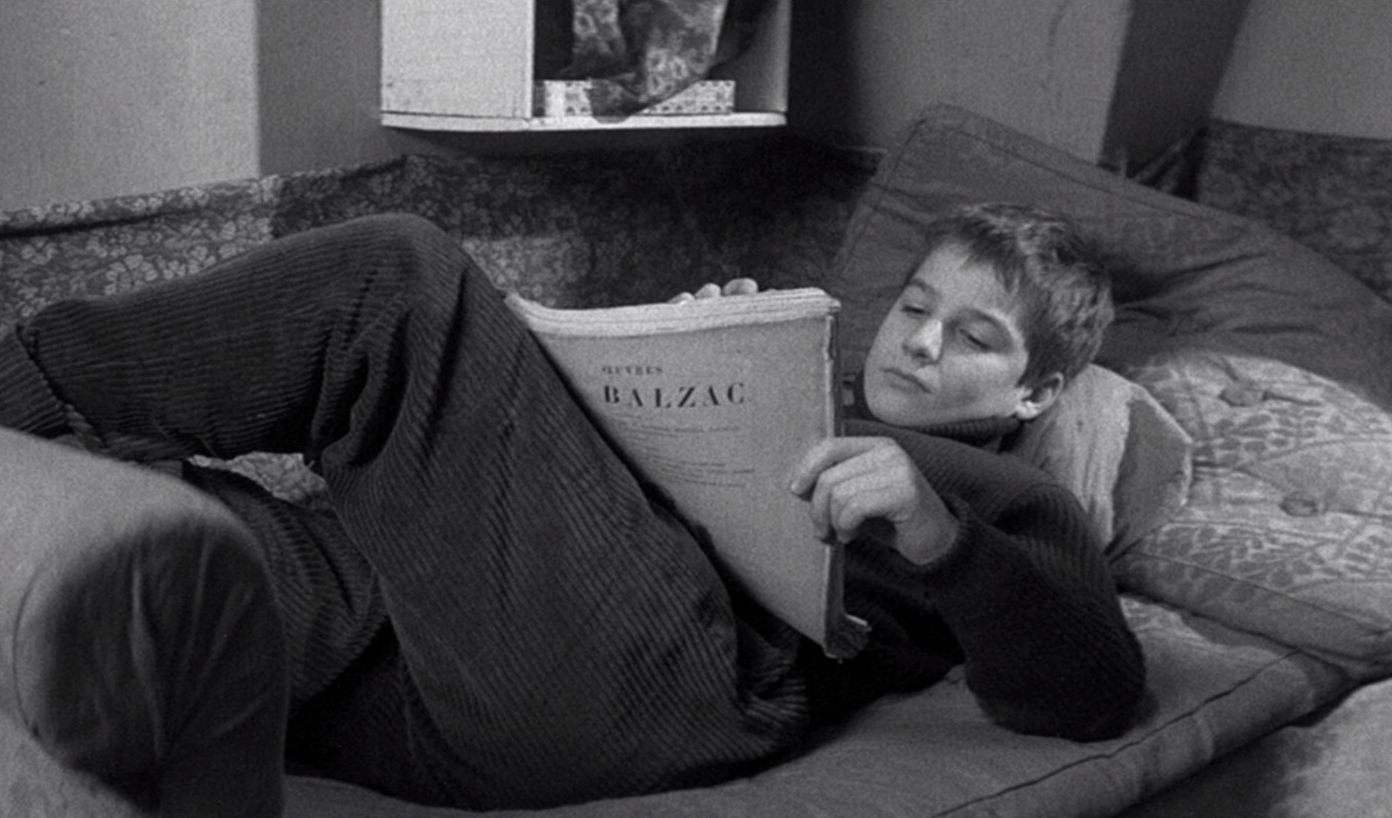
I can’t talk about these stories without spoiling some of their surprises, so consider yourself warned. Each is wonderful, but this time around the one that really struck me was “Sarrasine.” I’ve only ever taught it in the context of Roland Barthes’s powerful reading of it in his brilliant book about realist fiction, S/Z. My take on the story is heavily indebted to Barthes, but I found it freeing to teach the story on its own terms. I think using Jordan Stump’s translation from this lovely new edition of Balzac stories helped too. It feels fresher and lighter than the one by Richard Howard I’m familiar with.

I had the students bring a one-page summary of the story to class, partly as a diagnostic exercise (so I could see what their writing was like) and partly to get them to practice accurate and concise description. I wanted to know what they chose to emphasize. (Interestingly, they almost all ignored the ending.) Here’s my crack at it:

“Sarrasine” begins at an opulent ball at the home of the mysterious de Lanty family. The narrator has brought a (married) woman to the party, Madame de Rochfide, whom he hopes to seduce. Like the rest of Parisian society, the young woman is both attracted and repelled by an old man who regularly appears at the de Lantys’ parties. Who is he and why is the family so solicitous but also so frightened of him? The narrator knows and agrees to explain all to his lover when they meet in her boudoir the following evening. There he launches into the story of one Earnest-Jean Sarrasine, a sculptor who rose from obscurity in provincial France to fame in Paris, leading him to win a prize to study in Rome. Sarrasine’s genius combines a fiery, unruly nature with a profound lack of worldliness. That naivety is apparent when, arriving in the Eternal City, he attends the opera and falls immediately in love with a singer known only as La Zambinella. La Zambinella rebuffs the sculptor’s professions of love, saying that if Sarrasine really knew her he would be horrified—a diagnosis that proves to be true when she turns out not to be a woman. Her unearthly voice is the result of castration. An enraged Sarrrasine is on the point of killing the poor creature, to use a word the text repeats several times, when he is himself murdered by ruffians hired by the singer’s protector, one of Rome’s most powerful Cardinals. The old man—the uncle of Madame de Lanty—is none other than La Zambinella; his musical career generated the fortune that has fueled the family’s rise to respectability. But when the mystery is revealed it casts a shadow, a kind of taint on its eager audience. Madame de Rochfide is so repelled by the story that she breaks off her relation with the narrator (and in classic Balzac fashion, threatens to retire from this monstrous world to a convent).

“Sarrasine” is a great story. And it’s great for teaching narrative structure, both because it’s filled with so many mysteries and because it’s so brilliantly manipulative in making us care about them. In other words, it’s very suspenseful, and we feel the suspense all the more powerfully because characters in the story do too, and they’re always cuing us to experience events in a certain way.

I began our discussion of the story by asking the class to identify the story’s key mysteries. They quickly said: Where does the de Lantys’ money come from? Who is the old man? Who is the subject of the portrait of Adonis that hangs in the de Lanty mansion? Who is La Zambinella? Will the narrator get together with Madame de Rochfide?

These all turn out to be versions of the same question. Even the last one hinges on the revelation of the others. I pointed out some of the ways the story answers these questions early on without really answering them. These pieces of incomplete information fit with the story’s depiction of concealment and revelation. Plots work by oscillating between revealing and concealing; Balzac is a master of literalizing these narrative metaphors. The story is full of secret passages, cloistered window-ledges, disguises, etc.

Here’s an example of the kind of half-answer I’m talking about. Already on the fourth page the narrator reveals “The beauty, the fortune, the wit, the grace and intelligence of these two children [the de Lantys’ son and daughter] came to them solely from their mother” (my emphasis). As Barthes points out, the sentence’s parataxis—the presentation of information serially, without any kind of subordination or hierarchy—sweeps us along, so that it’s almost impossible to notice that we’ve already been given the answer to one of the story’s burning questions. But the answer is only a partial answer, an answer we can’t yet fully understand. The de Lanty fortune comes from the maternal side. But we don’t yet know what that means.

The story’s clever plotting, especially the extended flashback to the time when the enigmatic old man was the diva La Zambinella, contributes to its sense of mystery. Where things get really interesting is when that mystery is resolved. At the end of the story, all our questions are answered, but the resolution isn’t satisfying, at least not to the character that has been our stand-in, Madame de Rochfide. (She is the one, like us, who hungers to know the truth behind the mysterious appearances.) Barthes famously described the story’s final scene as a metaphorical instance of castration, an echo of the literal castration that befalls the singer. Here, for example, is the narrator explaining the connection between the old man, La Zambinella, and the de Lanty fortune:

“Perhaps now you can understand Madame de Lanty’s interest in concealing the source of a fortune that comes from—”

“Enough!” she interrupted, with a commanding gesture.

We sat for a moment in the deepest silence.

The event at the heart of the story—Zambinella’s castration, that is, his becoming Zambinella—is so terrifying, even, it would seem, disgusting, that it cannot be spoken, and even the incomplete revelation of its truth is enough to kill desire in anyone who hears of it. (I mean both narrative desire and sexual desire.) The exchange the narrator and his lover have agreed upon—a story for sex—isn’t consummated. In this sense “Sarrasine” offers an allegory of the impossibility of any story to conclude satisfactorily—no solution is ever as satisfying as its enigma.

In other words, one of the things Balzac’s story is about is that what is hidden can never be fully revealed. To satisfy narrative desire is always to incite a kind of death. And that’s especially true in a story like this one, where a key connection between the story of the sculptor and the castrato and the story of the narrator and his lover is the former’s desire to shape the other to their own ends. What Madame de Rochfide says bitterly to the narrator—“Oh! You’re remaking me to suit your own tastes. A strange sort of tyranny that is! You want me to be something other than me”—could just as easily be said by La Zambinella to Sarrasine.

IMG_0206

The same sort of solipsistic control is evident in more melancholic form in Chekhov’s “The Kiss.” A general who like fat women assumes his men must as well. A habitual cynic assumes his colleague must be lying. And an introvert assumes that others must share his disparagement of himself. In contrast to Balzac, and also to Kipling, with their dramatic, even melodramatic events, Chekhov operates in a more muted register. I don’t know if he invented the modern conception that short fiction centers on small epiphanies, but he’s certainly an important figure in the development and eventual triumph of that mode.

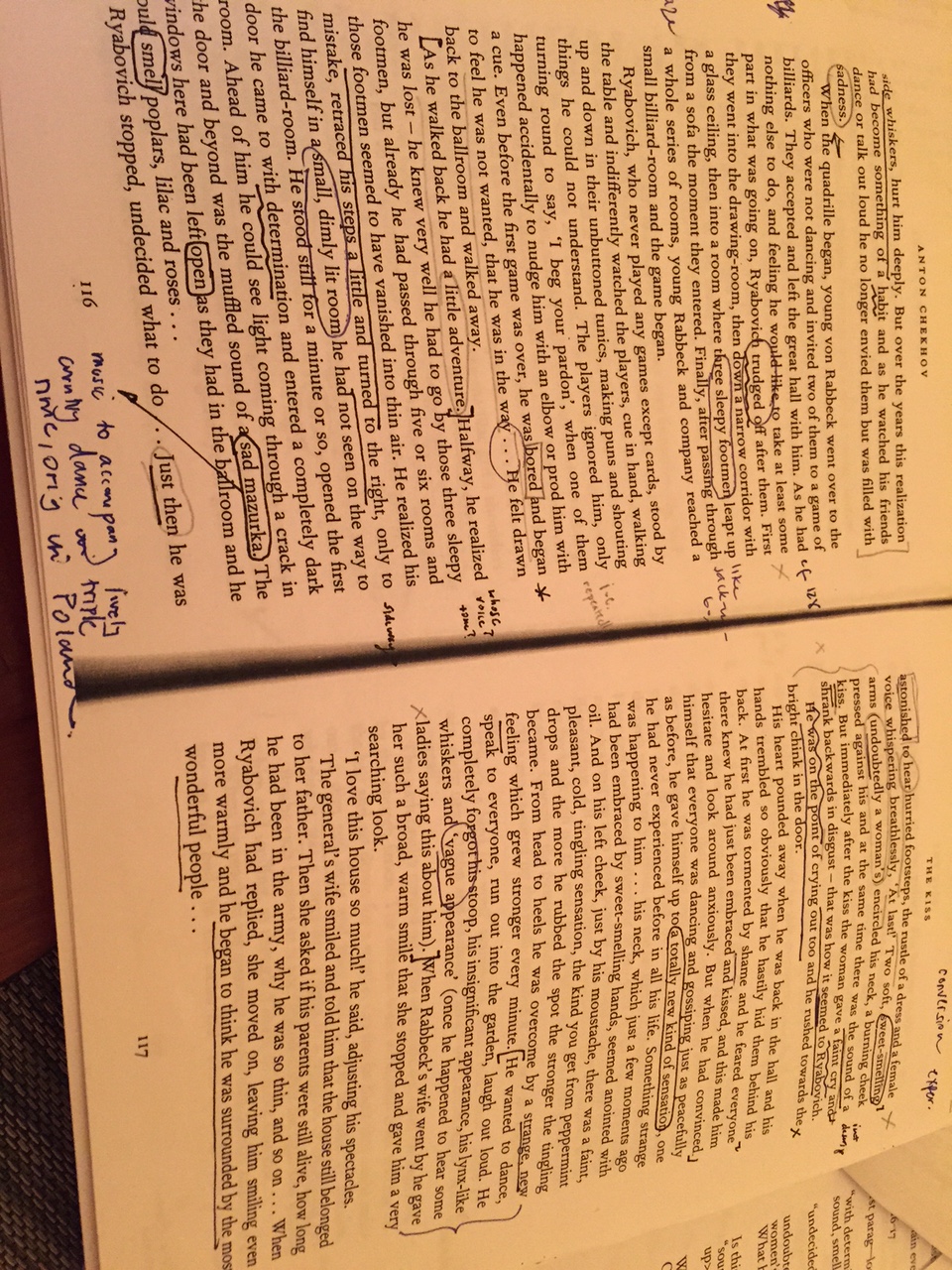
I began our discussion of the story by asking students to name the central event of the story. They immediately referred to the scene in which the protagonist Ryabovich, lost at a house party, wanders into a darkened room where he is embraced by a woman who has mistaken him for her lover. But a student immediately added that the real event seems to be the man’s reaction to the embrace. Thus the titular kiss becomes an allegory for our tendency to imagine that a story pre-exists its telling—its plot—when in reality it is only ever constructed from our ways of telling it. Here’s the passage we spent a lot of time on:

Ryabovich stopped, uncertain what to do… Just then he was astonished to hear hurried footsteps, the rustle of a dress and a female voice whispering breathlessly, ‘At last!’ Two soft, sweet-smelling arms (undoubtedly a woman’s) encircled his neck, a burning cheek pressed against his and at the same time there was the sound of a kiss. But immediately after the kiss the woman gave a faint cry and shrank backwards in disgust—that was how it seemed to Ryabovich.

It took a little prodding but eventually I was able to get students to see that this is really a very strange description. The loss of sight in the darkened room means that other senses are heightened—here we referenced a number of other passages that describe sounds and smells—but how trustworthy are those senses, or how are they being interpreted? Why does the text add that parenthetical “undoubtedly a woman’s”? Hasn’t the reference to a female voice made that clear? (Though “Sarrasine” ought to have made us suspicious about such essentialism.) I can’t trust that “undoubtedly”—I immediately hear the doubt hiding within the word. It’s not that I think the person was actually a man. It’s that the whole scenario seems so insubstantial. As one student pointed out, it’s only Ryabovich who is convinced the woman shrinks in disgust. (And because he decides never to return to the house, we never find out if he’s right.)

Further uncertainty comes from that strange phrasing, “there was the sound of a kiss.” Sound isn’t usually the first way we experience a kiss. Why then does Chekhov describe it this way? Again the effect is to render the whole event uncertain. But that very uncertainty is what enables Ryabovich to speculate extravagantly about it, to construct an ideal woman composed of all the most appealing parts of the different women at the party (he imagines the shoulders of one, the smile of another, etc).

We didn’t have time to consider the different registers of experience in the story—the way the habitual actions of the artillery battalion to which the protagonist belongs are succinctly described but derided by the text as boring, whereas the singular action of the kiss, if we can even talk about it in such terms, is developed at length to the point of distortion. But we did linger over the end of the story, over Ryabovich’s decision not to return with the others to the house where the kiss occurred, a decision that comes after he stands overlooking a river. The current that purls faintly and passes inexorably along leads Ryabovich to feel a sense of futility. Yet the story’s final irony is that in taking, at long last, a decisive action—in not returning to the house where, in a different kind of story, he would have re-encountered the woman from the darkened room—he resolutely chooses irresolution. But doing so allows him to maintain the power of fantasy, thereby asserting the inevitable quality of reconstruction that attends all the important moments of our lives. Yet in a way I still don’t fully understand the recognition of this inevitability is combined with a really ominous sense that things will go badly for poor Ryabovich. When the others go off to the party, he lies on his bed “in defiance of fate—as though he wanted to bring its wrath down on his own head.”

rudyard-kipling

Speaking of ominous fate, what about “Mrs. Bathurst”? This post is already too long, so I won’t say much about it here other than that it is in fact the most enigmatic of these puzzling tales. In fact, it’s really hard to know what happens in it, and we spent much of the class period trying to sort that out. Like “Sarrasine” and “The Kiss,” “Mrs. Bathurst” is also a story about storytelling. Four men gather in a railway car near Cape Town to tell the story of a man who deserted from the Navy. But what exactly happens to him, and what led him to desert? A quick online search suggests that commentators can’t agree on the answers. I think the students found it hard—it worked less well than the last time I taught it—and it’s true that to make any sense of it at the most basic level we have to make much of enigmatic and offhand phrasing, as when the deserter tells the story-teller: “remember that I am not a murderer, because my lawful wife died in childbirth six weeks after I came out [i.e. away from England].” Why “lawful wife”? Isn’t that redundant? Well, maybe not if you have a second wife, an unlawful one. Not, in other words, if you’re a bigamist. Look here for an extraordinarily detailed, if sometimes pedantic to the point of obtuseness, analysis of much of the existing criticism of the story, where this suggestion among others is made. (The whole site has the layout and monomaniacal tone that so characterized the Internet in its early days.) Kipling doesn’t even attempt the resolution of narrative enigmas that proved so problematic in Balzac. He’s probably the least well respected of the three writers today, but in this sense at least he feels the most radical. We’ll return to the topic of uncertain or unknowable events when we read an early story by Nabokov next week.

Short Fiction Week 1: Lydia Davis

I mentioned last time that I’m teaching a course on short fiction each semester this year. It’s been a while since I’ve taught it and I’m quite looking forward to it. I love novels, but it’s a relief to have a course without any. Short Fiction falls under my department’s Introduction to Literary Studies category, and is intended for Freshmen and Sophomores. These courses satisfy two of the general education requirements all students at my institution need to fulfill: Literary Studies and Writing Level 1 (W1). Thus although I hope to entice some of these students into at least thinking about majoring in English, the reality is that this is the only English course most of them will take.

It’s not easy teaching students how to develop their interpretive skills by reading attentively. But it’s even more challenging when I’ve also got to combine that task with teaching them how to write. Reading and writing go together, of course, but turning students into proficient writers takes a lot of time, both in class and in individual conferences with me. All of the assignments are structured into stages emphasizes revision. The dual aims—complementary but each daunting in its own right—make these classes hard to teach. (Fortunately, we were recently able to limit these classes to 18 students (it used to be 25) which helps quite a bit.) But I usually enjoy my introductory level courses a lot, especially in the fall semester. There’s nothing quite like the excitement—however undisciplined—of a first semester college student.

It doesn’t take long for the semester to get to the point where day-to-day survival is the only thing that matters. One of the first things to go by the wayside, at least for me, is my own writing, including here at the blog. I want to change that, and so this year I’ve decided to write each week about one of the stories we’re studying in class. I hope my dozens of loyal readers will keep me accountable. I welcome all gestures of support!

73024233-davis_41391c

Class met for the first time today, and I reserved the tedious business of going over class procedures & the syllabus for the last ten minutes and spent the rest of the time on a short piece by the contemporary American writer Lydia Davis. I’ve often taught her absolutely wonderful story “A Mown Lawn,” but this year I decided to go with something different, the first story in her most recent collection, Can’t and Won’t (2014). Davis is known for writing very short, very smart, often very funny stories, and this one is no exception. It’s called “A Story of Stolen Salamis” and here it is in its entirety:

A Story of Stolen Salamis

My son’s Italian landlord in Brooklyn kept a shed out back in which he cured and smoked salamis. One night, in the midst of a wave of petty vandalism and theft, the shed was broken into and the salamis were taken. My son talked to his landlord about it the next day, commiserating over the vanished sausages. The landlord was resigned and philosophical, but corrected him: “They were not sausages. They were salamis.” Then the incident was written up in one of the city’s more prominent magazines as an amusing and colorful urban incident. In the article, the reporter called the stolen goods “sausages.” My son showed the article to his landlord, who hadn’t known about it. The landlord was interested and pleased that the magazine had seen fit to report the incident, but he added: “They weren’t sausages. They were salamis.”

I started by asking the class what wasn’t in the story. Answers came pretty quickly: defined characters, description of the setting or much of anything else, and most importantly, details about the crime and its upshot. As one student cleverly put it—and this was by far way my favourite observation today—the story “leaves out the meat.” (That kid’s going far.)

Students were readily able to recognize the story’s obliquity, though it was a bit harder for them to see how much of that effect comes from Davis’s decision to tell the story in first person but without telling us very much about that person. We know only that she is the parent of a son who lives in Brooklyn and the possessor of both a good vocabulary and a wry, detached way of looking at the world, in short, that she is someone rather like Davis herself, which is why I use “she” here though there’s no indication of the narrator’s gender in the text itself, and it really doesn’t matter whether she’s like Davis at all. The narrator’s presence in the text is so minimal that it’s as if the story is taking the piss out of the convention that first person narrators are the heroes of their own stories. But that indirect, mediated quality is central to understanding the story.

I asked the class why the story was called “A Story of Stolen Salamis” rather than, say, “Stolen Salamis.” Isn’t the introductory phrase redundant, implied by the very existence of the text? And why “a” and not “the”? One student observed that “the” would mean there was only one story. But in this case there are at least two. There’s the story as a whole, and there’s the story within the story, the one reported in “one of the city’s more prominent magazines.” I reminded students that we use “story” to refer both to fiction and to fact. What links these uses are narrative and rhetorical conventions of the kind we’ll be studying in class. Certainly fiction seems to trump fact here, since the reporter—echoing the son (though it’s unclear how directly—the passive construction “the incident was written up” doesn’t tell us how the reporter found out about it—from the crime blotter, maybe?)—wrongly calls the stolen objects “sausages.” And although we didn’t actually talk about it, the quotation marks matter a lot. “Sausages” isn’t in quotation marks the first time the word appears in the story. Here the narrator is aligning herself—in her words, commiserating—with her son, as if to suggest that she too would have made that mistake. But the later reference to sausages—“In the article, the reporter called the stolen goods ‘sausages’”—is clearly not the narrator’s. Yet the sentence would have worked just fine without the quotation marks. We’d still know it was the reporter who had used the offending word. But in setting “sausages” off like that, the narrator distances herself from the glib and patronizing magazine.

She respects the landlord, who, thanks to his perhaps absurd but ultimately noble insistence on distinguishing salamis from sausages, is definitely the hero of the story. Preparing for class (how did anyone do that before the internet?) I looked up the difference between these terms, and everything I found said a salami is a kind of sausage, just one that is cured longer and is therefore drier. The difference, then, is subtle, but subtle differences matter a lot, especially when we’re reading literary texts. The main reason I wanted to start the course with this text—besides the fact that I like it so damn much—is that it’s such an elegant parable of interpretation, of how words matter, how we must always respect the specificity of whatever it is we’re interpreting. This precision can have other ends than linguistic ones, too, as one student noted by saying, when I asked them why the guy cares so much about the distinction anyway, that he might be asserting his Italian or Italian-American identity.

A fair point, but the identity the story really cares about isn’t ethnic or nationalistic but rather linguistic. Returning to the title, we can see that the most important word in it is not, as we might have expected, “stolen” (in other words, the drama of its narrative events, however absurd—the alliteration of the “stolen salamis” is like something from a Post headline:   “Stolen Salamis!”) but rather “salamis” (in other words, language itself, the importance of naming). In the end, I can’t quite figure what eh story wants to say about linguistic precision—after all, insisting that they were salamis doesn’t keep them from being stolen. Maybe, then, the joke is on the landlord? But I think the story presents him as a man of integrity rather than a pedant. And certainly not clichéd or casual like the reporter, a tone the story itself always seems to be skirting in its use of ready-made phrases like “a wave of petty vandalism and theft” or “an amusing and colorful urban incident.” For these phrases reduce the specificity of what exists in a way that completely opposes the landlord’s insistence on his salamis.

IMG_0205

There’s even more to be said about this story, I’m sure. But we said a lot in a short time—we got to most of these points, and I was pleased about that. I was less happy about how uneven the participation was—some students seemed much more engaged than others. But it’s too early to come to any conclusions as to what this group will be like. I’ll report back next week about how we’re getting on as we tackle stories by Balzac, Kipling, and Chekov. Stick around—that is, if you can stand to see how the sausages are made.

How Danish is It? Naja Marie Aidt’s Baboon

Baboon–Naja Marie Aidt (2006)

Translated from the Danish by Denise Newman (2014)

Baboon, the debut collection in English by the Danish writer Naja Marie Aidt, has been getting a lot of buzz among bookish types. That was enough to get me to buy it, but not of course to read it. It had to compete for my attention with all the other books on my bedside table: books I had to read for work, books I had to read because they were coming due at the library, books I had to read so as not to face the books I had to read for work, books I had to read to satisfy obscure readerly projects of the sort I’m always setting for myself.

But Baboon spent only a short time in the purgatory of the TBR pile (most books sit there for years). I read it in two or three short sessions last weekend, impelled by the now inescapable fact that school is about to start up again. This year I am teaching a course on short fiction each semester and I always like to include a couple of recently published stories to help me decide what I really think about them. In this way I decided that I didn’t like Haruki Murakami or Etgar Keret as much as I thought I did, but that I liked Rachel Seiffert even more than at first. Although I’ve a few reservations about Aidt’s work, the collection impressed me enough that I’ve assigned the first story in the collection, “Bulbjerg,” for the first week of class.

KMS359

“Bulbjerg,” named after a prominent limestone cliff in Jutland, reminded me a bit of a Margaret Atwood story. There’s the same sense that however threatening the natural world might seem it isn’t nearly as hostile as the people lost in it. And a similar tone: Aidt has Atwood’s asperity and intelligence. “Bulbjerg” opens with an expression of wonder—“Suddenly we found ourselves in the middle of an astonishing landscape: luminous, white sand dunes on all sides, wind swept, small trees twisting under the vast open sky”—but its dominant emotion is in fact fear. It’s fitting that “suddenly” is the story’s first word. A lot of dramatic things happen in its ten pages, just as they do in the other concise stories in the collection. But as PT Smith points out in an excellent review, eventfulness plus concision doesn’t equal clarity. As the story begins, the narrator, his wife, their six-year-old son, and their dog are lost in a forest. In the opening sentence they come up for air, but only by happenstance—note the passive construction “we found ourselves”—and not for long. They must plunge back into the forest to get where they are going. But where is that? And who are these people?

Aidt is good at menace, as in this scene from early in the story. The boy is tired, the family collapses to the ground. But time is passing. They need to get moving:

“Shouldn’t we get going?” you ask. I get up and suddenly notice how tired I am. My arms are completely limp and there’s an overwhelming feeling of weakness throughout my entire body. The water bottle is empty. The dog pants with its tongue hanging out of its mouth. You lift it into the cardboard box on the bike rack. Sebastian bravely picks up his bike and rides ahead of us. His bell rings with every bump on the road, and the flag he was so proud of when I mounted it on the rear mudguard looks cheap and shabby now. We ride on in silence.

The first time I read this, I was sure something terrible had happened, a catastrophe of some kind. A war, maybe, or a natural disaster. Maybe it was that cardboard box for the dog that got me thinking this way. Who takes their dog on a bicycle trip in a box? It seemed so desperate. Are they escaping something? Or maybe it was that bell, ringing its feeble warning, its futility only exacerbated by the cheap and shabby flag. What could have pushed this family to this point? They’ve run out of water, they’re tired, vacillating between barely restrained anger (“Shouldn’t we get going?) and silence.

But it’s not a catastrophe, at least not in the apocalyptic sense. It turns out that this is just a family outing gone awry, not life threatening, but dangerous nonetheless. Aidt captures perfectly that knife-edge between panic and exhaustion that sets upon you when you’ve lost your way in the woods. But she isn’t just describing that sensation—she’s also inciting it in us. In this story and in the others, readers are as lost as these characters. That’s because Aidt is always dropping us in the middle of things, leaving us to sort out who the characters are, how they’re related to each other, where they are and what they’re doing. And when we do figure these things out, we often have to wrestle with our feelings about them. There are not many likable characters in this collection, some are downright unpleasant, even disgusting. That’s true even in a story like “Interruption,” a kind of absurd experiment in the mode of Kafka or Gogol, when a middle-aged woman—a fugitive, it would seem, though this too is never made clear, from a newly opened “massage parlor” which is really nothing more than a brothel—bursts into the apartment of a graduate student, installs herself there (cooking and cleaning and offering other services besides) and refuses to leave. Our feelings towards the woman—the narrator thinks she is Thai or Filipino but can’t be bothered to find out for sure—remain unclear because we never get any access to her consciousness, and the narrator’s indignant and slightly revolted response to her is hard to get past. We know it tells us more about him than her, but she remains a cipher to us. I admire the way Aidt suggests the precariousness, even the danger of the woman’s life without using it to build sympathy. Similarly, I appreciate the way she makes the student, who in another story might seem sympathetically put upon, as much cold and calculating as bewildered and frustrated.

If I say these are confusing stories, then, I’m referring not to their style—Aidt’s sentences are straightforward, even plain—but to their emotional force. They refuse to offer us the consolations of protagonists that we can identify with and situations that we can embrace. Even when the characters threaten to become caricatures the stories wrong-foot us, as in the case of the self-satisfied hedonist of “Wounds,” whose life falls apart when an innocuous boil on his ass becomes a horrifying, life threatening, baffling disease. We can’t enjoy disparaging him, yet we don’t quite ever come to sympathize with him either.

So when I say these stories left a bad taste in my mouth you shouldn’t take that as criticism, exactly, but rather as recognition that they’ve done the work they set out to do. These stories don’t ask to be loved—they’re the opposite of ingratiating—so what’s left might be admiration. And I do admire them, certainly enough that I want to read Aidt’s first novel, also just out in English translation. And I’m curious how I’ll feel about “Bjulberg,” at least, after I’ve taught it next week.

images-1

Baboon is translated by Denise Newman. As always when I read translations from a language I don’t know, I’m at a loss as to what to say about her efforts, beyond expressing deep gratitude for giving me access to books I’d never otherwise be able to read. I could say the translation seems fluent and skillful, which it does, but in the absence of the original I’ve no idea. I do wonder, however, and this doesn’t have to do with the specifics of this translation but of its very existence in English translation (and thanks are due to Two Lines Press for publishing these stories, and in such a handsome edition). As I read the book, I thought about what Tim Parks has been saying repeatedly over the past few years—that “international” or “world” literature is increasingly governed by the unstated, free-floating, but no less powerful desire to be translated into English, such that a straightforward style (more Raymond Carver than Henry James, say) and a lack of cultural specificity have come, however unconsciously, to govern the production of literature already in their original form, let alone in the decision (always as much economic as aesthetic) to translate that literature into English. If I understand him right, Parks thinks there is a whole canon of world literature that is being written in ways that make it amenable to being translated into English.

Whatever one thinks of Parks’s claims—I like him because he’s kind of cranky and intemperate, our own D. H.Lawrence, even though I think he might be exaggerating the case—I think there’s a useful question to be asked about what we want from literature in translation. Another way to say what I mean is that I found myself wondering as I read this collection whether there was anything particularly Danish about it. Which in turn made me wonder, what the hell would that even mean and why would I want it? Was I expecting a landscape tastefully littered with Arne Jacobsen chairs? It’s condescending to expect the foreign to be exotic, or to correspond to one’s received idea of a place (these things usually mean the same thing). And yet the suggestion, made in a blurb on the back cover, that these stories are “universal” (which I take to mean, “could be American!”) seems similarly condescending and disrespectful. Maybe it’s knowing so little about Denmark other than a few television shows and crime novels (as well as an abiding conviction that it must be the loveliest place on earth) that makes me feel this way.

But I did decide, as I always do, not to include Babel on my short fiction syllabus, even though those stories are wonderful, because they strike me as likely to seem foreign to my students in ways my course doesn’t have the time to explicate. Aidt, on the other hand, will I suspect resonate strongly with students. The comparison could be better, I know: anything written a century ago needs context in a way something written today doesn’t (though I do teach plenty of early twentieth century texts in this course). But I can’t help thinking that the ready amenability of these stories to being translated into English is a kind of fault. And yet as soon as I do I remember the disreputable narrator of “Bulbjerg” and his desperate family, as lost to each other as they are in the woods, and unsettling to us. Perhaps I’ve been fooled in my thinking. Perhaps these are uniquely Danish stories. Perhaps there is no such thing as a Danish story. Perhaps the apparently assimilable style of Baboon is a false friend, only an apparent cognate. Perhaps I’m not giving these surprising and sly stories their full due.

A Summer’s Worth of Crime Fiction

Summer isn’t over yet, of course, especially not in Arkansas. But my summer almost is. Administrative duties begin this week, and the first day of classes is only three weeks away. I’m sure I’ll dispose of a few more crime novels before the semester really starts to pinch, but for now here are a few thoughts about some I’ve read lately:

Gallows View—Peter Robinson (1987)

The first in the long-running Inspector Banks series, and a pretty good debut. For a while there I read the new installments of this series religiously. I’m a few behind now, not sure why, they’re always solid, often much better than that, and Banks is likeable enough, a kinder, less tormented Rebus. I don’t always need to know so much about the music he’s listening to, though. I’d never read the first five or six, though, and it’s interesting to compare the later installments to the first one. Robinson has become a better writer, but already here he shows a light touch in explaining the story of Banks’s move from London to Yorkshire. And his pacing is good, too. At 250 pages this book is the right length. I’ve bemoaned many times the bloat in crime fiction, with novels regularly topping 400 pages. In fact, Robinson himself has since succumbed to this tendency. Still, meeting Inspector Banks has reignited my interest in the series and I plan to read the next few.

1830india

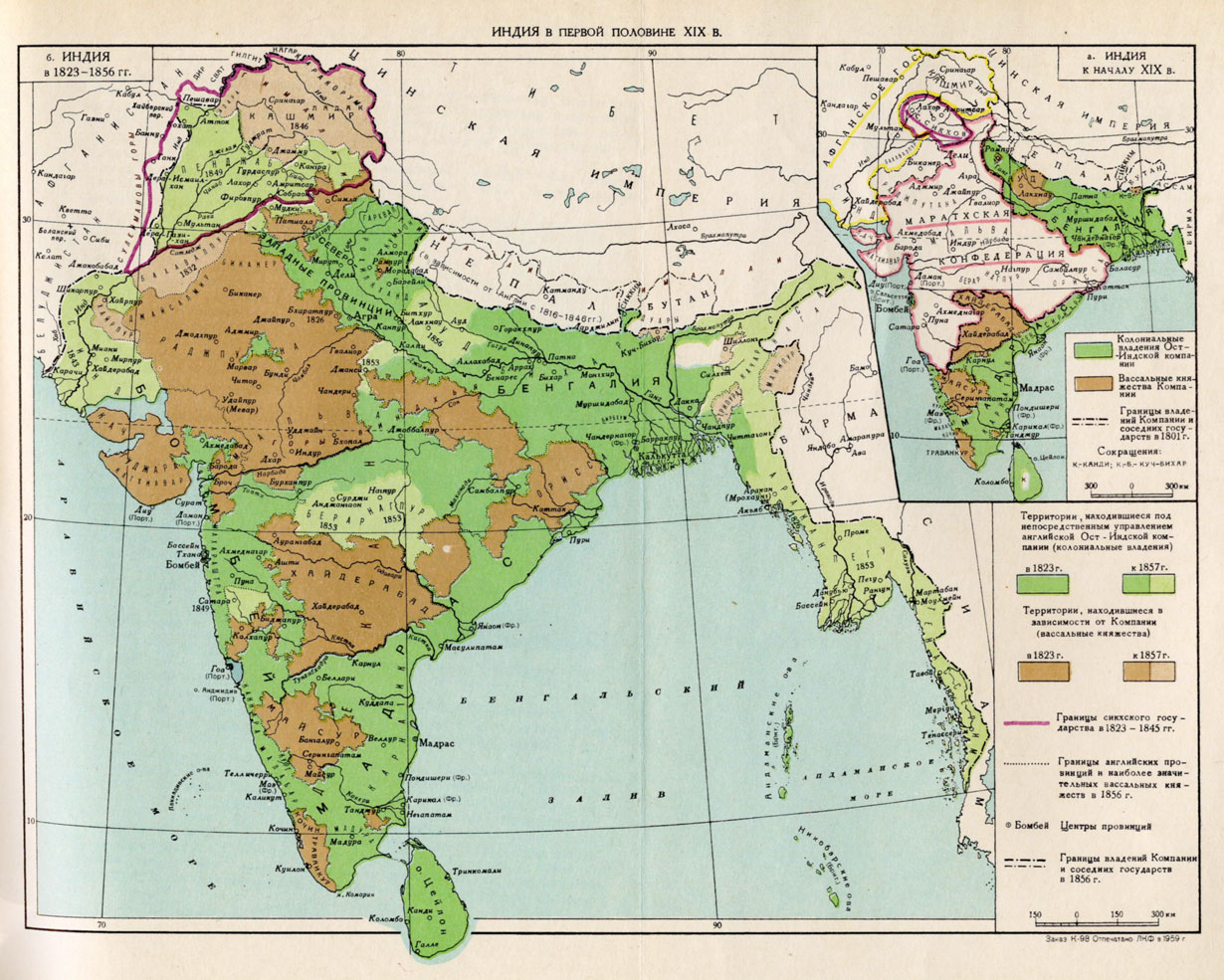
The Strangler Vine—M . J. Carter (2014)

This first time novel by a historian begins what promises to be a very good series. Someone recommended this in the TLS Summer Reading series, and I’m glad I followed up on it. William Avery is a young soldier recently arrived in India in the 1830s. Languishing in Calcutta before joining his regiment, he is charged with accompanying Jeremiah Blake to find a well-known poet, the Walter Scott of Anglo-India, who has gone missing. Blake is a shadowy figure who is employed by the East India Company but lives in disrepute in the “native” part of the city, and in fact seems to have repudiated the Company altogether. Avery is naïve, a bit complacent and blustery, though a good sort. Blake is mercurial, expert in a dozen Eastern languages, an expert at tracking people who don’t want to be found. There’s an extended “meet cute” in which Blake is contemptuous of Avery and Avery horrified by Bake before each comes to appreciate the other, work as a team, etc. Avery is disabused of his faith in the Company; Blake regains some of his faith in the human race. So far, so conventional. Fortunately, Carter doesn’t push the Holmes/Watson comparison too hard. And her knowledge of the period is impressive. She describes the 1830s as a time when an earlier openness on the part of Company officials for India’s cultural traditions was hardening into something more dogmatic and oppressive, an incipient White Man’s Burden. The book drags a little at times, especially in the middle third, usually when Carter tries to burden her story with too much information. But the ending is genuinely moving and I look forward to the next installment, which, it seems, will be set somewhere quite different. (Already out in the UK—Book Depository order necessary? Hmm…)

w-abbey-road-williamsburg.jpg

Invisible City—Julia Dahl (2014)

I read this because it’s ostensibly about the Hasidic community in New York. But it’s actually about the newspaper business in the era of social media, which interests me a lot less. Dahl’s portrayal of an insular world in which wrongdoings are overlooked in a tacit understanding between community leaders and secular officials is fine as far as it goes. But Rachel Aviv’s New Yorker piece from last year explores the same topic much more probingly. It tells you something that a few later I can’t even remember the protagonist’s name, but she has a complicated back-story that allows her access to this relatively closed world. I didn’t find that story interesting enough to want to read the just-released follow-up.

matthiasdottir_louisa-reykjavik_harbour~OMae6300~10157_20061031_7297_10

Oblivion—Arnaldur Indridason (2014/2015 English translation Victoria Cribb)

Indridason is one of my absolute favourites and I always order his books from the UK since they come out a year earlier there. Some are stronger than others, of course, but this one is particularly good. A couple of years ago, Indridason concluded his series centered on his melancholy detective, Erlendur. But then he had the idea of writing about Erlendur’s early days. Last year’s Reykjavik Nights showed us Erlendur’s life as a traffic cop in the early 70s. In this follow-up, set a few years later, Erlendur has become a detective. He investigates two unrelated crimes, one recent and one from twenty years earlier. The resonances between them—they are linked only thematically, in relation to the American military presence in Iceland after the war—are intriguing but not hammered home. I’ve written before about my love of Iceland, so maybe this stuff interests me more than most people. But everyone ought to appreciate how almost insistently low-key these books are. Indridason is especially good at showing how awkward it can be to investigate crimes in a small country, where everybody almost knows everybody else.

Dissolution—C. J. Sansom (2003)

I’m not much of one for classical/medieval/Renaissance-era historical mysteries, but I quite liked this first installment of a series centered on Matthew Shardlake, a hunchbacked lawyer working for Thomas Cromwell in the 1530s who increasingly finds himself torn over his master’s methods. At least I liked it until I read Jenny’s damning but compelling complaint about the implausibility of importing what are essentially 19th/20th century narrative protocols on to the Early Modern period. After that I liked it less. I might continue with the series anyway, though: the first one was definitely readable, and I enjoyed the counter-perspective on Cromwell, who I only know from Hilary Mantel. This book is fine, but it’s no Wolf Hall! Think Sansom is tired of hearing that yet?

44

The Red Moth—Sam Eastlake (2013)

Found this while in Canada and it seemed like the kind of thing that might be hard to get in the US, plus I’m a total sucker for WWII crime/espionage fiction. The inspector is a Finn who once worked for the Tsar and then was recalled from Siberian exile and put to work for Stalin. It’s all most implausible—Stalin is even a character, which doesn’t work out too well: I get that the point is that he’s not a frothing madman, but the picture of him as simply a malign functionary is fairly preposterous. A perfectly adequate vacation read, but I doubt I’ll be getting to the rest of the series anytime soon.

cabimageresizer

Ngaio Marsh—A Man Lay Dead (1934)

Marsh is one of the most famous Golden Age British crime writers along with Christie, Allingham, and the utterly glorious Tey. This is the first of her Inspector Alleyn series. It’s not perfect—Marsh can’t quite seem to figure out what she wants Alleyn to be like: is he nice, is he brooding, is he a bit callous?—but it’s thoroughly enjoyable, a classic country house murder with a hint of espionage. Read it—it absolutely stands the test of time. Looking forward to reading more of her work.

One Night, Markovitch–Ayelet Gundar-Goshen (2012)

Translated from the Hebrew by Sondra Silverston

As part of my ongoing but not particularly diligently executed plan to get a handle on contemporary Israeli writing by authors not named Oz, Grossman, or Appelfeld, I was pleased to find Ayelet Gundar-Goshen’s debut novel on my recent trip to Canada. (It’s published there by Anansi and in the UK by Pushkin, but not in the US, at least so far.)

One Night, Markovitch, which won a big Israeli prize, begins with twenty men boarding a ship in Mandate-era Palestine on their way to a clandestine mission in Europe. But why would Jews be going to Europe just when so many were trying desperately to get out?

The answer is as fantastic as many of the events in this fanciful novel: in order to circumvent British restrictions on Jewish immigration, each man has agreed to marry a woman active in the Zionist movement and then divorce her once the ship has arrived safely back in Palestine. I’m pretty sure nothing like this ever really happened—though the more I learn about the events of that period the more extraordinary things I learn, so who knows—but historical accuracy isn’t Gundar-Goshen’s concern. Nor is it even the mission itself, which is easily accomplished and cursorily described. Her concern is instead for the metaphor the conceit enables.

visit-palestine-revived_9de1933a-4066-4714-b6c1-9a8ab0680590

One of the men, the Yaakov Markovitch of the title, thoroughly plain if not exactly ugly, is paired up with the most beautiful woman in the group, named (not particularly imaginatively) Bella. For reasons that are never quite clear, Markovitch decides that he won’t divorce Bella. What to him is devotion is to her, not surprisingly, intransigence. Bella has no interest in or desire for Markovitch, yet even though the two live separate lives, sometimes in the same house and sometimes not, he continues to refuse her a divorce, a state of affairs that persists for years.

The novel explores the consequences of this refusal, not just on Bella and Yaakov but also on a handful of others associated with the voyage. This group, most of whom end up on a moshav (I think maybe in the Jezreel Valley, though I can’t be sure: Gundar-Goshen never tells us where it is though maybe it’s obvious to Israeli readers), is clearly intended to represent the generation that founded the state of Israel. Some reviewers—especially those in the German-language press—read the novel as an attempt by a member of the younger generation (Gundar-Goshen was born in 1982) to debunk the myths of tenacity and sacrifice that have long been used to characterize the pioneers who forged a Jewish homeland by making the desert bloom and by defeating a sea of implacable enemies.

I don’t think this reading is quite right, though. It’s not so much that Gundar-Goshen wants to disparage her forbearers or show them as less than heroic. If she did, she would surely have written her book in a less mythologizing style. I’ve always been suspicious of the term “magic realism” because I’ve never understood it. But I think it might be the right term to describe Gundar-Goshen’s book. Consider some of its events: a house become literally frigid as a result of the hostility between its inhabitants; a woman smells of oranges so strongly that the man who loves her unrequitedly banishes the fruit from his surroundings for the rest of his life; and a man willfully blinds himself by staring into the sun after receiving admittedly terrible news. Emotions are literalized in the world of the novel; feelings are so powerful they work on things in extraordinary ways. Here, for example, is Markovitch’s friend extolling the virtues of his soon-to-be wife: “At that point Zeev Feinberg burst into such roaring laughter that the train accelerated, and he finally sighed and said, ‘When we go back, I’ll marry her. Really and truly.’”

The language here—of admiration so strong it can make a train speed up—seems to support the mythology of the virile pioneer. It’s possible, of course, that the novel’s marvelous events are meant ironically. But I think we’re meant to sympathize with these characters, not disparage them.

It’s true that the magic realism of Garcia Marquez and Carpentier and others was developed as a response to the overwhelming vicissitudes of colonial experience, of a way of life so confounding that “mere” realism couldn’t make sense of it. As such magic realism isn’t quiescent or naïve but rather politically subversive. But Gundar-Goshen always subordinates public politics to private emotions, as her opening paragraph makes clear:

Yaacov Markoviotch wasn’t ugly. Which is not to say he was handsome. Little girls didn’t burst into tears at the sight of him, but neither did they smile when they saw his face. He was, you might say, gloriously average. Moreover, Yaacov Markovitch’s face was remarkably free of distinguishing features. So much so that your eyes could not linger on him, but slipped onward to other objects. A tree on the street. A cat in the corner. It required an enormous effort to keep looking at the barrenness of Yaacov Markovitch’s face. People do not enjoy making enormous effort, and so they only rarely looked at his face for any length of time. This had its advantages, and the unit commander was aware of them. He looked at Yaacov Markovitch’s face for exactly the amount of time he needed, then dropped his gaze. You will smuggle weapons, the unit commander said. With that face, no one will notice. And he was right. Yaacov Markovitch probably smuggled more weapons than any other member of the Irgun, and never came close to being caught. The British soldiers’ gaze slid over his face like oil on a gun.

Reading this paragraph in the bookstore I thought I was going to get a novel about the struggle to establish a Jewish state and I was intrigued enough to overlook those irritating sentence fragments and the repeated use of Yaacov Markovitch’s full name (a tic I still cannot explain charitably). But that’s not the book I got. The dangerous missions alluded to by the narrator are never described, the investigation of the terrorism at the heart of the founding of the state is never pursued. What is developed instead is the effect of Markovitch’s face on women, not just the little girls referred to here. But even the physical and emotional responses of distaste, even repulsion, that become so important to the book are confusingly presented. It’s not clear why the “gloriously average” face becomes, in the space of a sentence or two, an almost pathological “barrenness.”

3531466440_a1c25b54f1_o_d

One Night, Markovitch might not put politics at its center, but it doesn’t ignore the political events of the period entirely. Feinberg—the one whose laugh sped up the train—fights in the 1948 war and is psychologically traumatized when he accidentally kills an Arab woman and child. The novel doesn’t have much to say about Jewish-Arab relations, even in moments like this one where it directly references them. Instead, Feinberg’s guilt is depicted through the freezing of his relationship with his wife and child, an emotional disassociation only broken by the melodramatic series of events that follow from his decision to become a Nazi hunter in postwar Europe. One of his victims has an infant child, which he takes as his own, returning with her to Israel.

All of which might simply mean that Gundar-Goshen is more comfortable talking about the nascent Israel’s relationship to Europe than to the Arab-Israeli conflict. (Is the only way for Gentiles to overcome their enmity to Jews to become them, the only way for Jews to overcome their enmity to Gentiles to make them Jews?) But I think that the central tragedy of the Zionist enterprise—its willingness to repeatedly indulge its central fiction: that the land it bent to its will was empty—is never far from her thoughts.

In that sense, then, the split between politics and emotions I’ve been ascribing to the novel isn’t really there. Instead, the emotional warfare practiced by the characters on each other becomes an allegory for Israel’s political situation. This possibility is made clear in two extended meditations on Markovitch’s refusal to divorce Bella.

In the first, Feinberg has learned that Markovitch sleeps every night with Bella’s nightdress and upbraids him for thinking that eventually the nightdress will turn into a woman. “ ‘It’ll never happen, not in a year, not in twenty.’” Markovitch angrily responds:

‘So in another thirty, or forty. You know what, Feinberg, maybe never. But I hope, and that’s something too. And maybe if I hope enough, if I hope really hard, that hope will turn into something real. Look at us, look at this country. Two thousand years we’ve been hoping for her, waiting for her, sleeping at might with our arms around the sleeves of her nightdress, because what is history if not the sleeves of a nightdress that has no smell? And you think she wants us? You think this country returns our love? Nonsense! She vomits us up time and time again, sends us to hell, beats us down without mercy. With the Romans and the Greeks and the Arabs and the mosquitoes. So you think that someone here says, ‘If she doesn’t want me, I should go?’ Someone here says, ‘There’s no point in holding a country by force if she’s been trying to get rid of you from the minute you came to her.’ No. You hold on to her as hard as you can and you hope.’

History might be a lot of things, it might be a nightmare from which we are trying to escape, but nothing here convinces me that it’s the sleeves of a nightdress that has no smell. But just where is the narrator in relation to Markovitch’s outburst? How are we to take his claims? The hoary conflation of land and woman suggests that the answer is, skeptically, a reading supported by the second passage, in which even Markovitch himself comes to see that the rhetoric of oppression, coercion and domination does more harm than good. Feinberg and his wife have suffered a terrible loss; Markovitch catches them comforting each other:

 [Markovitch] looked at Zeev Feinberg with wide-open eyes. Only a moment ago he was roaring outside the hospital, gripping his pain and anger with clenched teeth. Now he had let it all go at once, leaving the rotting carcass behind, and had returned to comfort his wife. And he, Markovitch, had been wallowing in his own pain for so many years, holding on to his protesting wife, refusing to let go…. Yaacov Markovitch had been holding on to Bella for so long, and she did not want him. He held her dress in his clenched fist and refused to let go. When he looked at Zeev Feinberg’s open hand on Sonya’s shoulder, he suddenly remembered the blessing of fingers spread wide. And he wondered if he could still open his hand. But the thought terrified him. Let go? Of Bella? How could he? His fist had been clenched for so many years that his hand was no longer suited to any other work. Refusal had been a way of life for him.

The description of the fingers spread wide refers to a line from the great Israeli poet Yehuda Amichai that stands as the novel’s epigraph: “Even a fist was once an open palm with fingers.” In her riff on Amichai’s image, Gundar-Goshen reveals Feinberg as the closest thing the book has to a hero because of his willingness to forgive, forget, let go, change.

The passage never makes it obvious but it’s hard for me to read Markovitch’s epiphany and not think about the Arab-Israeli conflict. What it might mean to fully unfold the metaphor—to imagine what it might mean for Israelis to unclench the fist against those they’ve refused to let go (which in turn would mean thinking that the Israelis at least believe they love the Arabs, a strange idea perhaps but one that would make sense in the Freudian theory that there is no opposition between love and hate)—is unclear. Perhaps the allegory is really about the Israelis themselves, and a part of themselves they’ve held hostage or forgotten in their decades of being clenched. I don’t know—the book doesn’t tell us. Maybe not surprisingly, it is better at diagnosing the perils of refusal than the implications of acceptance.

But a book premised on the comparability of politics and emotions that cannot articulate what that comparison might enable or require is in bad faith. Gundar-Goshen’s revision of the narratives that have dominated Israeli history is based on the idea that our intimate, emotional relationships ought to predispose our political ones. But she seems unable to tell us how or to what end. And that makes the book more muddleheaded than anything else.

In the end, I just don’t know what to do with One Night, Markovitch. I didn’t read it with particular pleasure, found many of its characters irritatingly portentous and moony, grew exasperated with its magical events and histrionic prose—“Because Sonya’s eyes were identical to Bella’s and, from now on, one would not be able to cry without the other crying along with her.”

I was frustrated not because I disdain the thing that might go under the term “magic’ but because I believe in them so much. Gundar-Goshen’s magic of potent laughter, sentient houses, and inescapable odours is thin gruel compared to the real work that fantasy performs in our affective and social-political lives. Ultimately it’s the domestication of magic that bothers me about One Night, Markovitch.

Yet I can’t entirely dismiss it, either. I’m drawn to its belief that anyone who expects to be able to force another person to recognize their desires, even from what might seem good or noble motives, misunderstands the idea of what it means to enter into a relationship. And the reminder that a fist was always—and so might become again—an open palm and five dexterous, supple fingers resonates powerfully and beautifully for me. Still, when the bit that lingers most from an almost 400 page novel is its epigraph, maybe it’s time to search out the inspiration rather than invest more energy teasing out the contradictions of the work it inspired.

You can read the first installment of my encounter with contemporary Israeli writing here. I’m going to have to pick up the pace if I want to be able to come to any meaningful conclusions…

The Dead Secret–Wilkie Collins (1857)

My (very slow) journey through the complete works of Wilkie Collins continued this weekend with The Dead Secret (1857). This was Collins’s fourth published novel, the one right before he hit the big time with The Woman in White. It’s really quite good, absolutely enjoyable if a bit soppy at times and a little baggy. But there are a number of wonderful characters and some genuinely creepy and atmospheric scenes.

In his preface to the one-volume edition of 1861, Collins describes the phrase of his title as if it were a familiar idiom (he mentions it couldn’t be translated into French). I’d never heard the phrase “a dead secret” before, but apparently it means an “absolute secret, not to be revealed under any circumstances.” In this sense, Collins’s title is ironic, since the secret the story revolves around is supposed to be revealed in the first chapter—and it sort of is, though not conclusively enough for readers, or at least this one, to be sure what it is—but the person who is supposed to reveal it chooses not to.

As I observed recently in regards to The Law and the Lady, Collins here too anticipates Freud’s belief that “no mortal can keep a secret. If his lips are silent, he chatters with his fingertips.” Collins is fascinated by the idea that whatever is buried will eventually come to light. The Dead Secret begins with the maid Sarah Leeson attending the deathbed of her mistress, Mrs. Treverton, in a remote and falling down Cornish mansion called Porthgenna. Mrs. Treverton writes a letter to husband revealing a secret only she and her maid have known about until now, and just before she breathes her last she is on the point of making Sarah swear that she will pass the letter to Captain Treverton. Instead Sarah—whose hair is shockingly gray even though she is still a young woman, a sign of some terrible thing in her past—hides the letter in a locked room in the disused wing of the house and runs away from the Captain and his five-year-old daughter.

Ben Nicholson--Wrong Century, Right Place

We pick up events fifteen years later when that little girl, Rosamond Treverton, marries a young man, Leonard Frankland. Frankland is blind, blindness being a motif, I gather, that reappears in later works, and of course fittingly literalizes the figurative state of most of Collins’s characters. Collins uses Leonard’s blindness as a way to mediate the telling of the story even in the midst of the action. In this sense it seems an even more sophisticated version of his preference for shifts from third or first person narration to epistolary, or amongst various narrators or between various interpolated texts. These shifts emphasize the telling of the story over the events that are told. So for example Rosamond must describe everything she is doing to Leonard, especially once they find themselves caught up in trying to find the mysterious letter in a place Leonard has never been. This has the effect of slowing down the action while also ratcheting up the suspense, even in instances where there shouldn’t be any. We know where the letter is hidden, after all.

Although the mystery—which concerns them more than anyone—couldn’t be solved without them, Rosamond and Leonard are the book’s least interesting characters. The most interesting is Sarah—certainly she gets the most extraordinary scenes. She’s not really the heroine—the book’s attention is too diffuse, too decentralized among so many characters to have a heroine, and besides it’s unclear for the longest time whether or not we’re even supposed to like her: she’s continually rubbing other characters the wrong way—but she is at the heart of its enigma. Collins loves disguises, and in the scenes that most stuck with me Sarah hides her identity without actually lying about who she is. In the first, under the name Mrs. Jazeph, she becomes the nurse to Rosamond when the latter’s journey back to Cornwall is interrupted by the early arrival of her first child. The nurse, who has been nervous and flighty all evening, keeping herself at an unnatural distance which makes her charge increasingly uneasy, finally approaches Rosamond—but now she comes too close:

[T]he nurse was stopping midway between the part of the room from which she had advanced , and the bedside. There was nothing wild or angry in her look. The agitation which her face expressed, was the agitation of perplexity and alarm. She stood rapidly clasping an unclasping her hands, the image of bewilderment and distress—stood so for nearly a minute—then came forward a few steps more, and said inquiringly, in a whisper: —

‘Not asleep? Not quite asleep, yet?’

Rosamond tried to speak in answer, but the quick beating of her heart seemed to rise up to her very lips, and to stifle the words on them.

The nurse came on, still with the same perplexity and distress in her face, to within a foot of the bedside—knelt down by the pillow, and looked earnestly at Rosamond—shuddered a little, and glanced all around her, as if to make sure the room was empty—bent forward—hesitated—bent nearer, and whispered into her ear these words: —

‘When you go to Porthgenna, keep out of the Myrtle Room!

The hot breath of the woman, as she spoke, beat on Rosamond’s cheek, and seemed to fly in one fever-throb through every vein of her body.

The creepiest part of this passage is the qualifying clause “as she spoke,” which seems initially redundant—did we think the breath came from anywhere else?—but which in the end focuses our attention on the almost animalistic quality of Sarah. Similarly disquieting is the ambiguous pronoun at the end, which makes it hard to distinguish Sarah from Rosamond. (Shrewd readers will guess already that this suggestion of symbiosis is fitting.)

The scene could easily have been risible—and depending on your appetite for sensation fiction maybe it is—if it weren’t so true to the proto-Freudian theory of the unconscious (later Sarah will marvel that she said the last thing she wanted to say, or at least the last thing she thought she wanted to say) and so well executed.

Similarly dramatic is the second scene with Sarah that impressed itself on me. Sarah and her uncle Joseph (more about him in a second) rush to Porthgenna in advance of Rosamond and Leonard and brazen their way into the house, but Sarah is unable to retrieve the secret letter because she is overwhelmed on the threshold of the nfamous Myrtle Room by guilt and anxiety and maybe a genuine ghost. I’m too pressed for time to cite the passage: suffice it to say Sarah confuses the flapping of loose wallpaper with the admonitions of her late mistress and collapses in a dead swoon. Collins shows his genius in making us feel anxious and upset even though we know the (ostensible) cause of the disturbing noises. You can see Collins figuring out how to unsettle readers, and two years later he’ll write a masterpiece in which the kind of scenes I’m talking about here, which here are scattered across the book, will be much more prominent.

But The Dead Secret isn’t just apprentice work. I was disappointed by Ira Nadel’s introduction to the Oxford edition (unusual for that estimable line). Nadel meanders through the novel’s motifs, content simply to point out similar instances in other books by Collins. He never tries to interpret this book on its own merits. I was especially let down because the blurb tells me Nadel is the author of a book called Joyce and the Jews. And my pet theory about this book is that Sarah’s uncle, Joseph Buschmann, is in fact Jewish. Collins never says so, and he never resorts to the typology of this and other periods (hooked nose, swarthy, lecherous, usurious, etc) that would telegraph to readers, even unconsciously, a character’s Jewishness. We do know that Joseph is German, though he proudly asserts that he is also a citizen of England. We know he loves music—his prized possession is a music box given to his elder brother by Mozart himself: this automaton is just part and parcel of the book’s fascination with the uncanny, the Gothic, etc. We know he’s not quite five feet tall. He’s endearing in his insistent guilelessness, and kind and loving to Sarah despite all her troubles. Basically he’s a total mensch and I really wanted him to be Jewish not just because he was my favourite but because he is so determinedly not characterized by negative stereotypes. But being musical and short and kind and a little schmaltzy isn’t enough to make someone Jewish—though it’s a pretty good start.

Can anyone who’s read this book help me out here, and support this fancy of mine?

Either way, The Dead Secret doesn’t deserve to be one. A great book for your vacation reading.

Listen to Britain: A God in Ruins–Kate Atkinson (2015)

In A God in Ruins Kate Atkinson returns to some of the characters she wrote about in Life after Life (2013). That novel focused on Ursula Todd, who died many deaths navigating the perils of the twentieth century. I had reservations about the book, but I liked the way it valued sibling relationships over romantic ones. When I heard that Atkinson would be revisiting the Todd family, focusing this time on a younger brother, Teddy, I found myself looking forward to the book with an enthusiasm that surprised me. Recently I spent a weekend with it, engrossed happily enough, but already the book is fading for me, and I’m doubtful it will linger for me the way its successor did.

The great event in Teddy’s life, as for so many fictional characters and, who knows, maybe even real people, was WWII. He served as a bomber pilot, leading risky raids in his rickety Halifax bomber over Germany. Bombers were at constant risk—from anti-aircraft fire, from German fighter pilots, from the dangers of flying itself (taking off and landing were as dangerous as flying over Berlin). Teddy, bored stiff by his prewar job in a bank, comes alive in the air force. He loves the camaraderie, the white-knuckle combination of luck and skill needed to fly a plane, and most of all the terrible danger. Teddy is shot down twice: the first over the Channel, forcing a harrowing water landing and several terrifying days adrift in a life raft, and the second over enemy territory, which leads to his internment in a German POW camp (interestingly, the latter is only alluded to, not shown).

After the war, Teddy works at various provincial newspapers, marries his childhood sweetheart (who had at least as interesting a war as he did, as a code breaker at Bletchley Park), becomes an avid gardener, suffers the loss of his wife to brain cancer, and raises an increasingly difficult daughter with whom he is never quite reconciled but whose children he becomes close to. He has a good life, though maybe not a good death—at the end he is a centenarian who has lingered in a kind of half-life in a depressing nursing home. Atkinson never says so, but I think we’re to wonder if it hadn’t been better for him to die in the war. Teddy’s grandson overcomes a rough childhood to become a Buddhist-inspired guru of sorts. Perhaps this development is the novel’s way of insisting we must accept whatever happens to us, a New Age version of the English stiff upper lip. And yet even though the book is at pains not to glorify war, I think it can’t help but being in thrall to that time in British life.

671596

The novel’s interest in the relationship of past to present isn’t only historical or political. It’s also narratological. The TLS review suggested that, unlike Life after Life, A God in Ruins is concerned with character rather than narrative structure. I don’t think that’s right. But I don’t think its narrative experiments are always successful. For example, the book is filled with flash-forwards that reveal almost as an aside the inevitably terrible fate of a minor character. Take the case of Julia, a peer’s daughter serving in the women’s auxiliary with whom Teddy has a brief but intense affair. Teddy arrives at their rendezvous to find only a scribbled note thanking him for everything. The narrator continues:

Not long afterwards Julia was posted to an Army ordinance base and was one of seventeen people who were killed when a bomb dump accidentally exploded. Teddy was already in the POW camp by then and didn’t find out about the incident until years later when he read about her father’s death in his own newspaper (‘Peer in sex scandal falls to death’).

Other writers have used this technique to marvelous effect, notably Proust, and, more pertinently to Atkinson’s literary lineage, Virginia Woolf in Jacob’s Room and Muriel Spark in The Prime of Miss Jean Brodie. Atkinson’s glimpses into the future are much more heavy-handed than these other writers. After the paragraph quoted above, we are returned to the present in the most obvious way possible: “But all that was in the future.” Admittedly, the narration here is attached to Teddy’s consciousness, and he’s offered to us as a bit pedantic and dutiful, though all the more loveable for that conscientiousness. Which means that leaden transition could be Teddy’s own. But on other occasions the narrative asides are more obviously the narrator’s, even when expressed by a character. Ursula has a friend in the Air Ministry whose sole function is to provide the novel with war statistics, especially about the long odds that a bomber pilot would survive the war. The joke’s on her, as we learn during one of Teddy’s sorties. His rear-gunner has just seen a spectacular sunset:

As a rear-gunner, Kenny was the least likely of all of them to live to see a sunset in peacetime. Only a one-in-four chance of staying alive until then, Ursula’s girl said. In the end, of course, it was the girl from the Air Ministry who was living without a future, killed by the Aldwych V-1 rocket in June of ’44. She had been on the roof of Adastral House, where the Air Ministry was housed, sunbathing whilst eating her lunchtime sandwiches. (What were the odds against that, Teddy wondered?)

Serves her right for daring to disparage the fortunes of the protagonists of this book! That parenthesis is clumsy—it makes no sense either logically or narratively. When is Teddy thinking this? Certainly not in the plane over the North Sea. (He doesn’t yet know she’ll die this way.) At some later time? But there’s been no acknowledgement that we’ve left that moment in the skies, except perhaps that “of course” which might be taken as an indication of retrospective tsk-tsking: the irony of that girl with her grim statistics being the one who kicked off… and in such unproductive, hedonistic fashion (sunbathing!). Keep calm and carry on, indeed.

These narrative infelicities aside, though, the scenes in the bombers are terrific: vivid and exciting, filled with enough historical and cultural details that we understand what risks those young men ran and what they were asked to accomplish. But when Atkinson gets philosophic about the results of the bombing war—specifically, the firestorms that incinerated German cities, deliberately targeting civilians—her heavy hand returns. The culmination is a scene between Teddy and Ursula at a wartime concert of Beethoven’s Ninth where she asks him how he can justify bombing those civilians. Against the obstreperous backdrop of the Ode to Joy, the siblings discuss man’s inhumanity to man:

‘Alle Menschen werden Brüder,’ Ursual said. ‘Do you think it’s possible? One day? That all men could be brothers one day? People—by which I largely mean men—have been killing each other since time began. Since Cain threw a rock at Abel’s head or whatever it was he did to him.’

‘I don’t think the Bible’s that specific,’ Teddy said.

‘We have terrifically tribal instincts,’ Ursula said. ‘We’re all primitives underneath, that’s why we had to invent God, to be the voice of our conscience, or we would be killing each other left, right and center.’

In a scene we don’t see, Ursula returns to her rooms to continue reading Freud’s Totem and Taboo… Look, D. H. Lawrence is my favourite writer—I don’t mind a philosophical debate/disquisition in the middle of a novel. But this one is so pat: it considers whether German civilians are really civilians, whether they’re not also the enemy, culpable by association; it adds that awkward parenthetical about male aggression. The implied argument of A God in Ruins is that everything in Britain went downhill after the war, that nothing afterwards could ever do justice to its excitement and moral urgency. Indeed, war is exciting. As Freud put it in “Thoughts for the Time on War and Death,” written six months after the start of WWI, nothing quickens our appreciation for life than the imminent risk that it will be taken away. My sense is that in including set-pieces like this one between the Todd siblings Atkinson wants to question or qualify her own thesis about the terrible beauty of war. But its hastiness and triteness works against that aim. The moment feels dutiful, the prose especially lax. Only when Teddy is in the air does it come to life. In the end, then, the book feels like a hymn to the Greatest Generation, as evidenced by the number of times characters wonder how the cosseted and ineffectual postwar generations would cope in extremis, as if everyday life at any time didn’t offer up all sorts of emotionally rich, vital, and meaningful situations every day.

In the end, then, I hold two things against A God in Ruins. First, its self-congratulation about the seriousness of the enterprise of documenting twentieth century history, which comes across most fully in those heavy-handed exchanges between Ursula and Teddy about the possibility of a just war, a self-congratulation that folds into a conservative narrative about Britain’s decline. Second, the flatness of Atkinson’s prose, which holds no surprises, offers no resistance to easy digestion. It’s so inoffensive, so unlike the English fiction of the period it’s fascinated by (Bowen, Green, Lehmann, Taylor, etc). I can’t tell what’s more dispiriting: the vision of Atkinson writing a novel dedicated to each of the Todd siblings (even the eldest, the insufferable prig Maurice, might eventually get redeemed), or the vision of myself despite everything reading them all.

The Law and the Lady–Wilkie Collins (1875)

The critical consensus is that Collins’s great period is 1860-68, when he produced the four masterpieces Woman in White, No Name, Armadale, and The Moonstone. A couple of summers ago I devoured the first three, and loved them all, especially No Name, which I think about often. I was fortunate enough to have read the fourth in college under the expert guidance of Rohan, but I think it’s time to read it again.

At any rate, for once, the critical consensus seems to be right, at least judging from this later work. The Law and the Lady is very good but not quite top-shelf Collins. It hasn’t the seat-of-your-pants excitement of his best work, but it’s perfectly enjoyable and spry enough to keep readers guessing. Plus if you’ve any interest in Freud, you will enjoy the novel’s uncanny prefiguring of the theory of the unconscious.

The book opens with Valeria Brinton having just become Valeria Woodville—except that in a slip of the pen (paging Dr. Freud…) she signs her maiden name. The mistake isn’t just an indication of Valeria’s independent mindedness, although that will be amply demonstrated in the book’s events. It’s also an unconscious recognition that something isn’t right about the name she’s taking on.

It isn’t long before Valeria learns that her husband’s name isn’t Woodville. Her husband implores her not to look into the matter further. But that’s just what she does. Could we possibly be interested in a book about any woman who wouldn’t have? Before long she learns that her husband, whose real name is Macallan, was tried in Scotland for poisoning his wife. The Scottish part matters because Scots’ law apparently still to this today allows a verdict of Not Proven, which is somewhere between acquittal and guilt. The accused is free to go, but not free of suspicion or innuendo. Insisting that no one, not even his wife, could believe entirely in his innocence, Macallan leaves for the Continent. Yet Valeria is undaunted by this dereliction and sets out to prove Macallan wrong by proving him blameless

Valeria’s first step is to read the trial proceedings. Collins first published his works in serial form, and like other writers of the period, most notably his friend Dickens, he was a genius with suspenseful chapter endings. Here for example is Valeria launching her career as detective:

I drew down the blind, and lit the candles. In the quiet night—alone and unaided—I took my first step on the toilsome and terrible journey that lay before me. From the title-page to the end, without stopping to rest, and without missing a word, I read the Trial of my husband for the murder of his wife.

After a paragraph like that, who’s not going to turn the page/buy the next installment/watch the next episode? Indeed, Valeria’s description of her reading experience—at once breathless and assiduous—is a good description of our own. But although she might have taken her first step unaided, she gets a lot of help the rest of the way. A friend of her husband’s, Major Fitz-David, an aging ladies’ man, introduces her to some of the people who testified at the trial. Her late father’s law clerk, Mr. Benjamin, together with a Mr. Playfair, the lawyer who represented Eustace at trial, support her inquiries and eventually uncover the crucial piece of evidence. And even her new mother-in-law, who at first refuses to speak to her, begrudgingly comes to her side, even though she insists to the end that Valeria must not tell Eustace what she has found.

It is true, though, that Valeria is the force that keeps the investigation going, even when it seems to flag and even when she has to leave England to nurse Eustace back to health. He lies unconscious for weeks after having been wounded in Spain (for the life of me I can’t remember why he went there or what the fighting was about—I can’t seem to find it by flipping though the book, either). His actions exemplify his character: he’s supposed to be gallant but he’s always making a mess of things—indeed, we learn that the same ambivalent mixture of righteousness and weakness characterized his relationship with his first wife, Sarah, whom he married because he felt sorry for her. (We’re supposed to think her nasty and shrewish, but it’s hard not to feel sympathy for her. Collins could have done a lot more with Valeria’s feelings about her predecessor—the way Du Maurier did so successfully in Rebecca.) The vacillation and general pain-in-the-assedness of Eustace’s character is a weakness in a novel that depends on Valeria’s profound belief in him. Any time Valeria seems to question her motives—to wonder what it means that she’s undertaking all this effort and risk for someone who has treated her so badly, or to acknowledge that what really thrills her is the investigation itself more so than the eventual exoneration of her husband—she pulls back. I don’t see much evidence that Collins wants us to do anything but take her at her word.

At times, the book gets distracted from its protagonist and her husband. In those other books by Collins I admired his unusual narrative structures—his shifts in points of view or in media (from third person narration to letters, for example) all within a single book. That play with structure doesn’t work as well here. The trial, for example, is presented to us indirectly, through the report Valeria finds. But the book chooses to summarize it rather than transcribing it as a “found text”, presumably because that would be more interesting than a lengthy legal document, but the result is just the opposite: all the momentum the book had built up gets killed and it takes a while to recover. Similarly, a lot of the detective work is done by Playfair and Benjamin, but we hear about it through their letters to her instead of seeing it first hand.

But the real distraction doesn’t lie in the narration—it comes from the introduction of the character Misserimus Dexter, an old friend of Eustace’s and a house guest at the time of Sarah’s death. Dexter is supposed to be a menacing yet magnetic character of the kind that appears elsewhere in Collins—Count Fosco of The Woman in White might be the best example. But where Fosco genuinely is magnetic Dexter is more irritating. We hear a lot about his eccentricity, his genius, his mania. He lives in an isolated half-lavish, half-dilapidated mansion with a cousin who herself is a grotesque figure, a lumpen simpleton who is nonetheless devoted to him and, come to think of it, in this regard acts as a mirror for Valeria’s relation to Eustace. Dexter is a dandy, an elegant and beautiful man despite what the novel calls his “deformity”: he is a paraplegic who is mostly confined to a wheelchair except in some dramatic moments that Collins clearly relishes when he slips its chains and propels himself along by only the force of his arms. Valeria coaxes from Dexter his memory of the events around Sarah’s death—yet in doing so brings him closer and closer to madness until, having mentioned a letter written by Sarah on the day she died, a letter that promises to clear up the circumstances behind her death, he lapses completely into insanity.

The last part of the book concerns the search for this letter, which, we learn, is a suicide note from Sarah to Eustace that fully exonerates him. (That isn’t much of a spoiler, since we’re led to believe from pretty early on that Eustace didn’t do it. But this is a spoiler: Sarah kills herself by taking arsenic she had had Eustace purchase because she is convinced that in small doses it could remedy the kind of skin conditions that disfigure her—and she does so because Dexter, who had loved her before her marriage and is still furious that she rejected his proposal, shows her Eustace’s diary, in which he laments having married her and complains of her incessant wheedling and general poor character.) The letter leads us to the best part of the book: its fascination with the permanence of objects, especially those we think to be junk.

That fascination is already evident when Valeria first visits Dexter at what her mother-in-law satirically calls his palace:

We had got out of the carriage, and we were standing on a rough half-made gravel path. Right and left of me, in the dim light, I saw the half-completed foundations of new houses in their first stage of existence. Boards and bricks were scattered about us. At places, gaunt scaffolding-poles rose like the branchless trees of the brick-desert. Behind us, on the other side of the high road, stretched another plot of waste ground, as yet not built on. Over the surface of this second desert, the ghastly white figures of vagrant ducks gleamed at intervals in the mystic light. In front of us, at a distance of two hundred yards or so, as well as I could calculate, rose a black mass which gradually resolved itself, as my eyes became accustomed to the twilight, into a long, low, and ancient house, with a hedge of evergreens and a pitch-black paling in front of it. The footman led way towards the paling, through the boards and the bricks, the oyster-shells and the broken crockery, that strewed the ground.

I’m intrigued by the bathos of this would-be Gothic scene (the ancient house amidst abandoned construction sites: it’s unclear whether the new will even have the vigor needed to replace the old). It reminds me of something from Dickens, maybe Our Mutual Friend, probably because of all the waste, the oyster-shells and broken crockery (where’s that come from?). Waste is central to the resolution of the plot. Before being called to her husband’s bedside in Spain, Valeria visits his former country house, the place where Sarah died. Wandering the “wilderness of weeds” that is the garden of the shut-up house, something catches her eye:

Beyond the far end of the garden, divided from it by a low paling of wood [Collins will never say “fence” when he can say “paling”—though admittedly it has that fitting resonance of shock and suspense—turning pale, etc—though maybe I’m doing him an injustice and “fence” is just an Americanism], there stretched a piece of waste ground, sheltered on three sides by trees. In one lost corner of the ground, an object, common enough elsewhere, attracted my attention here. The object was a dust-heap. The great size of it, and the curious situation in which it was placed, roused a moment’s languid curiosity in me. I stopped, and looked at the dust and ashes, at the broken crockery and the old iron. Here, there was a torn hat; and there, some fragments of rotten old boots; and, scattered around, a small attendant litter of waste paper and frowsy rags.

Litter here of course means trash, but the word can also refer to a vehicle, and in The Law and the Lady this trash becomes the vehicle for Eustace’s exoneration and Valeria’s triumph. Biggest spoiler alert of all: the torn pieces of Sarah’s letter are exhumed from this pile and pieced together forensically. There’s nothing frowsy about this waste after all!

Here’s where the novel got spooky for me. For these descriptions of waste, on top of or beside which life goes on, and which never fully decay, reminded me uncannily of Freud’s descriptions of the unconscious. Already in “The Aetiology of Hysteria” from 1896 Freud compared the analyst to an explorer who excavates a ruined site and is able to uncover from its remains whole vanished way of life. He never wavered from the image of the unconscious as a wellspring to be excavated (lest its unhealthy manifestations—its symptoms—continue to debilitate the patient) but towards the end of his career he modified the image. In the great Civilization and its Discontents (which could be the motto for Gothic and Sensation fiction) from 1930, for example, he returns to the image of the mind as a ruined city, even the Eternal City, Rome, yet admits that the image doesn’t quite work because unlike in Rome, where the present day covers up the past, so that only hints of its past strata are apparent, in the mind nothing ever goes away. If we wanted to think of the unconscious as a city, we would need to conceive of every era of its history as coexisting so that we would, for example, need to imagine new buildings superimposed over the old ones they replaced.

In The Law and the Lady the future is only possible because the past persists. But what would that mean for a crime novel? Can we speak of solving a crime when any resolution comes from the fact that nothing is ever settled? What else from the past might surface to trouble this marriage that seems now to have been saved? Interestingly, Eustace elects not to learn what his first wife wrote in the letter, preferring only to know that it is enough to absolve him of blame. The novel’s resolution is thus appropriately qualified, and Collins gives us a powerful image of that uncertainty in the envelope containing Sarah’s letter, which Eustace elects to save for his soon-to-be-born child. That’s a potentially explosive inheritance, maybe not quite the bombshell that Pinkie leaves his progeny at the end of Greene’s Brighton Rock (which I read as a modernist Gothic/Sensation novel), but pretty strong stuff nonetheless.

It must be significant, too, that this all takes place in Scotland, one of those Gaelic Gothic dark undersides to English modernity—right after the passage I quoted in which the dust-heap makes its first appearance, Playfair ruefully says to Valeria that something like that wouldn’t be tolerated in the grounds of an English house—though of course the passage describing Dexter’s wasteland “palace” suggests he’s not entirely right.

At any rate, it’s that ending that makes me think The Law and the Lady is more than merely competent and engaging. The whole time I wanted Collins to leave us in doubt as to Eustace’s innocence, the way Du Maurier or Patricia Highsmith would have. Making Valeria protect a murderer would just be more interesting, though perhaps more sadistic. But in the end there’s enough unsettling about The Law and the Lady to make it a fitting depiction of the past’s similarly unsettling refusal to go away.