Here is my introduction to Episode 35 of the podcast I co-host with Rebecca Hussey and Frances Evangelista, One Bright Book.
Ben Sahm, “Child Labor” 1940 – 42. Part of the four-part mural The Meaning of Social Security (1940 – 42) Cohen Federal Building, Washington, D.C.
Our book today is Willa Cather’s O Pioneers!, first published in 1913.
O Pioneers! was Cather’s second novel, and her first big success. It’s a short book, episodic in structure, centered on Alexandra Bergson, a Swedish immigrant who lives on a struggling farm in southern Nebraska with her ailing father, her stoic mother, and her three brothers. On his deathbed, the father entrusts the farm to Alexandra, not only as the eldest child, but also and more importantly as the only one likely to make a success of it. By blending confidence, daring, and hard work, Alexandra does just that, becoming a successful landowner and a linchpin of the community of European immigrants forging new lives around the town of Hanover. Many of these new Americans are Scandinavian—some of the old timers still only speak Swedish—but others are French or Czech.
The title comes from one of Walt Whitman’s hymns to the glory of the American experiment. As its plural noun suggests, the novel is something of a group portrait. The first half centers on economic struggle and the fantasy of bending landscape and climate to human wishes. The second half foregrounds two love stories: the muted relationship between Alexandra and a childhood friend, Carl, who has gone away to seek his fortune and returns to visit years later., and the passionate, doomed affair between Emil, Alexandra’s youngest brother, and Marie, a married woman who lives on the neighboring farm.
This ending is already prefigured in the beginning, when Cather writes: “The history of every country begins in the heart of a man or a woman.” I might not have paid much attention to that sentence were it not for the circumstances in which I came across it. I happened to read the early chapters of O Pioneers! in the Little Rock Social Security office, where I had business earlier this week.
It turns out all kinds of people come to the Social Security office. I sat alongside new immigrants and elderly couples, family members with their adult disabled children and new parents with babies in tow. The room we occupied had the slightly sterile quality of many bureaucratic offices, yet it felt more functional than alienating. Most everyone’s attention was fixed on a large board which told us supplicants which window to visit when our number flashed up. But that didn’t stop us from doing other things too. People chatted with the people sitting next to them, and with the security officers who, despite the sign declaring that they were not to be bothered with official questions, easily and casually dispensed advice. They played on their phones, shuffled nervously through their paperwork, shushed their children, even read 20th century American novels.
I wished that the people who believe government is evil, maybe people like our current President and Vice President, whose photos glared malevolently from the wall of the hallway outside the waiting room, could see the place in action. Is it somewhere you would want to spend a lot of time? Certainly not. But is it a demoralizing vortex of inefficiency aimed at squandering the hard-won gains of “real” Americans? Absolutely not. It’s a place filled with people doing their best, a place dedicated to helping others, no matter how tattered the American social net might be.
I wondered what Willa Cather would think of that room. I thought of the communal spirit expressed by the Nebraska farmers who populate the pages of O Pioneers!, most of them either first or second generation Americans. I thought of the marginalized characters Alexandra protects—a man named Ivar prone to fits and unwilling to wear shoes but good with horses who she keeps on to her brothers’ dismay, a Swedish widow who loves to visit Alexandra’s farm because the younger woman listens to her stories and doesn’t demand that the old woman speak English. Would Cather be willing to shift the onus of care from individual to collective? Would she agree that a dignified life belonged to all citizens regardless of their beliefs or abilities, and that this opportunity should be given by the people to each other through the government rather than through the mercy of an individual? I remembered a counter tendency to Alexandra’s charity and large-mindedness, namely a tendency to judge behaviors deemed deviant or non-normative, as when Alexandra scours her body in the bath after indulging in sexual fantasy or denounces Emil and Marie’s illicit relationship.
Most of all, I looked at the faces in the room, many, perhaps most of which, were not white. I thought about who counts among the pioneers of the title, and which kinds of Americans did not seem to be imagined by the book. (Having finished the book, I’m especially struck by its absolute silence about indigenous people, who are not even present as frightening tales from the time before the frontier was settled.)
I hoped, and this is fanciful I know, that, despite the changes between then and now, Willa Cather would enjoy sitting in that room, would view its goings on with interest, would be curious about if not necessarily approving of the America present among its plastic chairs and scuffed linoleum flooring.
Robert Adams, “North of Keota, Colorado”
I’ll never know, of course, but I will know what my co-hosts thought of it, which is something I am even more curious about.
Friends, what did you make of O Pioneers! ?
Listen to the episode for their answers: but feel free to chime in below. We’re all friends here.
Dropping this as something to keep you busy—and maybe even entertained—while I carve out the time to write my Year in Review piece. I won’t be catching up on the last half of the year—in fact, not sure I’m going to continue with the monthly pieces, might be time to try something new—but I’d already written most of this one and it seemed a shame to let it go to waste.
Joaquin Sorolla, San Sebastian Landscape (1911)
Shelley Parker-Chan, She Who Became the Sun (2021)
Fantasy novel set in 14th Century China (with the smallest bit of magic) about a young girl who fulfills the destiny foretold for her brother, who dies, along with the rest of her family and everyone else in her village, from a harrowingly described famine. Zhu Chomngba drags herself, starving and mute with fear, to the nearest monastery, where she is taken in because she has disguised herself as a boy, a deception she never disabuses anyone of, going to great lengths to keep the secret. Her bunkmate, and best friend, learns the truth, leading to an unexpectedly progressive outcome. The meat of the book concerns Zhu’s long, slow rise to power, as she consolidates the Han and prepares to do battle against the Mongols. I liked the idea of this book more than the actual reading experience. By the end, I was keen to learn what happens next, but I was also relieved to have finished the book. (It’s long.) Jury’s out whether I’ll read the sequel.
William Maxwell, So Long, See You Tomorrow (1980)
Seems like everybody knows this book, but if you don’t, do yourself a favor and read it. But make sure you’re in a good head space first. So Long, See You Tomorrow, a novella about things people can’t bear, isn’t easy. A woman can’t bear to tell her son her estranged husband has ordered her to forbid the boy from visiting the farmstead where he, the former husband, is quietly cracking up, and, even more heartbreakingly, the boy’s dog is tearing itself apart in grief. Years later, another man, the story’s narrator, sits in a New York City analyst’s office and means to say that he “couldn’t bear” his mother’s decades-ago untimely death, but says, instead, he “can’t bear it,” a realization that sends him out of the office and into the streets, for only in the streets of NYC can one cry freely.
As these examples might suggest, the book consists of two strands. Interestingly, they intersect only glancingly. In one the first-person narrator, who seems an awful lot like Maxwell—today, the book might be marketed as autofiction—describes his mother’s death in the little town of Lincoln, Illinois in the 1918 flu pandemic. (The story that took up the whole of They Came Like Swallows is here compressed into a handful of anguished pages.) When the boy’s father remarries the couple decide to build a new house. The work-site, the house framed but without walls, and as such a metaphor for the book’s fascination with unfinished, maybe unfinishable structures, becomes the boy’s refuge after school. He bring his friend Cletus, and as the boys play amid the unfinished space, the narrator believes he “had found a way to get around the way things were.” But nothing gets around the way things are: that’s why life is so unbearable.
Cletus, whose experiences comprise the book’s other strand, also has much to mourn. His family, tenant farmers scrapping a life together, has fallen apart. He now lives in town with his mother, who has left her husband to be with the husband of the couple’s best friends, who work the next farm over. Cletus soon has even more to deal with: his father shoots his wife’s lover, his former best friend. (Not a spoiler: the novella opens with the rifle shot.) The boys drift apart. The narrator next sees Cletus years later in a high school hallway. The narrator sees Cletus, sees that Cletus sees him seeing—and ignores him. This unkindness haunts him all his life, getting tangled with the earlier loss of his mother. The book’s premise is that the narrator, now an old man in New York, the kind of person who visits MOMA regularly, where he is much taken with a Giacometti sculpture that reminds me of his father’s half-built house, a man, as I said earlier, like William Maxwell, excavates, through a mixture of research and imaginative reconstruction, what happened on those farms between those people.
Death, adultery, murder, cruelty: these are the things that can’t be borne in So Long, See You Tomorrow. Which makes the book sound lurid when in fact it’s heartbreakingly restrained. Or, more accurately, a strange blend of the two. The writer Antonya Nelson gets it exactly right:
I don’t know how William Maxwell manages to balance those two stories, one plotted like a melodrama, replete with murder and mayhem, and the other a quiet meditation that hinges on the tiniest non-gesture of passing strangers many years in the past. It’s a combination that oughtn’t work. And yet it does.
Even a three-page swerve into the mind of the abandoned dog works. Which it absolutely should not. Anyway, like I said, read it. It’ll tear your heart out, but in a good way.
I read a lot of Maxwell in my mid-twenties (somehow never this one, though). Now that I am old enough I want to revisit them all. And that’s just the novels. I haven’t even cracked the stories yet.
Manjula Martin, The Last Fire Season: A Personal and Pyronatural History (2024)
Manjula Martin lives in Sonoma County. She is not a winemaker (although she drives past the fields full of seasonal workers, most of them Latino/Latina, working through the night to pick the grapes at the time when they are at their most succulent). Nor is she especially wealthy (though she and her partner have jobs that pay enough and make a difference (union organizing, writing), plus the proceeds from an apartment she sold in San Francisco).
They live in a redwood cottage in the WUI, the wildland-urban interface, as do so many in the paradise of northern California. A paradise threatened by fire. As it always was. But now more than ever. The relentless impingement of human habitation into the forest, plus a century’s worth of misguided fire prevention strategy, plus climate change means the wildfire season is ever longer and ever more dangerous.
Martin’s memoir begins in July 2020, when terrible lightning storms set off hundreds of fires that burned hundreds of thousands of acres. It ends in November, with the delayed end of the season, though with the tendency of fires to smolder underground through the increasingly dry winters, every season is now fire season. In between, she, like everyone in California, learns to prepare a go bag, to speak knowledgeably about AQI levels, and, like many, to evacuate for a time when the fire comes within a couple of miles of the house.
She breaks up her descriptions of those months of the fire by looking back to her childhood growing up on a commune with hippie parents who left that life to become a master gardener and a professor in nearby Santa Cruz and forward to the actions she has taken since to prepare to live with fire.
Martin is an expert at living with hard things; she suffers chronic pain from the operations required to free her from a broken IUD. As a woman who cannot and never wanted to bear children, Martin resists the tendency to think of nature in terms of fecundity and rebirth, even as she finds herself unwillingly returning to that language. Martin impressively blends the experience of living in a damaged body with that of living on a damaged planet.
Martin learns the key distinction between good fire and bad fire. Without the former we have no hope of combatting the latter, though we may have left things too late. She argues that there is no natural world outside its encounter with the human (just as there is no definition of the human that isn’t dependent on our reliance on nature, especially plants). Our fantasy of pristine or untouched nature is just the flip side of our rapacious consumption of natural resources. Thus she returns again and again to her garden, which not only distracts her from her pain but teaches her about the power of pruning, grafting, and weeding. “An intervention,” she writes, “was not inherently good or bad; it was part of a dialogue. The tending of a natural body required constant attention: the giving and receiving of nurture and discipline. Extraction and tourism were types of attention. So was gardening. It mattered how the relationship was structured, not just that there was one.”
At her best, Martin rejects easy thinking. The tendency to just get through to the end of the next fire season, for example, is strong, but Martin rejects this as blindness. We need, she argues, to think of ourselves as in a relationship with the world, to refuse to separate human from non-human life.
The Last Fire Season annoyed me sometimes: it’s too long, and its author is pretty self-righteous. I’m sympathetic to her politics and indeed her world view, but even I had to roll my eyes at her holier-than-thou attitudes. But even though I strongly suspect Martin and I would hate each other, I learned a lot from her book (not least the wonderful word “duff”), and I bet I’ll think about it for a long time to come.
Caleb Carr, The Alienist (1994)
In the Sherwood branch of the Central Arkansas Library System’s copy of Carr’s The Alienist, someone has written alongside a passage referring to the draft riots of 1863, “Oh Please! Too much B.S.” Telling that out of this entire 400+ page novel, only the passage describing the backstory of its sole African American character is singled out for such contempt. Who knows when some anonymous member of my community expressed this frustration. It looks like the book hasn’t been checked out for a while—but it also looks like it was checked out a lot, back in the day. And of course, The Alienst was a huge hit. I remember selling more than a few copies of it in my bookseller days. For whatever reason, I never thought of reading it then. But Carr’s recent death, and the story of his life as revealed in the Times obit, piqued my interest. And I knew the book has its fans. When I wondered on Bluesky about reading it, Anne Trubek said she’d spent years chasing the high of her first encounter with the book. How could I not see what the fuss was about?
In New York in 1898 someone is killing young boys. Not just killing them: maiming them horribly and leaving them on grisly display. These boys are orphans and runaways. They work in brothels, servicing a particular clientele: men who like boys dressed up as women. In the first chapter, the narrator, John Schuyler Moore, a crime reporter for the Times is summoned to the latest corpse by his former Harvard classmate, Laślo Kreisler. Kreisler is the alienist of the title, as psychologists were then known: they cared for or studied people “alienated” from society and their own, “true” natures. Under the guise of then police commissioner Theodore Roosevelt (another old pal), whose attempt to clean the force of corruption (same as it ever was…) threatens to founder if the killer isn’t caught, the pair methodically stalk the fiendish killer. They are joined by the first female police officer in NY, two Jewish cops ostracized for their identity and their passion for scientific methods of detection, and some devoted former cast-offs from Kreisler’s life’s work helping orphans. The band gets together, they make painstaking progress, but they’re always behind the killer. As the death toll rises, and nefarious elements seek to use the killings to foment reactionary unrest in the city, the case becomes a race against time…
The short verdict: it’s good! Not, in my opinion, great. But worth reading. I got a Name of the Rose vibe from it: a smart non-crime writer writing an investigation in a historical period they have researched to bits.
The long verdict: maybe what Carr was doing—spotlighting together historically marginalized figures and using historical figures like Jabob Riis and Teddy Roosevelt as more than just bit players—was more unusual at the time than now. Maybe the book is in that awkward in-between stage: a bit dated, not yet so old that it feels like a glimpse into another world.
What does feel of its time—the 1990s, not the 1890s—is the passionate defense of children, and the abhorrence of the violence (physical, psychological, sexual) done to them by adults. Based on what I read about him, this element seems to come pretty closely from Carr’s own life, with the desperate, authentic, slightly incoherent quality of not-fully-worked-through experience. In this, The Alienist reminded me of some otherwise completely different books, the crime novels of Andrew Vachss, all of which centered on the sexual abuse of children. Anyone remember those? Vintage published them in the 90s, they were kind of a thing, but I never see them anymore. Wonder what happened to him.
Ignore that anonymous Arkansas reader: no BS here. There’s plenty of fiction being written today that will look, if we are lucky, a little creaky in 30 years in its efforts to include marginalized experience. Worth a little awkwardness to kick open some doors.
Laurie Colwin, Shine On, Bright and Dangerous Object (1975)
Colwin’s first novel, which I think I maybe found a bit slight on my initial deep-dive thirty years ago and which I haven’t read since, but which impressed me greatly as a middle-aged reader. Crazy to think Colwin was only about 30 herself when she wrote it.
A Jewish woman marries into an old WASP family. He husband, a charismatic ne’er-do-well, dies in a sailing accident. In the grieving process, she must come to terms not only with her loss but her recognition of how little her husband had ever been able to know about himself. In the process, she becomes close to her husband’s brother, as serious as her husband was carefree. I won’t tell you what happens, but Colwin does something so interesting at the end: her book takes an unexpected swerve that makes everything so much more complex. Man, it sucks she died so young.
Francis Spufford, Cahokia Jazz (2023)
God, what a book! I’ll say more about it in my Year in Reading piece.
Elisa Gabbert, Any Person is the Only Self (2024)
Essays on mostly bookish topics written by the poet Elisa Gabbert. I was happy to start in on the first one, because I remembered it from its first appearance in the New York Times: a lovely piece on the “recently returned” shelf at the Denver Public Library, where no algorithm or even individual taste holds sway. Gabbert has revised the piece so that it has a wider focus, and I actually missed the minor-key aspect of the original. But I swallowed these pieces one after another, unable to give them the time they, like all good essays, deserve. I ought to revisit them from time to time. Here’s what stuck with me, though: the to-me breathtaking abruptness of their endings. Gabbert does this thing where she meanders in classic essayistic fashion, and then simply declares herself done. I experienced this as an attack on my sense that the ending of an essay should call back to its earlier moments, allowing readers to see in a new light something they’ve have already been told. But they really are more ways to do things than you’d think.
Jamel Brinkley, Witness (2023)
Strong collection of stories of unhappiness. I still think about “Blessed Deliverance,” about a group of friends coming up in a gentrifying neighbourhood (one sign of which is that some white folks set up a bunny rescue) who drift apart as they enter high school. And I was blown away by “Barstow Station,” the story of a UPS driver whose adult relationships founder because he’s too busy preserving himself from the memory of something bad that happened when he was a teenager. I immediately decided to teach it this fall—along with this lovely close reading by my secret boyfriend Garth Greenwell. (Secret to him, not all of you.) In the months since first writing this, I did indeed teach the story, and even though most days in that class were hard slogging, the story was a hit. Or at least what counted for one in one of the least curious groups of students I’ve ever taught.
Colin Walsh, Kala (2023)
Debut Irish crime novel that seems to have made basically no impact in the US market. Friends who were teenagers when one of their gang disappeared are brought back together when the body is found. As the crime is investigated, these now-adults learn how much they’ve lost over the years. I’m grateful to the friend who sent me a copy: I read Kala with pleasure over a summer weekend. Walsh reminds me a lot of Tana French: they’re both Irish, obviously, and dab hands at dialogue. Above all, Walsh concentrates as much on character as his more famous (and, let’s be real, talented) confederate.
Linda Kinstler, Come to this Court and Cry: How the Holocaust Ends (2022)
In her brilliant first book, Linda Kinstler asks this vexing question: what counts as proof that the Holocaust happened? She begins in Argentina in 1965 and the Mossad’s assassination of Herbert Cukurs, the Latvian Lindbergh (in politics and aviation alike), known during the Holocaust as the “butcher of Riga.” Next to the body, the killers left this text from a closing speech at the Nuremberg Trials: “Mankind itself… comes to this Court and cries: ‘These are our laws—let them prevail!” A strange choice, at least for anyone uncomfortable with the idea of taking the law into one’s own hands.
From this historical event—prompted by unwillingness on Israel’s part to have a sequel to the Eichmann trial and fear that the statute of limitations for perpetrators was about the expire in Germany—Kinstler’s text becomes at once more theoretical and personal. Theoretical because her main interest is in parsing the difference between law, history, and story, and how the evidentiary claims for the latter two are different than those affecting the first. And personal because in the background of Cukurs’s story—a member of the Arājs Kommando, Latvian auxiliaries who competed with the Germans for cruelty and zeal in murdering their Jewish former neighbors—was one Boris Kinstler, the author’s grandfather, who disappeared or died in mysterious circumstances in the late 1940s and may have been a KGB spy and thus acting as a mole within the fascist-aligned organization.
Central to Kinstler’s argument is a historical situation that was new to me. In 1958 a German jurist named Erwin Schüle, the lead prosecutor on a trial of perpetrators who had been stationed in Lithuania, made a consequential decision. Initially faced with only a single defendant—a man named Fischer-Schweder who had white-washed his SS record and, perversely, even ran a displaced persons camp after the war—Schüle ran up against the problem that German law required him to prove that defendants had initiated murder (in this case, mass shootings), rather than doing them on the orders of others. Witness testimony was inconclusive. So Schüle ordered his detectives to expand their investigation to uncover what he called “the crime complex” of the area on the German-Lithuanian border where Fischer-Schweder had served. As Kinstler explains, by crime complex Schüle meant “the entire constellation of actors and actions that allowed mass executions to take place.” In so doing, the prosecution charged nine more men. All ten were convicted.
The idea of the “crime complex” considered Holocaust crimes as structural rather than individual:
it treated entire swathes of the Nazi administration as criminal organizations and presumed the complicity of everyone involved, including secretaries and radio operators and cooks. It required investigators to begin with a place, or a name, or a date, and comb through vast amounts of information to fill in the blanks: who had been killed, and how, and by whom? How many ‘Aktions’ were there, and on whose orders? How many Nazi personnel had been involved? Were they still alive and in Germany? If they were able to answer all these questions with certainty, then they could initiate criminal proceedings.
Perhaps because of its status as both victim and perpetrator, Latvia never pursued the “crime complex” idea. Which, Kinstler argues, made it hard for the country to come to terms with its responsibility in the miserable fate of its Jewish population. And then, more recently, to refuse to take up a case against (the memory of) Cukurs, despite the pleas of the remnants of its Jewish community. For in these same years, Cukurs has again become a folk hero in Latvia, a devoted patriot, a fighter of the Soviets, a victim of Israeli aggression, who not only didn’t kill Jews but helped several members of that community, even rescuing one young woman and taking her to safety in South America after the war. (Kinstler meets the woman’s daughter to learn more, though mostly what she learns is that the woman’s mother never talked about her wartime experiences, leaving her and Kinstler companions in confusion.) Kinstler tells us about a musical that, like something out of Mel Brooks, white-washed Cukurs’s reputation; she even reads a spy novel (recommended to her by the local prosecutor) in which her own grandfather figures as a Soviet spy and thus a traitor to the Latvian people.
Historically, it’s clear that Cukurs both saved a handful of people and was present at many deportations, requisitions, beatings, and mass shootings, notoriously in the Rumbula massacre, in which 25,000 Jews were murdered on two days in late November and early December 1941 in a forest near Riga. Eyewitnesses report him taking part in such events. But no one alive can testify to it.
In this sense, Come to this Court and Cry is a fascinating expansion of what Dan Stone argues in his new history, regarding the reactionary backlash that has shaped the latest iteration of Holocaust memory wars. At the annual Holocaust remembrance events, local politicians downplay the Arājs Kommando’s responsibility, saying that no simple conclusion can be made regarding its activities. Too hard to acknowledge complicity.
As Kinstler concludes, in the 21st century, to expand the reach of justice in reopening cases from the era of WWII is a double-edged sword: “a crime that can still be tried can also still be pardoned.” Her book explores how “remembering went from being an injunction to a knotted, nearly impossible question.”
And what about Boris Kinstler, the author’s grandfather? Was he a spy? At the end of her book, which I recommend unreservedly, Kinstler tells us about the report she requested from the Russian government. Did they have a file on her grandfather? A one-page letter returns: no information or materials pertaining to Boris Kinstler exists in the archive. No answers there either. Kinstler’s subtitle, she tells us, is a warning, not a prediction. The fight against the Holocaust’s misuses never ends; as the forces who propagate those varied distortions grow in number and power, it seems a fight less likely than ever that we will win.
Helen Garner, This House of Grief (2014)
September 4, 2005 was Father’s Day in Australia. A man named Robert Farquharson was driving his three children home to their mother, who had initiated divorce proceedings against him earlier that year. Father and sons had spent the day watching the football, visiting family, making a KFC run for dinner, even doing a little shopping. Night had fallen; Farquharson was on the highway, five minutes from home. He headed up a railway overpass, then down the other side. Suddenly, his car veered off the road and plunged into a reservoir. Farquharson survived; the boys drowned.
Garner’s work of narrative nonfiction tells the story of the aftermath of this terrible event. Although he was charged by the Crown with three counts of murder, his soon-to-be ex-wife supported him, saying he could not have set out to kill his beloved children. But Farquharson’s behaviour after the crash was odd, to say the least. Splashing out of the water into the spring evening, soaking wet, he flagged down a car and ordered its drivers to take him to his ex-wife’s house. Only there did he mention the children were still in the water. And only then were the authorities informed. When Farquharson and the boys’ mother were taken back to the site, by her new lover, Farquharson stood silently, asking only for a cigarette. It was the new man in Cindy’s life who went into the water to try to rescue the boys. That first night, when police questioned him, he insisted he hadn’t done anything wrong, asking only, over and over again, what would happen to him.
Who acts that way? Well, anyone maybe.
What is the right way to respond to a terrible situation? Is some grief more acceptable than others? Could Farquharson’s confused story—that he had blacked out during a violent coughing fit—have been true? Is cough syncope a thing? Some experts said no. Others said yes. What about the physical evidence, tire tracks and the like? According to the police, the signs pointed to voluntary movements on the slope, inconsistent with an out of control car. Farquharson, they allege, steered the car into the water. But they messed up some of the evidence, and failed to account for the road’s camber. What about the explosive testimony of one of Farquharson’s mates, who said he’d had a conversation with the man a few months before the event, outside the local fish and chippie on a Friday night: Farquharson was not just low and helpless, as others had testified he had been, but angry and vengeful. He said he was going to kill the boys, and he would do it on a day everyone would remember, Father’s Day. Did Farquharson really say such a thing? Why didn’t the mate come forward at the time?
Was this an accident or an act of vengeance? Garner followed the trial for months, attending court every day, and her book records the efforts of the Australian legal system to come to terms with this baffling case. She gets friendly with the other regulars—reporters, gawkers, court officials—and one day runs into the defense counsel, to whom she says, “Only one man knows what happened, and he’s not saying.” This seemingly benign statement of perplexity incenses the lawyer (he threatens to ban from the courtroom): the whole point, he thunders, is that Farquharson doesn’t know what happened. What is knowing? What is an act? Can we entangle our conscious decisions from our unconscious drives? These are the big questions Garner probes in this riveting book.
Garner doesn’t like Farquharson—her take seems to be that the only thing more impossible than his having killed the boys is the possibility that he didn’t—and her descriptions of the man are pitiless, though, I wouldn’t say, unfair. In one especially merciless moment, she calls him a “small stump of a man, with his low brow and puffy eyes, his slumped spine and man-boobs, his silent-movie grimaces and spasms of tears, his big clean ironed handkerchief.” It doesn’t help, from her perspective, nor, I suspect, from that of either the law or public opinion, that Farquharson is profoundly inarticulate. He responds with baffled indignation to his plight; he turns to sentimental clichés and watered-down therapy-speak. Behind the story of the crime is an argument about a certain kind of Australian masculinity and its helpless, toxic loneliness. As a North American reader, I no doubt don’t understand the full context but Farquharson is legible beyond his corner of Victoria.
I’ll let you look up the outcome for yourself: if you like Janet Malcolm (name-checked here in one of the epigraphs) you’ll enjoy This House of Grief. I read with avidity, but I also never quite get on with true crime. Throughout, Garner projects herself on to the jury, imagining her own responses (boredom, confusion, indignation, you name it) reflected in their posture and expression. By the end, I felt like Garner was trying to reason out her own compulsion. It can’t be good for you, attending to a sensational trial this closely when you don’t have to. I found her final pages, where she mediates on her grief for children she never knew—ending in a sanctimonious aria: “They are ours to mourn. They belong to all of us now”—mawkish and unconvincing.
Read this, sure, but read her fiction first.
Dorothy West, The Wedding (1995)
Set in 1953 in a black enclave on Martha’s Vineyard called The Oval, West’s novel—only her second, written over decades in collaboration with her editor, Jacqui Kennedy Onassis, and published when the author was 88—is set on the day leading up the wedding of the youngest daughter of the community’s richest and most prestigious family. This economy of space and time is contrasted with flashbacks that go back four generations on both sides of the family. Over and over, these family stories show whites and blacks mixing, often intimately. The characters, obsessed with color, police racial distinctions that can’t hold. Seemingly impermeable ways of living and thinking prove to be all too permeable. Most interesting to me as a (remembered) record of the last moments of legally segregated America—a world Henry Louis Gates, Jr. wrote about in his underappreciated memoir Colored People. Had I read it on my own, I would probably have forgotten it soon after reading. But I read it for One Bright Book, and Frances and Rebecca helped me think about it more carefully. They didn’t quite convince me the novel is as smart about class as it is about race, but they made me see it as more carefully composed then I’d thought. Give the episode a listen and see if you are enticed.
Georges Seurat, The Hollow Way (1882)
Tell me—have you read any of these? If I could only recommend one, it would be the Spufford. And then the Colwin. And don’t sleep on Brinkley. But a good month all round. Doesn’t last summer seem a lifetime ago?
Pleased to once again present reading reviews from some of my favourite readers. Today’s installment, his fourth, is byScott Walters. Scott launched the much-lamented blog seraillon in 2010, and expects to return to it one of these days. He largely follows Primo Levi’s model of “occasional and erratic reading, reading out of curiosity, impulse or vice, and not by profession.” He lives with his partner in San Francisco.
Barring surprises, here ends the 2024 edition of the EMJ Year in Reading series: except, I hope, for my own. (Gotta write that…) Thanks to everyone who contributed–and all who read these engaging lists.
Balthus, The Passage of Commerce Saint-Andre (1954)
Thank you, Dorian, for inviting me again to participate in The Year in Reading. [Ed. – Pleasure all mine, Scott!] Mine meandered mostly pleasurably through some 60 books. I abandoned others, was surprised to have read fewer Italian works than in previous years, and experienced a number of unpremeditated pairings, reading two works each by a dozen authors plus more thematic linkages. I’ll get straight to 2024’s highlights:
The Woman in White, Wilkie Collins (1860)
I nearly lost my head when I interrupted my spouse’s reading of the final pages of The Woman in White, but her abrupt “Ssh!” made total sense as I plunged into the book myself the next day. Abstracted, the “detective-ish” book’s nutty plot—starting with its mysterious woman in white and moving to family secrets, confused identities, unlikely coincidences, shady interlopers, and convoluted inheritances—would hardly seem encouraging. But over 650 pages Collins never lets drop any of the knots of intrigue he has in the air, a master class in plotting with the ending so neatly and satisfyingly resolving the novel’s myriad conflicts that the book should have come tied up with a pretty bow. I found equally impressive his crafting of splendid characters, including the flamboyantly louche and unforgettable Count Fosco and Marian Holcombe, the novel’s moral center, surely one of the great characters in English literature. [Ed. – Now read No Name!]
[Paired with Collins’s The Moonstone].
The Purple Cloud, M. P. Shiel (1901)
If The Woman in White stands at the peak of the Victorian era, Shiel’s The Purple Cloud levels the period to the ground: an apocalyptic horror story, to be sure, with a body count beyond reckoning, but also an existential tale that takes Jules Verne’s brand of adventure in the direction of Lovecraft (and maybe even Kafka and Beckett). Into the tale of the sole-surviving member of a polar expedition returning to find worldwide catastrophe, Shiel mixes dazzling epic catalogues with itinerant wanderings—by dogsled, boat, rail, and on foot—that make Odysseus seem nearly an armchair tourist. A magnificently macabre tour of England unfolds from the coasts to the moors to the mines to the vacant house of Arthur Machen (to pay a literary debt) before the novel’s agonist traverses the infernal hellscape as far as Tokyo and San Francisco. Adding to the panorama of ghastliness is the misogynistic unpleasantness of the narrator himself, though having a murderer inherit such a lonely place is certainly a twist on the “last man” genre. Shiel lightens his grotesqueries by upscaling his inventiveness and gallows humor, even taking a few swipes at the Empire’s Victorian sensibilities. His idiosyncratic, nimble writing prompted me to mark down passages, though left me wondering whether the “purple” in his title may have referenced florid elements infecting his sheer writing bravura. Half-way through I wondered why the book didn’t regularly appear on English literature reading lists. Two-thirds of the way through, an abrupt turn sent the tone spiraling from Brueghel’s Triumph of Death into the schmalz of W. H. Hudson’s Green Mansions, underscoring a built-in problem of last man narratives: how to bring things to a close, what with destruction being so easy and rebuilding such a struggle. Shiel regained his footing towards the end but stumbled again on his way out the door. Maybe some goody-two-shoes editor had stuck their nose in. Still, The Purple Cloud’s grandiose conception and relentlessly ghastly anti-pleasures made it a singular reading experience—and fitting B-side to Collins.
Bel-Ami, Guy de Maupassant (1885)
At age 4, my French goddaughter presented me with a paper “cootie-catcher” featuring appealing green designs on three sides and a frightening mess of scribbled red and black on the fourth. I inquired. “This is a flower, and this is a tree, and this is grass, and this is a vampire.” [Ed. – Reasonable.] Now that she’s 21 I’ve come to expect this kind of thing regularly, but when she insisted that I read Guy de Maupassant’s Bel-Ami, I fell right into her trap. The story of a down-on-his-luck former soldier, Georges Duroy, whose life is transformed by a chance meeting with a war buddy who helps get him into journalism, is a superb depiction of the writing life; an existential examination of class, morality and gender relations; and one of the most sordid narratives I’ve come across. Duroy is a terrific antagonist, an arriviste with attractive qualities tinged by inexperience and raw ambition, not above prevarication and cruelty when it suits him. Maupassant manages the story so skillfully that I naively believed it to be heading towards a treatment of the subject of friendship between men and women, the source of Duroy’s “Bel-Ami” nickname—an ironic one, I was soon to realize, as what Maupassant does with Duroy makes Zola’s take on human debauchery look like a Sunday school picnic. [Ed. — !] The novel contains great set pieces, including a drawn-out death scene where a post-mortem odor drifts off the page like something out of D’Annunzio, and a party in a mansion on the Champs-Elysée that contrasts with the grim lives of Duroy’s rentier parents rotting away in Rennes. Maupassant levels the world of journalism too, its appetite for influencing public opinion, its writers seeking short-cuts to fame—a subject altogether too relevant today. Duroy’s talent, which emerges bit by bit, takes flight in social situations, where during one visit with a group of women he extemporizes on the writing of the French Academy. Maupassant, of course, was writing against the Academy grain, and few writers have woven a French of such sublime beauty from a tissue of such splendid decadence. [Ed. – Well, damn!]
[Paired with Manon Lescaut (1731), by the Abbé de Prevost].
Dark Back of Time, Javier Marías (1998) (Esther Allen, translator)
It would be unjust to pigeonhole Dark Back of Time –“a book of digressions”—as a campus novel, and equally unjust to separate it from its co-joined twin, All Souls (1992). But taken together as a campus novel, these two works, set at Oxford, slay all comers. Someone once quipped that the campus novel was about settling scores. Dark Back of Time seems aimed at undoing any barbs present in All Souls and even any notion of that book’s having been a roman à clef (this too, of course, may be a fiction). While the first part of Dark Back of Time engages weighty questions about fictional representation of real people, the joyousness of the novel’s explorations often had me in stitches, including a scene in which an academic negotiates with the narrator/author how he will be represented in the new novel, and another in which the narrator/author, timidly attempting to clarify for owners of an Oxford bookshop that what he’d written in All Souls was not about them, finds that the couple revel in their fame and petition to be included as themselves in a film version. It seems fitting in these books that Marías, Spain’s late greatest novelist, has evoked echoes of the most iconic of Spanish fictions, for, like the first and second books of Don Quixote, the two novels form an essential unit in which one could read only the first volume and miss out dramatically on what the second volume does with the first. (I’d love one day to see All Souls and Dark Back of Time boxed as a set; Cervantes would approve.) I don’t think it’s an exaggeration to suggest that these volumes, taken together, may be the finest contemporary literary work to address the question, “What is fiction?” Two other elements to recommend the book: The first is Marías’s inclusion of the fascinating story of Redonda, the “literary” nation of which Marías served as most recent and presumably final King (M. P. Shiel had been the first). [Ed. – Wait, that dude you just wrote about?? Is this real? Am I being punked??] The second is that Dark Back of Time contains some of Marías’s most exhilarating writing; I think immediately of a moving passage about the dawn crepuscule and streetlights that persist for a time into the day. Time having ever been one of Marías’s great preoccupations, I also winced at his narrator imagining life at age 85—a full 15 years past the premature end of Marías’s own. Unconscionably, The New York Times left Marías off of its recent list of the 100 Best Books of the 21st Century to date, but it is certain that the lamp of Marías’s work will live on to see its day.
[Paired with Marías’s short travel book, Venice: An Interior (2016)].
The Charwoman’s Shadow, Lord Dunsany (1926)
Fantasy is not among my favorite genres, but I’ve been fond of everything I’ve read by Edward Morton John Dax Plunkett, a.k.a. Lord Dunsany. Dunsany’s stories seem more like a new model of fairy tales, exploring interstices between reality and the imagination and dealing with moral issues without being moralizing. The Charwoman’s Shadow features a young Spaniard sent by his family to learn alchemy from a woodland magician, and exhibits Dunsany qualities in abundance: a deep gratitude for the richness of life, where nothing can be taken for granted; a genial wit and wordplay; a careful attention to nuance. The centerpiece of the novel is the value of one’s own shadow, the disappearance of which, through a Faustian bargain, produces unexpectedly dire consequences. Another Dunsany treasure is the lyrical quality of his writing, for example when he takes on that most magical of hours, l’heure bleue:
bright over the lingering twilight the first star appeared. It was the hour when Earth has most reverence, the hour when her mystery reaches out and touches the hearts of her children at such a time if at all one might guess her strange old story; such a time she might choose at which to show herself, in the splendour that decked her then, to passing comet or spirit, or whatever stranger would travel across the paths of the planets.
And then there is the book’s splendid ending, which I will not spoil other than to say that with no apparent thought of producing endless sequels like some contemporary writers of fantasy fiction, Dunsany gently places his chief protagonist off stage and sweeps into a realm of wistfulness drenched in the glow of a glorious sun setting at the height of Spain’s Golden Age.
[Paired with Dunsany’s The King of Elfland’s Daughter (1924)].
At 163 pages, Aira’s Fulgentius straddles novella and novel, and not simply as matter of length. Aira’s intimate, vividly imagined tale of a Legate of the Roman Empire who also happens to be a playwright expands as it follows the aging Fulgentius and his 6,000 soldiers from Rome to reconquer Pannonia. Along the way, Fulgentius mounts performances of his sole work, a tragedy written when he was an adolescent, starring himself as tragic hero—and most important audience member. As Fulgentius has already written—or thinks he has already written—the tragic outcome of his own story, the plot tension is carried by a familiar Aira conceit around the entwining of fiction and reality. As a prime example one of Aira’s works that graft a fictional character onto history, Fulgentius offers a vivid sense of what such a march must have been like for the soldiers, the general, and the populations in their path. Deviating from the author’s more typical surrealist gymnastics, the language here takes on an unusually elegant lyrical register.
[Paired with Aira’s Alexandra Pizarnik (2001), an appreciation of the Argentine poet].
The Catherine Wheel, Jean Stafford (1952)
I found a copy of Jean Stafford’s The Catherine Wheel when I was 18. Had I read it then, I doubt I would have fully appreciated its adult nature—for it really is an adult book, dealing with adult things, things terrifying enough that I approached the novel’s final pages with a shudder of complete dread (completely vindicated). But in The Catherine Wheel Stafford also reckons with youth, entwining her two main characters, 38-year-old Katherine Congreve and her 12-year-old cousin Andrew Shipley. Devastated in love at an earlier age when Andrew’s father John married her sister Maeve, Katherine now occupies a position as the town’s most prominent unmarried curiosity, but also a magnet to John and Maeve’s children, left behind while the parents “summer” in Europe. Twin betrayals connected to this departure have set both cousins spinning: John’s surprise declaration of love for Katherine and determination to divorce Maeve while abroad, and the disappearance of Andrew’s playmate of previous summers, Victor, now entirely occupied with the post-war return of an older brother. Dually abandoned, the cousins shift focus to one another. Stafford thus sets up an unusual device in which youth attempts to divine the mysteries of adulthood while adulthood frets over the crises of youth, in a marriage story focused on impacts beyond the absent couple’s own strife. [Ed. – This feels like some Henry James-level melodrama!] A kind of third eye—that of the people of Hawthorne, who notice when Katherine’s light stays on into the wee hours—levies its own social pressure on the house’s inhabitants. Stafford’s densely poetic sentences frequently had me reading her aloud, relishing her words, marveling at the perfect limning of some little thing or creation of a resonance that rippled out towards subjects beyond the proximate ones. Though rooted in a realist, formalist literature that prioritized and exalted language, the novel still felt raw and new, bursting out of old molds, totally unsettling. Not a novel for the squeamish, but certainly one for any reader ready to appreciate some of the finest American writing of the period.
[Paired with Stafford’s The Mountain Lion (1947)].
whose names are unknown, Sanora Babb (1936/2004)
Sanora Babb’s novel has been highlighted in recent articles recounting editor Bennett Cerf’s decision that two Dust Bowl novels in a single year would not stand. The other, of course, was The Grapes of Wrath, allegedly constructed in part on notes Babb had collected concerning hardscrabble farmers in her native Oklahoma, and which Cerf provided to Steinbeck. Though Babb published other well-received works, her Dust Bowl novel languished unpublished for nearly 70 years. whose names are unknown borrows its title from an eviction notice served on a family of Oklahoma farmers. What the novel may lack compared to Steinbeck’s elegant structure and majestic sweep, it makes up for in granularity of detail and visceral impact relating the farmers’ desperation and poverty, with particular attention to the lives of women, whose interactions give the work some of its strongest scenes. Babb’s direct, declarative sentences come across as hard as the land worked by her characters. She describes the knife-edge on which her people live, where even small luxuries—such as butter for the biscuits—must be used sparingly “so that it will last until the next churning.” Where Steinbeck set his novel on the back of hope for a better life in California, Babb spends a long time in Oklahoma before heading west, zeroing in on the encroachment of the Dust Bowl, poor farming practices colliding with a change in climate and the shifts within and without people as they try to wrestle with such environmental change. Babb’s powerful novel deserves at least to be taught alongside Steinbeck’s, or rather, as the debt is all his, the other way around. [Ed. – Pretty telling/damning that I’d never heard of it.]
Écoute, Boris Razon (2018)
It’s clear from which chapter of French journalist Boris Razon’s novel Écoute (“Listen”) Jacques Audiard plucked the seed for his film Emilia Perez, but Écoute differs almost entirely from the film. As the book’s title suggests, Razon focuses here on listening, various forms of which coalesce the book’s entwined stories and capture the complex, fraught texture of contemporary communications. Set mostly on a single block near Place d’Italie in Paris (with detours to Mexico City and Lisbon), and with the November 2015 terror attacks continuing to resonate, the novel touches on the surveillance state by encompassing listener, the listened-to, privacy, and identity (here’s where Emilia Perez came in, but so, to my surprise, did Fernando Pessoa). In conveying the rapid-fire chatter and laconic banality of so many electronic communications, Razon employs a good deal of verlan, texts and texting abbreviations, and emoticons, prompting one character to muse on the absence of a dictionary adequate to capture today’s modes of information sharing. Running beneath this surface noise is a current of desire to disappear from a world in which privacy has all but vanished. The stunning first chapter presents a scene of the Paris street that surely ranks among the richest in that city’s literature, an “audioscape” as experienced from the inside of a police surveillance van by an officer quietly being undone by his job of attempting to cull signal from the noise and by the uncanny valley between electronic input and what he perceives with his own senses. [Not yet available in English translation, though that may well change should Emilia Perez win the Oscar for best film].
Edward Hopper, Solitary Figure in a Theater (1903)
Oak Flat: A Fight for Sacred Land (2020) and Thunder and Lightning: Weather Past, Present and Future (2015), Lauren Redniss
2024 was the year I came late to Lauren Redniss’s party, pairing her powerful Oak Flat with her larger format Thunder and Lightning. The former explores the fight around the proposed Resolution mine on tribal lands in Arizona, while the latter treats weather phenomena both straightforwardly (i.e. Rain, Heat, Wind) and in more abstract terms (i.e. Chaos, Dominion, Profit, War). Using an anecdotal approach, Redniss displays in both books a knack for ferreting out the most interesting possible interviewees and unearthing fascinating hidden tales. But what makes the work of this MacArthur award winner stand out is its exploration of text and image. Using full page illustrations, Redniss skillfully advances her story through images of such impact that I found myself gasping at turning a page and being confronted with an image perfectly tuned to the tone she had set. The large format of Thunder and Lightning lends itself particularly well to her subject. In Fog, the text crawls along the bottom of pages of vast gray. Redniss’s deliberateness in matching image to text and letting the image carry the narrative feels like a new form of text/image interaction. In a section about cloud seeding, she describes a proposal to use weather balloons to heft a pipe with multiple nozzles to spray chemicals that could help cool the planet. I could not help see this as a metaphor for the way her illustrations lift her text in air. These images, easily mistaken for colored pencil washes, are in fact mostly acid etchings in black and white that Redniss has hand-colored (Thunder and Lightning includes a description of her processes). I read Redness not long after finishing James Elkins’s novel, Weak in Comparison to Dreams, another work that relies heavily on images, by a leading theorist of text/image interaction, no less, and now find myself dreaming of a Redniss/Elkins collaboration. Come on, you two. Make it so. [Ed. – Either way, I’m tracking down these Redniss books!]
Moonlight Elk, Christie Green (2024)
I know Christie Green but was wholly unprepared for her first book. Each time I put Moonlight Elk aside, I could not waitto get back out into it. That awkward prepositional formulation feels apt, as Moonlight Elk, a book framed around Green’s experiences in across New Mexico hunting wild game, largely for sustenance, takes one to wild spaces in an intensely intimate manner. Exploring the borders between interiority and exteriority, animal and human, life and death, the book’s dozen interlocking pieces, indexed to a hand-drawn map of the state, might well be the New Mexico state book of the year (if such a thing exists). With solid research behind her narrative, Green leverages her experience as hunter, mother, landscape architect, land use expert, designer, naturalist, activist, and writer to traverse territory of essay, short story, meditation, and what one might call an anthropology of relationship. Memoir might also come to mind, but resistant to definability, Moonlight Elk seems more like an exorcism, a courageous self-interrogation in quest of a “free range” existence that refutes facile answers, upends convention, moves into spaces predominantly occupied by men, and attempts to rid the cultural body of a toxic detachment from nature. Hunting—particularly as a woman alone—foregrounds the narrative, but Green is after larger game. She inhabits the lives of animals, their cycles and patterns, how they move, what they sense, how they see her. The mysterious, miraculous complexity of bodies, not least Green’s own, forms the beating heart of the book: details of muscular structure and bone, of blood and feathers and sex, the quickness of eyes, the sharp sense of smell. Her hunts force self-reckoning, as when she discovers a fetus moving within the abdomen of a cow elk she has shot, or when she ends the suffering of another cow that comes to her after being gruesomely wounded by poachers. Green, who grew up in Alaska, integrates into her experiences a wealth of issues impacting the American West, from private vs. public land and water use to tribal and border concerns (in the boot heel of New Mexico, a quail hunt collides with Border Patrol conducting their own kind of hunting). Only at the narrative’s end did I grasp the extent of the subjects Green had covered. More personally affecting, as she moves through forest, desert and chapparal, shadowed by cliffs and trees, illuminated by dreams and the changes of the moon, she offers, with keen animal sense and without escapism, an orthogonal, conscientious response to received ideas, convenient consumerism, and mediated experience. Hyper-alert, alive, intuitively creating her path, Green renders wilderness almost otherworldly. I emerged from Moonlight Elk seeing this world anew, as though a physical alteration had taken place. [Ed. – Sold! Might pair well with Joanna Pocock’s Surrender.]
Gallery of Clouds, Rachel Eisendrath (2024)
The title: irresistible. The cover too, a fresco of clouds at sunrise or sunset from the ceiling of the Rose Main Reading Room in the New York Public Library. And the opening especially, the author recounting a dream of carrying her manuscript through heaven and meeting: Virginia Woolf. Both ostensibly and in fact, the subject of Gallery of Clouds is Sir Philip Sidney’s 16th century, 900-page pastoral romance, Arcadia, about which I knew nothing and which overwhelms even Eisendrath, a Sidney scholar: “I find that my memory of the plot has already started to dim, to blur…I can no longer keep track of the basics…” I say “ostensibly” because Eisendrath uses the obstacle, Arcadia serving here as a nexus to send her fertile mind wandering down winding paths, from observations on the genre of Romance to the use of images, Shakespeare to Little Nemo, Poussin to Walter Benjamin, Montaigne to manicules (!), the marriage of hunting with desire to the cat dozing on Eisendrath’s bed.
But these seemingly inexhaustible spin-offs never seem gratuitous. Eisendrath subtly constructs an Arcadia of our own era, her black & white photos echoing the pastoral romance’s means of advancing its airy infinities through “images in words,” her “clouds” of thought (which she pointedly distinguishes from mere fragments) paralleling the episodic nature of the romance, her grounding her observations on Sidney in a relatable contemporary manner underscoring the genre as a response to grim realities. At the same time, Eisendrath engages proliferating modes in contemporary writing, such as the use of the fragmentary, the merging of the academic and the personal, the punctuation of text with images, the grappling, through a need to say, with an unraveling world. Though she is writing about a 16th century romance, her small, enthralling, sui generis book has volumes to say about how we read and write. And in Eisendrath’s few references to her own teaching, Gallery of Clouds, more than anything I have read in decades, has me wanting to be a student again.
The Waves, Virginia Woolf (1931)
Rereading The Waves 40+ years after I first read it and in the same copy I’d used then, my margin notes served to measure the distance between that young reader and this old one. I experienced pride regarding the young stranger’s underlining of particular lines; I noted too that he’d missed a lot. Passages of time of this sort span The Waves, entwined temporal arcs that longitudinally capture Woolf’s six characters through alternating interior soliloquies as they move from childhood to university [ed. – well, some of them get to go to university…] to the workplace to middle age and beyond, while brief impressionistic pieces preface each chapter and, over the course of the novel, trace the sun’s path across the sky during a single day at the shore. Here as in many of her works, Woolf, the great writer of immediacy, obsesses over capturing sensations, gestures, glances, discreet moments, the wave at the point of breaking, of ebbing. Rafts of glorious sentences ride Woolf’s exquisite phrasing, as she simultaneously questions the inadequacies of language, frustration with these limits reaching a crescendo as mortality nears for her characters, and a voice longs for:
some little language such as lovers use, broken words, inarticulate words, like the shuffling of feet on the pavement. I begin to seek some design more in accordance with those moments of humiliation and triumph that come now and then undeniably. Lying in a ditch on a stormy day, when it has been raining, then enormous clouds come marching over the sky, tattered clouds, wisps of cloud. What delights me then is the confusion, the height, the indifference and the fury. Great clouds always changing, and movement; something sulphurous and sinister, bowled up, helter-skelter; towering, trailing, broken off, lost, and I forgotten, minute, in a ditch. Of story, of design I do not see a trace then.
[Ed. – Is this Bernard? Sounds like Bernard.] Woolf described The Waves as a “playpoem,” but its approach to polyphony is unusual. In the first chapter, she goes inside the heads of her characters as young children while at the same time supplying them a vocabulary beyond their years, a device through which they speak both as themselves and as the writer, the latter’s presence made manifest when the children catch a glimpse through a window of a woman writing. Throughout the novel, her six characters’ voices float like spheres governed by gravity, now apart, now coalescing, as waves gather force and crash, exploding in spray and froth. But her characters also serve to question the nature of identity: clearly creations of the writer and facets of her circle (the roman à clef aspects interested me little), they are also beings in whom a “self” is merged inextricably with other selves. For all of its prose-poeminess, The Waves stands as a remarkable and grounded philosophical inquiry into what constitutes a self—and whether it even makes sense to speak of a “self.” [Ed. – Yes, the latter especially!]
In my first reading, I scarcely noticed the centrality to the novel of the death of Percival, a “seventh” character never given a voice. But in Paris shortly after finishing The Waves, I caught director Elise Vigneron’s theatrical adaptation of the novel, an extraordinary work employing both live actors and corresponding marionettes made of ice, such that as the play progressed, these figures melted, with much of the later action occurring in a resulting pool center stage. [Ed. — !] The physical presence of these characters and their doubles rendered Percival’s invisible presence powerful, a black center in Woolf’s “six-sided flower; made of six lives.” As with the shell-shocked Septimus Smith in Mrs. Dalloway, Percival represents a generation of young people damaged or lost to conflict and war. The cumulative effect of Woolf’s meditation on loss, whether through ordinary aging or via the injustice of an early death—and a palpable sense of darkness again descending upon Europe—left me overwhelmed by emotion at the story’s close.
What attracted me to Woolf at age 18 held firm: her sumptuous sentences; the tension between a love of people and aloof solitariness; the desperation of time passing fused with the fever to glean something lasting from the fleeting and ineffable. Also: recognition at last of Woolf’s lament for life lost at an early age, for the unshakable impact on those left behind, pushing The Waves into a work far greater than I’d registered the first time around. I’ve been thrilled, moved, and humbled by revisiting this extraordinary novel while the sun sinks toward a darkening horizon, so many years after I first read it, when the sun still mounted the sky. [Ed. – Beautifully put, Scott.]
[Paired with Woolf’s final novel, Between the Acts (1941)].
Felix Edouard Vallotton,The Sunny Street (1922)
Others works I could have included: D. H. Lawrence’s powerful Sons and Lovers [Ed. – Ph hell yeah]; Italian critic Cristina Campo’s The Unforgiveable; the Strugatsky brothers’ The Snail on the Slope; Georges Simenon’s Arizona noir La Fond de la Bouteille; Shakespeare’s The Winter’s Tale; a pair of short books by Helen DeWitt (may she please complete her novel-in-progress set in Flin Flon, Manitoba) [Ed. – Wait what now]; Andrés Barba’s Two Small Hands and Andrés Neuman’s The Things We Don’t Do; poet Susan Nguyen’s second gen take on the American South in Dear Diaspora and other of her poems on-line; and, Most Unexpected Literary Object, the first volume of Ahmed Fāris Al-Shidyāq’s Leg Over Leg, a daring four-volume novel completed in 1885 with the modest ambition of catapulting the whole of Arabic language and literature into the modern age. In sum, a Year in Reading that elicited joy, snark, bon courage, resolve, humility, and defiance for challenging times ahead.
[Ed. – To which I can only summon both the raised fist and the thank you hand emojis: this is wonderful, Scott. May we draw on those good emotions in 2025!]
Pleased to once again present reading reviews from some of my favourite readers. Today’s installment, his fourth, is bythat titanic reader, the one and only James Morrison. James lives and works in Adelaide, on unceded Kaurna territory.
John H. Glenn Jr., “Fireflies Outside Friendship 7; First Human-Taken Color Photograph from Space”, 1962
BEST BOOKS READ IN 2024: An Annotated Index of Limited Utility
Books—there’s never any end to them, despite my attempts to read them all. Of the 280-odd I read in 2024 (no, you get a life!), these are the best of those that were new to me. In order to make this as useful(?) as possible, in in the endless quest for cheap novelty, they are presented as annotation to an index of themes. [Ed. – Sorry, missed that last bit. Still thinking about the 280…] Four writers appear twice (Kate Kruimink, Joseph Roth, Percival Everett and Walter Kempowski) and for what I think is the first time, both parties in an extant marriage also make the list (Everett again, with Danzy Senna).
Age, Coming of: Gwendolyn Brooks, Maud Martha & Diane Josefowicz, L’Air du Temps
Two opposing approaches to stories of young girls growing up. Brooks’s 1953 novel is a collage of vignettes stretching over years, the growing up of a Black girl in Chicago, unlucky but resilient, dreaming of a high-class life in the face of her own limited opportunities, Josefowicz’s novella covers just a short period of time in the life of a 13-year-old girl, when the shooting of a neighbour proves to be the catalyst for the peeling back of various local secrets. Brooks was primarily a poet and Josefowicz is a historian, but both of them show themselves to be tremendous fiction writers.
Art, Making of and Prehistory of: Maylis de Kerangal, Painting Time (translated by Jessica Moore)
De Kerangal is a personal favourite, and her best books usually involve a deep dive into some fascinating technical process (organ transplants, restaurant-level cooking, infrastructure engineering, or, in this case, both ancient cave art and trompe-l’œil painting), balanced with beautifully judged explorations of its human pressures and consequences. A compressed, deeply involving history of visual trickery and the impulse to make art.
Art, Making of from Deceased Father’s House: Jen Craig, Wall
In 2023 Craig’s two earlier novels were among my most loved discoveries, and I wasn’t wrong in thinking her third book would also be fantastic. A woman who is and isn’t Craig herself returns home to Australia to empty out her dead father’s house, with an eye to making the contents into an art exhibition. Multiple levels of consciousness rooted in different frames of time, deftly handled so as to be both convincing and presented with clarity, Craig’s prose is a wonder. I was lucky enough to be able to speak with her about one of her earlier books as part of the Wafer-Thin Books discussion series I co-hosted with Brad Bigelow of Neglected Books (neglectedbooks.com) through 2024—video here.
Biracialism, Literature of, Now an Award-Winning TV Series: Danzy Senna, Colored Television
Breezier in style than most of the books here, but far from shallow, Senna’s book features a protagonist obsessed with her own mixed-race nature, author of an undisciplined manuscript that’s becoming “the mulatto War and Peace.” She makes the mistake of getting involved with the Hollywood “prestige TV” world, and complications, as they say, ensue. Race, art, theft, infidelity; it’s all in there, making the sort of book that’s likely to be a big commercial success. Except this time it’s actually a good book. And yes, it does pain me to have to keep spelling the title the (wrong, but in this case “correct”) American way. [Ed. – They’re wrong, the Americans. And they will never admit it, James.]
George Hendrik Breitner, “Marie Jordan Nude, Seen from the Back”, 1889
Black Hole, Haunted by in Silicon Valley: Sarah Rose Etter, Ripe
A Silicon Valley satire—no, wait, come back! It’s well worth your time, and not just because the main character is haunted by her own personal tiny black hole, a physical manifestation of her depression. Things are not improved by her getting pregnant, nor by her various other ill-conceived life choices. A downbeat comedy of unforced errors.
Blitz: Francis Cottam, The Fire Fighter
Look, I have a weakness for Blitz fiction—people trying to go about their ordinary lives each day while having their world hammered each night by bombs is something I’m apparently able to read about endlessly. [Ed. – Same!] Cottam’s 2001 novel about a man given the task of protecting five specific London buildings from firebombs, without knowing why these sites are so important, is vividly convincing about the textures of daily life at the time, as well as exploring duty and treachery under ludicrously extreme circumstances. I’ve not read any of Cottam’s other books, which mostly seem to be supernatural fiction, but if they’re as strong as this they will not disappoint. (For more Blitz fiction, see Norah Hoult under Brains, below)
Boxing, Junior, Internal Thought Processes During: Rita Bullwinkel, Headshot
I enjoyed but didn’t love Bullwinkel’s story collection Belly Up, so if I hadn’t already bought Headshot I might have given it a miss. Yet again, incontinent book purchasing saves the day! [Ed. – As is so often the case!] Basically a series of internal monologues (though in the third person), from each of the teenaged girl contestants in an ill-attended second-rate female boxing tournament in a dusty gym over the course of one weekend, it’s a marvel. Kicks your Hemingway-style boxing crap out the door.
Brains, Decaying: Norah Hoult, There Were No Windows (also Cocktail Bar)
One of the Persephone Books rediscoveries that I can no longer afford due to most British people being dickheads and causing Brexit, thus making it prohibitively expensive to have British books sent to Australia, this 1944 novel by an Irish writer was both depressing and very funny, in the way that you can laugh afterwards about an awful relative, though their physical presence makes you squirm. It’s a pitch-perfect rendering of a deluded snob, hit with encroaching dementia and lowered circumstances, as the German bombs fall on London and servants become scarce. [Ed. – Oof, this sounds like something that might be called “unflinching”!] It was so good I immediately bought her story collection Cocktail Bar, from 1950, and it was similarly full of great things.
British People, Fucking Up Overseas in the Face of Imminent Implied Arachnid Apocalypse: Olivia Manning, The Rain Forest
Olivia Manning, man, such a great writer. Why isn’t all her stuff in print, instead of mainly just the (admittedly brilliant) two Fortunes of War trilogies? The Rain Forest, from 1974, is an intriguing twist on her common theme of a not entirely well-matched married couple doing duty for Britain overseas, in this case in a thinly disguised Madagascar (there are lemurs). Well-meaning ineptness in the face of political intrigue shades into an unexpected hint of global catastrophe to come from humans encroaching into a reservoir of toxic biology deep in an unexplored forest. Wonderful stuff. [Ed. – Wow! Sounds amazing! I, for one, welcome our imminent arachnid overlords.]
Johann August Ephraim Goeze, “Little Water Bear”, 1773
Century, Twentieth, Horrors and Absurdity of: Patrik Ouředník, Europeana (translated by Gerald Turner)
When spellcheck can’t cope with the author name or the title, you’re doing something right. Europeana is a brief but rambling survey of the Twentieth Century in all its ghastliness, where every fact, major or minor, is given equal weight, like a lecture by the most brilliant autistic raconteur in the world. If, like me, you buy the Dalkey Archive Essentials edition, you can also enjoy the brutally trimmed pages that slice off the outer edges of the marginalia.
Convicts, Female, Transcontinental Aquatic Journey of: Kate Kruimink, Astraea
The first of two Kruiminks on this list (see Grief, below), and the inaugural winner of the Weatherglass Novella Prize, this is the entirely shipbound story of a group of women being transported to New South Wales (not Tasmania, as every single review incorrectly states) in the early 1800s, to be servants and breeding stock in the new colony. Plagued by overbearing and/or predatory men in the shape of ship’s captain, crew, and minister, and haunted by their own miseries and guilts, their story is nevertheless a darkly funny one, full of unexpected insights and, for the reader, delights. [Ed. – Yep, getting this one for sure.]
Displacement, Linguistic, Psychological Aftereffects of: Antigone Kefala, The Island
Antigone Kefala is a (deep breath) ethnically Greek Romanian cum Australian via post-WWII refugee resettlement camps, writing in English, her fourth language. This 1984 book, being reprinted in North America this year, is, inevitably, out of print in Australia. It’s a subtle, destabilising, discursive meditation on place and belonging and language; very hard to pin down and quite unusual. [Ed. – Yep, getting this one for sure.]
Domestic Life, Oppressive Atmosphere Within: Fumiko Enchi, The Waiting Years (translated by John Bester)
A wife forced to choose and manage her husband’s concubine, who is still effectively a girl and not an adult, is the core of this disturbing but unsensationalised brief novel from 1957. Enchi was a distinguished, prizewinning novelist, and one of the great female writers of Japan. It’s criminal how little of her work is translated into English. [Ed. – Yep, getting this one for sure.]
Ineko Arima in Tokyo Twilight (Tôkyô boshoku) (Yasujirô Ozu, 1957)
Epics, Tiny and Incomplete: Joseph Roth, Perlefter (translated by Richard Panchyk)
This was the year that, despite pacing myself carefully, I ran out of Joseph Roth fiction. He was one of the greats, a genius and an alcoholic of astonishing powers, and the supreme chronicler of the Habsburg Empire, its collapse, and the darkness that followed. Perlefter is an incomplete novella, found in his papers and published posthumously, yet still substantial enough to hold its own. A wealthy Austrian, observed by an orphaned relative, enthusiastically grapples with the technological and social developments of the early Twentieth Century, all observed with Roth’s characteristically subtle and quirky eye and voice. See also Napoleon, below.
Failure, Artistic, Afterlives of: A. Valliard, The City of Lost Intentions: A Guide for the Artistically Waylaid
I can guarantee you’ve not read anything like this: a consistently inventive tourists’ guide to a netherworld of endless artistic failure and pretension, packed with more ideas per square inch than most books could even dream of, and written with a style recalling the sarcastically decadent fin-de-siècle classics. You’ll probably see yourself in it, and not be happy about it.
Grief, All-Enveloping Nature and Absurdity of: Kate Kruimink, Heartsease
Kruimink’s other novel of 2024 was the longer Heartsease, set in modern Tasmania [Ed. – Sure you don’t mean New South Wales???], and spikily hilarious even though it’s all about loss and grief and neglect. Wryly, unsentimentally Australian in the best way, and including a fine joke about musk sticks. [Ed. – Probably lands better if you know what that is.]
Lesbians, Ancient and Fragmented: Sappho, If Not, Winter: Fragments of Sappho (translated by Anne Carson)
As when trying to describe Ulysses in a previous one of these round-ups, sometimes there’s not a lot you can usefully say about a great book; you just have to point at it and marvel. I’ve read other translations of Sappho before, and loved them, but this really must be the ultimate take in English.
Life, Viewed Askew, in Small Portions: Jessica Westhead, And Also Sharks & Percival Everett, Half an Inch of Water
Two wide-ranging short story collections from the back catalogues of writers I deeply admire. Westhead is Canadian and belongs more to the George Saunders school of fiction (though better and more inventive), while Everett is much harder to pin down—if there’s any American writer working today with a broader, less predictable bibliography then I’ll eat any number of hats. Both books are full of gems, and are frequently genuinely funny.
Nanotechnology, Inadvertent Consequences of treating Cancer with: Anton Hur, Toward Eternity
An industrious and talented translator into and out of Korean, Hur’s first novel is cheeringly excellent: a full-on literary science-fiction exploration of nanotechnology, identity, social collapse, cloning, warfare, and the possibility of a human future, no matter how altered that definition of ‘human’ might be. It’s really enjoyable to see someone so talented engage with the genre in such a serious, productive way, though the results are often pretty bleak. [Ed. – Now I’m mad I had to return it to the library before I could read it.]
Napoleon: Joseph Roth, The Hundred Days (translated by Richard Panchyk)
The second Joseph Roth in this list, and something of an outlier in his work, being a fictional patchwork view of Napoleon through minor figures in his orbit, rather than being set in the Austro-Hungarian Empire. Roth was always great, though, and stepping outside his usual area doesn’t dim his powers one bit. That I now have no fiction by him left unread is a cause of great psychological pain for me. Financial donations to ease my distress will be accepted. [Ed. – Please contribute to James’s GoFundMe. He asks so little.]
Nazis, Fleeing From in Company of Unreliable Man: Helen Wolff, Background for Love (translated by Tristram Wolff)
How did a book this good end up sitting for decades in a drawer, unpublished? Imagine a lost Jean Rhys novel, only with a female protagonist who has agency (alright, so it’s not an exact match) [Ed. – genuine lol], beginning with a couple fleeing to the Côte d’Azur one hot summer to get away from the growing Nazi power at home in Germany. Wolff wrote this book in 1932, but never tried to publish it, even though she later went on to found Pantheon Books in America with her husband. What other masterpieces like this are out there, sitting unpublished in a world where Haruki Murakami and Dan Browns’ every fart gets the hardcover treatment? Truly we live in a fallen world.
Nazis, Revenge on Collaborators with: Martha Albrand, Remembered Anger
In many ways this is ‘just’ an above-average crime/espionage novel, about an American man imprisoned by the Nazis who gets out at the war’s end and tries to find out who sold him out. But what lifts it above that is the fact it was written just as the events it was describing were happening, in the early months of 1945, as Paris wobbled back to the start of normality, by an author (born Heidi Huberta Freybe Loewengard) who was herself politically active against and then a refugee from the Fascists, and it beautifully captures the numerous little details of its time and place to give it a real kick of verisimilitude. [Yep, I’ll be getting this one, and actually reading it!]
Nazis, Rise and Collapse of: Walter Kempowski, All for Nothing (translated by Anthea Bell) & An Ordinary Youth (translated by Michael Lipkin)
A pair of stone-cold masterpieces, looking at Germans in World War II from opposite ends, geographically and temporally. Youth is about boyhood under growing Fascist power and then war, sneaking jazz records and trying to get out of the Nazi Youth, not for political reasons but because you don’t like enforced physical activity. Nothing, on the other hand, is the tale of the slow destruction of a German household on the Eastern Front as the Russians draw closer and closer. Both are wonderfully written, and attempt no form of exculpation of the author or the characters. These are people who didn’t like the Nazis because they were not their social class of person, not because of any ethical qualms. Youth is apparently part of a whole series of books Kempowski wrote in German, and we need all the rest translated NOW. [Ed. – Amen]
Palestine, Staging Hamlet in: Isabella Hammad, Enter Ghost
Even at the best of times trying to stage Hamlet in with an all-Palestinian cast under Israeli rule seems like a logistical nightmare, and these are not the best of times. A Palestinian-born, London-based actress returns to her birthplace and her sister, and almost involuntarily gets caught up in the theatrical project of a distant acquaintance, as well as attempting to reckon with her family and its history. It made me immediately buy Hammad’s first novel, The Parisian, though I haven’t read it yet because it’s huge. [Ed. – I just bought this too, and it’s so huge!]
Sanatorium, Satire of Male Attitudes Within: Olga Tokarczuk, The Empusium (translated by Antonia Lloyd-Jones)
I get the feeling not everyone loved Tokarczuk’s latest book translated into English, but it was very much my kind of thing. A bunch of guys, self-deluded and not as smart as they think they are, discussing the issues of the day and their philosophies, while living in a tuberculosis sanatorium? A strange, supernatural observer/narrator? Sign me up!
Slavery, Literature Of, Remixed: Percival Everett, James
On the other hand, pretty much everyone seems to have loved this, and rightly so. As I mentioned above, Everett is one of the least predictable writers alive, and his take on Huckleberry Finn from Jim’s code-switching point of view is a gripping, funny masterclass in rewriting a classic without redundancy. This is an angry, exciting and surprising book that doesn’t always match the original’s plot. I hope this gets the author the huge audience he deserves, though it’ll also be funny to see this bigger audience attempt to process some of his earlier books.
Unknown photographer, Cat, Year unknown [Ed. — Spooky-ass cat]
Smallpox, Alternative History of World Due to: Francis Spufford, Cahokia Jazz
You know those stories where what begins with a couple of beat cops investigating a crime scene ends up being a whole-of-society-spanning investigation of conspiracy and political intrigue? Well, imagine one of those, written with the perfect mix of style, insight and originality. And it’s set in a version of history where it was the less virulent form of smallpox that was brought to the Americas by Europeans, meaning what has become the United States has done so in the face of much vaster, stronger First Nations. And imagine it’s a huge amount of fun. That’s Cahokia Jazz, baby. [Ed. – Look for this on my year-end list too!]
Troubles, The, Childhood During: Jennifer Johnston, Shadows on OurSkin
Jennifer Johnston is a writer who I idiotically ignored for years because her current UK publisher cursed her with the sort of soft-focus-photo-of-a-woman-in-a-fancy-dress-turned-away-from-the-camera-with-her-head-cropped-off cover photos more commonly found on flimsy commercial fiction. [Ed. – I prefer house-lit-from-within-against-a-nighttime-sky myself.] But then I came across a copy of How Many Miles to Babylon? with a good cover, read it, and was hooked. She’s phenomenally good, a brilliant and unsentimental Irish writer whose particular interest is the way the British occupation of Ireland leaks into and impacts upon the lives of ordinary people. Shadows is one of her best, following the life of a young boy in Derry in the 1970s, half in love with a school teacher who in turn is half in love with the boy’s older brother, who has come back home from England with big ideas and a gun in his back pocket. [Ed. – Damn, I just looked her up and she has so many books!]
Wildfire, Californian: George R Stewart, Fire
A Californian wilderness on fire, with the fire itself as the main character, and telling the story of all the people arrayed against or caught by it. Stewart, who also wrote Earth Abides (a wonderful novel and now a terrible TV series), describes everything with a dispassionate but not cruel eye, and the result, published in 1948, is all too horribly relevant now.
[Ed. — Ladies and gentlemen, give it up for James Morrison, always all too horribly relevant! Seriously, thanks James, this was amazing and budget-busting, as usual.]
Pleased to once again present reading reviews from some of my favourite readers. Today’s installment, her third, is bymy friendAnja Willner. Anja lives and works in Berlin.
Lizzie Borden (no, not that one), Agnes Martin (1970s)
I’ve been logging my reading for seven years now. (A fairy-tale number, seven. I can’t name any other thing I’ve been doing for that long.)
2024 was different because burnout and depression ate up most of my year. [Ed. – So sorry to hear it, Anja. Lots of things to be depressed about and burned out by.] But thank god there’s always a but: And that’s the books that made it through the mind fog (doesn’t that make a great blurb) and stood out for me:
Christoph Ransmayr: The Terrors of Ice and Darkness (Die Schrecken des Eises und der Finsternis, 1984)
A great book about the price of discovery and adventure. The title is accurate, and if after reading it you still feel like starting your day with an icy shower or in a barrel filled with ice, I cannot help you. [Ed. – Ha! No fear there on my part!]
So you have this story about the Austro-Hungarian North Pole expedition going terribly wrong (skip this book if you feel strongly about dogs…) and getting almost no viable results, strung together with the story of a young Italian who goes missing while researching the same expedition more than a hundred years later. Some nice playing around with what is fact and what is fiction included.
(If you read this in winter, and your winters are still cold, make sure your heating works so you don’t get too authentic a reading experience.)
“Quiet” heroes
Something that almost always gets me is what you might call a “third row” hero: The protagonist is, at least on the surface, some ordinary person leading an uneventful life.
Of course, this only works if two requirements are met: First, the protagonist not really being dull (or so dull it’s already entertaining), and second, the writer is skillful enough to carry off this kind of story.
Claire Keegan’s Small Things Like These was such a read for me. A quiet hero, a quiet life, but so much going on under the surface it’s almost impossible to lay the book aside. [Ed. – You hear people say „I read this book in one sitting a lot, and I feel like that must mostly be exaggeration, but I actually did that with this one!]
I’m also a sucker for narrators looking back on things not said or done in the right time. For me, J.L. Carr’s A Month in the Country is a gem full of wistfulness and melancholy (without self-pity), and musings about craftsmanship and memory, art and history. (It’s not so widely read here in Germany as it probably is in English-speaking countries.) [Ed. – Just going to leave this here…]
But hey, I don’t want this to sound dull (depression and books with hardly any plot, duh!) or as if I don’t like action-packed novels.
There was also my first Henry James! I had planned that ages ago, but I also wanted to read 300 hundred other things, and then… umm… life. [Ed. – We all know how that goes!]
Anyway, Portrait of a Lady. Wow. So many twisted marriage offers turned down in queer ways. So many plot turns, so many multi-layered characters (and the super creepy girl)! [Ed. – An action-packed novel indeed! So good, so pulpy, in its own way.]
I can’t help thinking James would have been great at scripting reality shows, and he’d also have to be in charge of the casting. Just imagine, a reality dating show written and produced by Henry James! I’d be so addicted I’d hardly get anything else done.
But back to supposedly “dull” books and on to one of my private reading obsessions: Anita Brookner novels. Despite crying for two days after reading my first Brookner in 2022, I’ve been sticking with her strange books.
Strange because often, they read like an abstract summarizing a novel or like a construction plan rather than like a novel in the flesh. Not to speak of her heroines (and occasionally heroes) whose rigidly organized lonely lives are so similar to one another I’m not always sure what happened in which book (not that it would matter very much, it’s not Henry James). Yet somehow, it works out great – at least for me. [Ed. – Amen!]
In 2024, I added three more Brookner novels to my reading log: Lewis Percy, Bay of Angels, and A Friend from England. Of those three, I liked Bay of Angels best (presumably the Brookner with the most sun, but that’s just the weather). Of course not as much as Look at Me, my all-time favourite of hers. [Ed. — Look at Me is hard to top!]
Gwen John, Self Portrait with Letter (1907)
And finally, out of the brain fog emerges Nicole Seifert’s book about the women writers of “Gruppe 47” (group 47), an influential post-war German literary coterie. I already was familiar with some of the female members of “Gruppe 47”, but so many of them I was taught not to take as seriously as the alpha males who were the stars of the group, like Günter Grass.
In my reading log, I wrote down a single word about Seifert’s Einige Herren sagten etwas dazu (“Some gentlemen said something about it”): Brilliant. And I’ll stick with that. And boy, this book has led to some serious running after backlisted books! Meaning that I can never* buy a book again because I’ve still got two packages of literature waiting to be rediscovered standing around in my apartment. [Ed. — Tell us what they are in the comments, Anja!!!!!]
*never = not before the end of February 2025 or something like that [Ed. – That is modest indeed. I mean, it’s almost the end of February now! You can probably start reordering… Thanks for this lovely piece, Anja!]
Pleased to once again present reading reviews from some of my favourite readers. Today’s installment, his third, is bymy longtime friendKeith Bresnahan. He is a self-described harrumphing scrivener who lives and works in Toronto.
Roger Deakins, The Rail to Grants, New Mexico (2014)
2024 was a difficult year, marked by personal loss. In July, an old friend from graduate school, a brilliant and feisty scholar of the Horn of Africa, succumbed to the cancer that she had been living with on and off for the past decade. And then in October, another death. My oldest and closest friend, with whom I’d been friends since kindergarten, died of an aggressive cancer he’d been diagnosed with only 11 months earlier. I’d managed to get down to Atlanta, where he’d recently taken on a new academic position, a few times to see him—the last just weeks before his passing—but it still felt inadequate, and very sad.
Throughout all this, I was working on writing my own book, on architectural destruction and emotion in late-nineteenth century France. Despite spending the last half of the year on sabbatical from teaching, I didn’t manage to finish it, which was also difficult. But: I’m still here, and the work continues amid the usual teaching and service. I’m casting an envious eye on those colleagues leaving academia for greener or at least other pastures. But for now, this is where I’m at.
Apart from the reading I did for my own book project, which was substantial, my extracurricular reading this year was not insignificant: 65 books, if my list is correct.
I read a lot of mysteries, by French, Irish, English, Japanese authors. I read a lot of Georges Simenon, though not the Inspector Maigret series. (I read the last of these—75 novels and three short-story collections—a few years back. Would that there were more.) Unusually for me, I read quite a few Canadian authors, and a couple American ones, and one Sicilian. A bunch of French graphic novels/comics. And I finished my reading, begun many years ago, of Zola’s 20-voume Rougon-Macquart saga.
Here are the ones that stayed with me:
In the first days of 2024 (feels like a lifetime ago), I read Geoffrey Household’s Rogue Male, which was as great as everyone says. An Englishman, having attempted to assassinate an unnamed European dictator (Hitler, quite obviously) is now being pursued by agents across the continent. It’s a white-knuckle ride that in its second act switches pace to a two-person détente, in which our hero slowly plays out becoming-animal (the ‘rogue male’) in a kind of homemade burrow. Super-weird, I loved it. My only complaint is with the book’s end, which reveals a deeply personal rationale for the assassination attempt, practically undoing the whole perversely-unmotivated-action-begets-tragic-outcomes schema of all that had come before. Still, highly recommended.
Seicho Matsumoto, Point Zero. I had read his mystery A Quiet Place a couple years back and loved it. [Ed. – Agreed, so good.] Point Zero, like that one, is translated by Louise Heal Kawai for Bitter Lemon Press. As I progressed in the book, I started wondering: had I read this before? It all had a vaguely familiar ring. It turns out I had not; but I had watched Yoshitarō Nomura’s excellent 1961 film adaptation, Zero Focus. It’s an excellent, propulsive tale of a woman whose new husband has gone missing, and her search to find the truth. I figured out (or remembered?) who ‘did it’ about 2/3 of the way through, but it hardly mattered. Great, though A Quiet Place still has the edge for me. More Matsumoto in English, please!! [Ed. – I gather there’s a ton of him. Sort of like Simenon.]
Other Japanese books I read this year: Seishi Yokomizo, The Devil’s Flute Murders and The Little Sparrow Murders (fine, if workmanlike, mysteries); Jun’ichirō Tanizaki, Naomi (a striking tale of manic obsession and cuckoldry, but the main characters aggravated me to no end).
I also read Yoel Hoffmann’s edited anthology Japanese Death Poems, which I received as a tongue-in-cheek birthday gift (although they knew I’d also love it). It’s what it sounds like: a collection of short poems, mostly haiku, written over centuries by monks and poets and ordinary folks on the verge of death, or in anticipation of dying. Fascinating stuff. I read it in the fall, in the midst of grief. Good to meditate on, and dip in and out of.
Also in the mystery vein, I continued to work my way through Magdalen Nabb’s Marshal Guarnaccia books, set in Florence. I like every one of these I’ve read, and this year I went back to the beginning, to read (new to me) the first in the series, Death of an Englishman. Excellent and atmospheric, and I loved that Guarnaccia has the flu and only shows up at the very end for this first book in his own saga. [Ed. – Intriguing!]
My last read of the year was also a mystery (they really do seem to fit the winter holidays in a way I can’t explain): John Banville’s The Lock-Up. This is a late book in his Quirke series (originally published under the pseudonym ‘Benjamin Black’), but the first I’ve read. For whatever reason, I’ve never got on with Banville’s literary fiction (I know, shame on me). [Ed. – I dunno, I’m not sure he’s all that, actually.] But this hit the spot. Quirke, a weary alcoholic pathologist, investigates the murder of a young Jewish woman in 1950s Dublin. All sorts of side-narratives here: former Nazis escaping justice with the help of the Church, arms dealings in Israel, romantic entanglements, struggles with work colleagues. Yes, aspects of it are clichéd and feel dated, despite being published in 2023. What can I say? I liked it enough to immediately reserve four other books in the series at my local library branch, so watch this space for more in my 2025 round-up.
George Simenon: since finishing the Maigrets, I’ve been slowly working through some of his other output: these 300-odd standalone books are often gathered under the rubric of ‘romans durs’ (‘hard novels’). They’re hard looks at human nature, alright, though not always violent or murderous. I read 19 of these this year, including a bunch of the ones he wrote while living in the USA in the 1950s, and set there (for whatever reason these have never struck me with the same truth as his French-set novels). Some leitmotifs: voyeurism, small-town prejudice, frustrated men, philandering men, sensual women, penny-pinching women, family squabbles, and men who suddenly realize that their wives resemble their mothers. Nothing if not Freudian, this guy.
My favourites: The Krull House; The Venice Train; Account Unsettled; Striptease; The Little Saint; The Man with the Little Dog; The Little Man from Arcangel. For me, this last one was the best: A Russian-Jewish bookseller and philatelist, assimilated to France since arriving there as a young boy and living in a small town’s market district, marries a promiscuous younger woman from the town. She leaves one evening and does not return, and suspicion slowly falls on him. It’s a masterful study in the vicious closedness and rumor-mill of a community against a person they had superficially but never deeply accepted, driving to an inevitably sad conclusion. I’d put this up against any literary study of othering and alienation, any day of the week. [Ed. – 100: this one will be on my year in review list, too.]
I also read Pedigree, Simenon’s memoir of his life from birth to age 15 in Belgium (Liège, to be precise), focused mostly on his mother and her family. The basic elements of his other books seem to pretty much have their origins here, except the murders. A note about his mother, whom he felt never sufficiently loved him: from the 1930s to the early 1970s Simenon wrote fiction with compulsive mania, averaging 10-15 books a year. Then his mother died, and he never wrote another novel. Did I already mention Freud?
My Can-Lit year:
I like Canadian literature as much as the next guy, provided the next guy likes it but doesn’t make a habit of it. [Ed. – Handshake emoji.] But, I was a visiting fellow at Massey College at the University of Toronto this past year, where the spirit of Robertson Davies flows through the corridors, and where I had some interesting discussions of Canadian literature with my fellow fellows — including David Chariandy, whose very fine reflection on race and parenthood in Canada, I’ve Been Meaning to Tell You, I also read this year. All of which prompted me to pick up some books:
Helen Humphreys, Coventry: I really enjoyed this short novel set during the burning of Coventry Cathedral in November 1940, with intersecting stories of two women. Canadian author, if not Canadian content. Also a bit of a cheat, since I read it for another academic project on ruins. But everything counts!
Robertson Davies, The Deptford Trilogy. One of the landmarks of Can-Lit. I’d read Fifth Business (the first novel in the series) decades ago, but never the other two, The Manticore and World of Wonders. I read them all in quick succession in the depths of a Toronto winter. Fifth Business, set in small-town Ontario and then Toronto (with a side-swerve to WWI Europe) is seriously great. I would read it again right now. The Manticore: was I surprised that the next book in the series sees our hero undertaking Jungian analysis in Switzerland? Yes. Did I like it? Also yes, but decidedly less than the first book. The third, World of Wonders, picks up threads from the other two, and set in the world of circuses and magic. There is thus a lot here about stagecraft, circus life, and stage magicians, all of which are things that repel me, frankly. [Ed. – We are the same person, Keith.] So, not my bag. But still, a satisfying enough conclusion.
Marian Engel, The Tattooed Woman. Well, we know how we feel about a certain book by Engel, don’t we? [Ed. – We feel grrrrreat about it.] Bear has been featured here on occasion, including the last time I did one of these year-in-reviews. Here we have her last published work (from 1985), a collection of short stories featuring women at middle age, dealing with children and partners and aging. A mixed bag, with some standouts. Not a patch on Bear, but worth a look. [Ed. – Totally agree with this assessment.]
Helen Weinzweig, Basic Black with Pearls. Thanks to the folks at NYRB Classics for bringing this 1980 book back into print. [Ed. – Also available from the good folks at Anansi Press.] An unexpected treat. A woman, estranged from her husband and family, wanders through Toronto, maybe looking for her mysterious lover, who may be a spy (and who also may not exist) and then maybe goes home where another woman maybe now lives in her place. A psychological novel in the best sense. As a local, I loved the street-level view of my city. However, I feel compelled to add an editorial note: you can’t get to Dundas from Queen going south on McCaul, lady.
Following this, I read an earlier Weinzweig, her first: Passing Ceremony. An episodic, fragmentary exercise in which varied voices unfold in non-linear fashion a wedding and its reception. Everyone seems to have a past and beef with the bride, while the gay groom in it for the social beard pines for a lost love. Fine, but I liked it less.
Brian Moore, Catholics. A fine short novel of faith and orders and the world, set in a remote Irish abbey in the wake of Vatican II. The Abbot, no zealot, has in fact has lost his faith, serving as mere manager of a group of working monks. The interactions between him and the young American priest sent from Rome to compel him to conform to the changed rituals are excellent. It compelled me, let me tell you. And it didn’t stay a minute past its welcome. It was one of the last books I discussed with my very Catholic friend—himself a great reader—in his dying months. Again, there’s no mention of Canada in the book, though this was (Irish) Moore’s adopted country, so I’ll count it here.
Zola:
As I’ve mentioned, this was the year I finished in Zola’s monumental Rougon-Macquart series, following two branches of this family through the whole of Second Empire France (1852-1870; the novels themselves were written 1871–1893). The books themselves vary, but I would recommend these to anyone. One of the great reading experiences of my life. Look forward to revisiting it in, oh, 30 years or so. You in, Dorian? [Ed. – Your faith in my longevity is touching, Keith. I still need to finish my first go-round. But, yes, if I’m still here and able in my 80s, you got it.]
Here are the ones I read this year, in the order in which I read them.
Money. Took me a while to finish this: kept putting it down and then coming back to it. The rise and fall of a speculative bank in 1860s Paris and those who are brought up and laid low by it. Beneath it all, Zola’s usual interest in ambition, passion, crisis, and heredity.
Earth. More disagreeable people. Really disagreeable. Maybe the worst people in the whole series. Zola’s great novel of peasant life. The earth is the great character here (the title gives it away), but it’s often obscured by the endless wretched goings-on of these stingy and promiscuous bastards. Wears its King Lear heavily on its sleeve. There’s no redemption here, and I was glad to be done with its characters, but it’s undeniably impressive.
The Dream. An abrupt shift from Earth. [Ed. – Yeah, dreams and earth do not seem to go together, lately.] A childless couple engaged in the family business of embroidery in a northern cathedral town take in an abandoned young girl, eventually adopting her; she is prone to religious passions and flights of fantasy, which eventually coalesce in her idealized love for the rich son of a local lord (and bishop!). The religious background and hagiographic details, as well as the highly detailed particulars of embroidery (hey, you were the one who picked up a naturalist novel) made for an interesting contrast with all the recent scheming bastards. (R-M connection: Angélique, the girl, is the illegitimate daughter of Sidonie Rougon of La Curée, in a plot point not developed except to assert the link to the rest of the series). Brandon Taylor, in his much-discussed recent take on Les Rougon-Macquart, wrote that this was his least favourite, the one on which he got stuck. Not me.
That would be:
The Bright Side of Life. This took me forever, despite being relatively short. My least favorite R-M novel. Technically speaking, there’s nothing wrong with it! All the components of the series are there: the family drama, the scheming and obsession with money, the kind-hearted soul exploited by unscrupulous others, the hint of martyrdom, and the scientific explorations of the age. Lazare’s constant flitting from one new artistic or scientific enterprise to another made me think of Bouvard et Pécuchet. Pauline’s passivity drove me crazy. But overall, this tale of family and striving and love on the Normandy coast left me without a sense of life, bright or dark, that vitality that’s usually there in Zola even in the descriptions of weather or mechanical objects. (R-M connection: Pauline is the orphaned daughter of Lisa Quenu, née Macquart, in Belly of Paris—ironically maybe my favourite of all these books).
Germinal. The last of my years-long reading of the Rougon-Macquart. Did I save the best for last? Almost. I still prefer the Parisian masterpieces Belly of Paris and L’Assommoir, and even Au Bonheur des Dames, but for epic tragic scope you can’t match this tale of cruel life in a northern French mining town. Zola depicts the crushing poverty and squalid forms of barely-human life (there’s a lot of comparing people to animals here), of an uprising and strike and the inevitable(?) ‘retour à la normale’—albeit one that ends with a germ of revolutionary hope, rising from the soil, of a future world in which the workers have their day. Still waiting on that one. Anyway, it speeds the reader along with propulsive force, in which sense it reminded me more of La Bête humaine than its more obvious counterpart, Earth. Zola is at his best here. Déprimant, bien sûr; mais quelle grandeur!
I also read Zola’s standalone Therese Raquin. Enough with the miserableness, Émile! Just unrelenting, goddamn. It’s great, of course, but I would recommend reading it on a day when you can immediately go for a picnic in the sun and pet some kittens and eat a bag of marshmallows. [Ed. – Unrelenting is the word. Grim.]
Other things:
Kent Haruf, Benediction. My first Haruf. An elderly man in a small town dies from cancer. A moving read, especially in this year.
Frank Tuohy, The Ice Saints. Thank the gods for the Head of Apollo imprint: so many great forgotten books in this now-defunct series. In this one, a young English woman, Rose, visits communist Poland in 1964 to see her sister, her sister’s Polish husband, and their teenage son. Lots of sadness and disillusionment to go around, and some nice reflections on the outsider’s pitying gaze and well-meaning help being not without illusions of its own. Rose is not particularly likeable, but neither is anyone else. Highly recommended. [Ed. – Entirely new to me! I’m intrigued.]
Walker Percy, The Moviegoer. Folks online seem preoccupied with the fact that it, and not Catch-22, won the National Book Award in 1961. But I’ve never read Catch-22, and I have now read this, and I liked it a lot. [Ed. – Plus we know by now that the folks online don’t know shit.] A recommendation of my friend when I visited him in Atlanta last summer, I didn’t get around to reading it until after he’d died, but I thought of him the whole time I was in it. I read the Library of America edition, and I am a sucker for that series’ size, typesetting, and lovely thin pages, so perhaps I was already well-disposed to like it. [Ed. – I confess, that font size stresses me out.] At the same time, I was surprised by it. A man who does not feel a great deal of attachment to much, but is on some kind of secret undisclosed ‘quest’ that gives his life meaning, spends a week or so around Mardi Gras flirting with (and maybe sleeping with) women, arguing with his aunt, worrying over (and definitely sleeping with) his cousin-on-the-verge-of-a-breakdown, and spending time with his much younger step-siblings. There’s sex, death, driving, movies watched. And not much else, except that somewhere in there is also the whole of life. It reminded me strangely of memories of reading J.D. Salinger, but also less precious and more mature. Fragments of this one have returned to me often since finishing it.
Claire Keegan, Small Things Like These. An exceptional short read, but you all know that by now.
Henri Alain-Fournier, Le Grand Meaulnes. Finally got around to reading this, which I consumed in a single short burst. A magical fairy-tale of old France, caught just before the old ways gave way to automobiles and telephones. It’s all faintly ridiculous, but somehow also great?
Peter Matthiessen, Nine Headed Dragon River. I’ve had an on-again, mostly off-again, relationship to Zen Buddhism over the years, trying and failing to establish a regular meditation practice, but feeling a real connection to the culture and writings it has produced. I really enjoyed this memoir of the author’s engagements (and struggles) with Zen Buddhism in America, Nepal, and Japan from the late 1960s to the mid-1980s. Ymmv, but it spoke directly to some long-dormant yearnings in me.
Marguerite Duras, The Vice-Consul. A strange, enigmatic, hallucinatory book about foreigners in India. Who knows what is true? What happened in Lahore with the Vice-Consul? The whole thing here is about others’ stories being told by others, telling their own false stories, lies and fabulations replacing whatever might be conceived of as a ‘truth’ — ultimately inaccessible if it exists at all. Annoying, also somehow memorable? [Ed. – Sounds annoying, truth be told.]
Fran Ross, Oreo. First published in 1974 and recently rediscovered. Lots of clever wordplay in this recreation of Theseus’s journey through the eyes of a young Black Jewish woman. If Ulysses were a hip trip through 1970s Philly and NYC instead of 1904 Dublin, it might be something like this.
I read a bunch of French comics/bandes dessinées this year, both in translation and not. Among these, I recommend Riad Sattouf, Esther’s Notebooks. Folks might recall my love for his autobiographical series The Arab of the Future. Here, he follows a young girl, the daughter of his friends, through the vicissitudes of elementary and junior-high school. I laughed out loud, a lot, at a time when I especially needed it. Also recommended are Julie Delporte, This Woman’s Work and Portrait of a Body, autobiographical graphic memoirs of trauma, friendship, sexuality, Tove Jansson, Chantal Ackerman, and much besides. Her pencil-crayon drawings, both lush and hesitant, perfectly match the tone.
Maybe the best book I read this year, though, was a bonafide classic: Giuseppe Tomasi di Lampedusa, The Leopard. Holy shit. As good as everyone says. Better. Every word in this book is covered in a layer of dust. It evokes the overwhelming stillness of a class (the Sicilian aristocracy) in decline, while the world moves around them. The central characters here are as immobile as a daguerreotype or Walter Benjamin’s nineteenth-century inhabitants sunk into their own velvet compass-cases. Deserving of all the praise.
Edward Hopper, Yonkers (1916)
There were lots of other books I read this year: some fine, others bad, others I started but did not finish, that didn’t make this list. One can’t say everything.
Plans for next year: I’ve got an ambitious lineup of French literary classics to boost my woeful education: Flaubert, Stendhal, Hugo, Proust. I’d also like to read more works by 20th-century women writers: luckily, I’ve got a dozen or so Virago editions sitting on the shelf here. Others: Banine’s Parisian Days, Litvinoff’s The Lost Europeans, all those Charco Press books I bought years ago. Those Banville mysteries. More Simenon, probably. And whatever else provides intelligent fodder and distraction as our world continues its shockingly precipitous slide into fascism. [Ed. – We read, we resist, we read as resistance. Thank you, Keith!]
Excited to once again present reading reviews from some of my favourite readers. Today’s installment, his sixth, is bymy longtime friendNat Leach. Nat is a nineteenth-century scholar turned college administrator who has spent the last 7 years reading the books on his shelves in alphabetical order. He lives in Ontario.
Saul Leiter, 1961
After complaining about my reading in 2023 in this space last year, 2024 was, on the surface, a much better year. I read 30 books as opposed to 20 in the previous year, and was on pace for an even higher total before hitting a wall at the end of the year (of which more anon). However, if we get into what the sports statisticians call “advanced metrics,” the numerical advantage is diminished; 6 of those books were either less than 100 pages or only slightly more, and 9 were works of theory, criticism, and/or anthologies that I had been working on for years and just completed this year. So, probably my actual reading for 2024 was not much better than 2023 in terms of quantity, but the quality was high, and that’s what really matters, right? [Ed. – Right!]
As for my overall reading project of working through my unread books alphabetically, now in its 7th year, I once again only progressed by one letter of the alphabet, finishing “L” and making a very small start on “M”. If I’m able to get through “M” in 2025 (a big if- it’s a pretty immense shelf), I will hit the halfway point of the alphabet and surely it’s gotta be downhill after that, right? [Ed. – Surely! Well, probably. Possibly?] The second half of the alphabet has the likes of “Q”, “X” and “Z” so there is hope! [Ed. – Insert Zola side-eye gif here.] In fact, of the 298 books on my list, exactly 200 are “A-M” so I’m actually closing in on the 2/3 mark of my project (although that list keeps growing every year, so who really knows?)
More importantly, for the purposes of this piece, I actually found some time, in the early part of the year at least, to write capsules for each book that I finished as I went along. Which is just as well, because I can scarcely remember what I read last January right now, and as I write this opening, I’m just as curious as you to see what comes next (probably more so).
Larsen, Nella – Passing (1929)
I had seen this book recommended so widely, I couldn’t resist adding it to this project, and it certainly does live up to the hype. The book is about the tensions in racial ideologies in early 20th century America, and seems no less relevant today. Clare Kendry “passes” as white despite a mixed-race bloodline that would see her excluded from white society. The very fact that she is able to do this so successfully mocks the white supremacist ideology that believes that racial differences are fixed and self-evident. The book’s focus also demonstrates the problematic intersection of these racial tensions with similarly oppressive gender expectations. Irene Redfield’s love/hate relationship with Clare is at the core of the book, so that it demonstrates also the ways in which expectations around “racial purity” are particularly focused on women. In this respect, Passing reminds me of another book I wrote about on here some years ago, Morley Callaghan’s The Loved and the Lost; although that book focuses on a white woman who circulates in black society in Montreal, the similarly tragic outcomes both speak to the violence and panic produced in white society by such blurring of racial lines. [Ed. – About to teach this tomorrow for the nth time: it’s an all-timer!]
Laski, Marghanita – The Victorian Chaise-Longue (1953)
When I received this book as a gift (in a lovely Persephone Books edition), I assumed, because of the title, that it was because of my academic interest in the nineteenth century. It didn’t take long for me to realize that it was in fact because of my academic interest in the Gothic. The plot itself smacks of the absurd: a tubercular new mother is transported back in time to the Victorian period while lying on the titular piece of furniture during her recovery. But this does not do justice to the book, which explores (as so many Gothic texts do) the relationship between mind and body, and the nature of identity. A fascinating read. [Ed. – Sounds great!]
Lathom, Francis – Italian Mysteries (1820) and The Midnight Bell (1797)
These days, Francis Lathom is little more than an answer to a literary trivia question (Name the authors of the 7 “horrid novels” on the reading list of Isabella Thorpe and Catherine Morland in Jane Austen’s Northanger Abbey!) but he was a successful novelist and playwright in his time. The Midnight Bell is the book mentioned in Austen’s novel, while Italian Mysteries was written considerably later. Both make extensive use of the Gothic conventions popularized by Ann Radcliffe in The Mysteries of Udolpho (and spoofed in Northanger Abbey), including apparently supernatural activity explained by natural means, banditti inhabiting abandoned castles [Ed. – They do be inhabiting the abandoned castles, the banditti], and lustful noblemen pursuing innocent heroines, who invariably faint whenever captured (By my count, Lauretta, heroine of The Midnight Bell, faints five times in the course of a single abduction!) [Ed. – Maybe some iron pills for that girl?] Lathom’s use of these conventions is, at least, skillful and coherent, which is more than can be said of many Radcliffe imitators of this period. As David Punter points out in his fascinating introduction to the Valancourt Books edition of The Midnight Bell, Lathom’s works are heavy on events, to the exclusion of character development, and his plots are so extensive and intricate that they invariably require quite elaborate explanations—indeed, the entirety of the 3rd and final volume of Italian Mysteries is essentially an extensive explanation of all the mysteries developed of the first two volumes. While both books owe much to Radcliffe, there are certain predilections of Lathom’s own that show through as well; for example, his books include many siblings who function as doubles of each other, and are usually moral opposites of one another. The books are a pleasure to read, though not, perhaps, especially notable examples of the genre. [Ed. – Look, you’re not getting this kind of content anywhere else, are you?]
Laurence, Margaret – This Side Jordan (1960)
Like every good Canadian of my generation, my literary education was steeped in Margaret Laurence; I read The Stone Angel in high school, and The Diviners in university. [Ed. – Same! I wonder what they read now?] And if that weren’t enough, I now find myself living just 15 minutes away from the small town of Lakefield, Ontario, where Laurence spent the last years of her life, and wrote The Diviners. All that being said, I really didn’t know what to expect from this book, Laurence’s first novel, which is much less recognizable in the canon of CanLit, not least because of its foreign setting. Laurence’s husband was an engineer who worked in Africa in the 1950s, so she spent some years living in what was then called the “Gold Coast” but was soon to become the independent country of Ghana. The book is largely about the difficulties posed by this transition, both for the British colonizers and for the people of Ghana, equally caught between a past they cannot return to and a future in which they cannot yet find their place (hence the biblical allusion of the book’s title; the characters are all looking ahead to a “promised land” they cannot enter). The book focuses on Johnnie Kestoe, a British accountant in a textile company; Miranda Kestoe, his well-meaning but sometimes clueless wife; and Nathaniel Amegbe, a struggling Ghanaian schoolteacher. Johnnie, following Miranda’s advice, tries to get ahead by supporting the company’s “Africanization” of its workforce, which his racist bosses refuse to accept, while Nathaniel tries to modernize his family and move away from the tribal customs that he sees as belonging to the past. The future, though, is not easy for any of them to grasp. It’s a strong debut novel, though it does not entirely show the brilliance that was yet to come from Laurence. As an aside, this book also scores points for having a main character named Nathaniel, a literary feature notable by its absence in all the other books on this list. [Ed. – Ha! Justice for Nathaniels!]
Le Fanu, Sheridan – Carmilla (1872) and “A Chapter in the History of a Tyrone Family” (1839)
There are not many classic Gothic texts of the 19th century that I have not read, so it was time that I finally read Carmilla. All I knew about it was that it was about a lesbian vampire and, yeah, it’s pretty much what it says on the tin, using the familiar conventions of the genre, with that added twist. As for “A Chapter in the History of a Tyrone Family,” my first thought upon reading it was “was this written before or after Jane Eyre?” There are many parallels, including a bigamous marriage and a potentially murderous first wife being kept in concealment. Turns out the answer is “before”. This story apparently influenced Brontë’s novel, and in turn, after the success of Jane Eyre, Le Fanu developed this story into a longer work in order to capitalize on it.
Le Guin, Ursula K. – The Left Hand of Darkness (1969)
Another book that I added because of a large number of recommendations, I must admit that I went back and forth on this one a bit. The author’s preface is one of the smartest things I have read about science fiction (or about fiction full stop!), but then the first chapter seemed so replete with science fiction clichés that I started to question what all the fuss was about. I also wonder if science fiction just isn’t my genre, or if I am just overly picky about the details of world-building; much as I admire the carefully prepared appendix on the “Gethenian Calendar and Clock,” which differ significantly from those of Earth, I also find it slightly off-putting that this entirely foreign world not only measures temperature in degrees (in itself not necessarily natural), but it uses a scale that seems strikingly similar to the Fahrenheit scale (with no additional context or explanation). [Ed. – Fahrenheit sucks!] Nevertheless, the book certainly grew on me as it increasingly developed the more philosophical implications of its sf premise. Le Guin claims not to be attempting to predict the future, but this book from 1969 is quite prescient in exploring the idea of gender fluidity, as the inhabitants of the planet on which the book is set share male and female characteristics and can transform into either. Less prescient than oddly coincidental is the fact that the narrator’s name is Genly Ai; it occurs to me that it would be impossible to include a character of that name in a book written today without readers assuming that he was some kind of embodied form of generative artificial intelligence. [Ed. – AI sucks! Like, a lot more than Fahrenheit. Which sucks, to be clear.]
Levi, Primo – Moments of Reprieve (1981) Trans. Ruth Feldman
Levi’s American publishers have been consistent, at least, in their dogged attempts to make his books sound as optimistic as possible; If This is a Man becomes Survival in Auschwitz, The Truce becomes The Reawakening, and Lilith, and other Stories becomes Moments of Reprieve. While it is true that to a certain extent, the stories recounted in this book have a lighter tone than his earlier memoirs, there is really very little “reprieve” to be had here. [Ed. – Yup. That piece about the Roma inmate he meets? Dark.] The book consists of descriptions of people and incidents from Levi’s time in Auschwitz which had not been included in the two earlier memoirs, as well as narratives that follow up on the post-war experiences of individuals who are mentioned in those books. And certainly, all of the qualities that make the earlier books so great are still on display here, especially Levi’s keen eye for character and his deep understanding of moral complexity. And yet, everybody seems to want more optimism, from the publishers to Chumbawamba, who recorded a song based on one of the most optimistic anecdotes herein, “Rappoport’s Testament” about a man who uses a very philosophical theory of life to endure Auschwitz, arguing that his previous pleasures in life are simply being counter-balanced by the horrors of the camp, and therefore he has nothing to complain about in the grand scheme of things. [Ed. – I did not know this!!!!] An admirable perspective, perhaps, but just one of the many that Levi explores—yet the only one to get a song written about it, with an incessant chorus of “I never gave up” as though this were the only praiseworthy, or even acceptable, attitude. (Having said that, I have to admit that I actually love this song. I mean, how critical can you be about a rousing anti-Nazi anthem? Look it up.)
Lindsay, Joan – Picnic at Hanging Rock (1967)
I was already very familiar with Peter Weir’s 1975 film adaptation of this novel, so I fully expected this book to be as good as it is. I found that Weir adapted the book quite faithfully; in both the book and the film, the plot about the uncanny disappearance of Australian boarding school girls is perhaps secondary to the reflections on the connectedness of people and things that are triggered by this incident. The most significant differences come from the fact that the novel is able to demonstrate more links in this web of inter-connectedness; from my perspective of having seen the film first, I was quite fascinated to see how Lindsay connects some of the more minor characters to each other and to the mysterious themes of the book in ways not shown in the film. Ultimately, what makes both book and film work so well is how expertly they manage the fantastic in Tzvetan Todorov’s sense of the term, hesitating between rational and supernatural responses to the mystery, but never fully embracing either perspective. [Ed. – Now I want to read this and see the movie again.]
Lively, Penelope – Moon Tiger (1987)
I’m at a bit of a loss as to how to describe this fascinating tour through both world history and the personal history of a dying historian, Claudia Hampton. These histories are linked and predictably (and unpredictably!) take many twists and turns along the way. But the most interesting thing about the novel is the way it plays with point of view, emphasizing that history depends on perspective as we move between Claudia’s first-person perspective, a more “objective” narrative voice, and the points of view of other characters. It may defy description, but it really works.
Lodge, David – Changing Places (1975), Small World (1984), Nice Work (1988)
I must admit that I felt that I had missed the cultural moment in which I should have read this trilogy. After all, any satirical work on academia these days would surely have to focus on the absurdities of governmental policies and the excesses of administrative oversight rather than the hijinks of carefree globetrotting academics (seriously, is there even any such thing as a carefree, globetrotting academic any more?) [Ed. – There is not.] Not to mention the fact that cultural values have shifted significantly in ways that make these books somewhat uncomfortable to read at times (thinking especially of the distressingly casual way that the idea of professors sleeping with their students is treated in these books). Despite all this, though, there is something enduring about these books, not only for their humour—based in the first book on the incongruities between Morris Zapp, brilliant but obnoxious American professor, and Philip Swallow, reserved English lecturer, and developed in many different directions from there—but also for their satisfying use of the conventions of comic narrative. Lodge is particularly knowing about this, and all three novels are highly self-referential (or “meta” as the kids say). [Ed. – I fear they do not actually say this anymore, at least judging from the blank stares I get…] Changing Places features a number of quotations from a (fictional) textbook that Swallow wants to use for his course on novel-writing, and which provides rules for writing a good novel—rules that Lodge himself proceeds to break in every instance. Small World (subtitled “an academic romance”) employs the conventions of the grail quest romance, adapted comically to the academic context. And Nice Work is an adaptation of, and contains frequent references to, the genre of the Victorian industrial novel. Moreover, in each book, the threads are pulled together in improbable but highly satisfying ways, as if Lodge is acknowledging both the artificiality of the conventions and the fact that we still desire such conclusions despite our awareness of their artifice. I learned recently that Lodge passed away on New Year’s Day, 2025, so I guess there was indeed some timeliness to my reading of these books. I also learned in the course of my reading that Lodge had been at the University of Birmingham while my parents were graduate students there. It really is a small world, I guess.
MacIntyre, Linden – The Bishop’s Man (2009)
Having lived on Cape Breton Island for 15 years, I found that this book resonated with me, not because of the plot about the sexual abuse scandal in the Catholic church, but because of the settings, the feelings of isolation brought about by the landscape and the weather, and the descriptions of tightly-knit but also highly insular communities. All very familiar to me. The plot that unfolds against this backdrop revolves around the titular character, Father Duncan MacAskill, who acts on behalf of his Bishop to address situations involving abuse committed by priests. He initially believes that he is helping to rehabilitate perpetrators and support victims, but struggles with his conscience as he increasingly realizes that he is just the front line of an extensive cover up operation. MacIntyre is a native of Cape Breton, and a prominent journalist so perhaps not surprisingly his fictionalization of these real situations and characters is believable and powerful.
WOMEN IN TRANSLATION MONTH
I always try to set aside two books for Women in Translation month in August (given that 2 is pretty much my monthly average, this makes sense to me). However, since my reading project as a whole has slowed down, I’m finding that I’m reaching further forward on my shelves each year. This year, I read a couple of books from further along the “M” shelf.
Dorian recommended this book a few years ago and of course he is right about what a tremendous book it is. [Ed. – Damn right he is. That guy really knows a thing or two.] Millu recounts the stories of six women whom she encountered in the women’s camps at Auschwitz. In many ways, the content of these tales is not unlike other Holocaust testimonies in the brutality, suffering and impossible moral situations that they depict, but it is also quite different in its specific focus on female experience in the camps. It must also be said that the stories are well crafted as stories. In both respects, the book reminded me in a strange way of the stories of Ida Fink, even though the latter are fictional. [Ed. – Absolutely!] Both writers provide keen observations of the brutality and suffering caused by Nazi oppression, particularly as it affects women. There is probably something more to be said about the relationship between the fictional and the non-fictional here, but that’s more Dorian’s territory. [Ed. – Certainly true that Millu uses an overtly narrative style in these pieces. Maybe Sara Horowitz’s idea about the Fink stories—that we sometimes need fiction to tell us what nonfiction can’t (it’s smarter than that, but that’s the gist)—might be useful here.]
Müller, Herta – The Passport (1986) Trans. Martin Chalmers
I had never read Müller before, so I didn’t really know what to expect, nor do I really know how to describe the experience of reading this book but here goes: it is a series of dark prose poems that build a feeling much more than they build the plot, which is ostensibly about the efforts of a miller to emigrate to West Germany. The images, though, vividly construct a picture of a hostile natural world, and the tensions of living amongst a foreign people. I commented earlier on the changes of Levi’s titles for an English-speaking audience; in this case, the effect of calling the book The Passport seems to be a rather banal attempt to focus on the plot, unlike the original German title, Der Mensch ist ein großer Fasan auf der Welt (“Man is a Great Pheasant in the World”) which better captures the poetic feel and the tension between the human and the natural world developed throughout the book.
IN PROGRESS
So, about that wall I mentioned… things were going swimmingly (yes, for me, the above is what swimmingly looks like) until the end of October/beginning of November. In the space of a fateful week, I began three new books. Little did I know that 2 ½ months later, despite putting almost all of my reading time and energy into them, all three would remain unfinished. Anyway, here’s a brief report on the books I didn’t quite finish in 2024 (with up to date completion percentages as of early 2025)
Lessing, Doris – The Golden Notebook (1962) Completed: 26%
First, not having included Doris Lessing in my original project, I was tempted to join a readalong of The Golden Notebook organized by the ever-encouraging @paperpills10.bsky.social. However, a combination of my usual lack of time, my inability to get my hands on a good physical copy of the book, and my struggles with the book itself led to my dismal failure to keep up. As for the book itself, it seems to me very original in terms of form (3rd person narration combined with 1st person in the form of notebooks kept by one of the characters) while seeming quite mundane (thus far) in terms of content and style. Perhaps that is what I’m struggling with, though I also wonder if it is part of the point (this is what notebooks are like). I will persist with this, but I have quite a way to go yet. [Ed. – Hmm I like this one: not sure you’re going to change your mind if you aren’t into it yet.]
Mann, Thomas – Doctor Faustus (1948) Trans. H.T. Lowe-Porter Completed: 73%
At about the same time, I was starting this book, which I had bought at a time when I was collecting Faust stories, but I had only managed to read the first few chapters at that time. I have done better this time, and what I have learned from this experience is that 1) I need to read more of Mann’s novels and 2) I may not have enough years left in me to read them all. This is a tremendous book, but one that requires much time and focus. I have been making slow but consistent progress, and there is now at least some light at the end of the tunnel. Despite the title, the Faustian theme is more an undercurrent than the book’s focus, which has more to do with reflections on the nature of art and its relation to culture. But what has perhaps most struck me about this book is its descriptions of the rise of Nazism and the psychology behind it, all of which feel chillingly contemporary.
Márai, Sandor – Embers (1942) Trans. Carol Brown Janeway Completed: 67%
Now this wonderful little (at least, comparatively) book is one that I would have finished long ago, had I not been saving it to cleanse my palate after working on the previous two books (gotta respect the alphabetical order after all). It is a much quicker, and highly engaging read. Last year, I commented on how my reading system often provides me with strange and unexpected correlations, and it has been somewhat strange reading this book alongside Doctor Faustus. Both books are written in the 1940’s but make use of a dual time frame split between the narrative present and a past in the late 19th and early 20th centuries. Both are set in central Europe and are thus framed against the background of the wars in these time periods, and both focus heavily on the relationship of a pair of male friends, one of whom is musical and artistic, the other more material and practical. But they are of course very different books; Embers tells the story of a friendship broken in youth that comes to a reckoning in old age. I’m still not sure what this reckoning is going to look like, but the suspense is building. So far, this is pretty great.
James Whistler, View across the Lagoon (1879 – 80)
LOOKING AHEAD TO 2025
My one final comment on all of the above is that one of the benefits of writing these entries shortly after finishing the books is that I can look back and see how my immediate response to the book varies from what my memory of it is now. For example, despite the lukewarm write-up, I thought about the Le Guin a lot after I finished it, and despite really loving the Lively, I haven’t really thought about it at all since then. I’m not sure that this is necessarily a measure of a book’s quality, but it is a measure of something. [Ed. – Yes! But what? I think about this a lot too.]
As for next year, I did have a fleeting desire to join a Proust reading group, since that is probably the book that I am most looking forward to on my remaining list, but my recent track record with group reads and the fact that I am probably not in the right head space at the moment has caused me to hold off (it’ll probably be a couple of years before I get to “P”)
So, my goal will be to try to get through “M” this year, although as I said, it’s a pretty formidable letter. I will at least see the benefits of having participated in group reads of some of the chunkier books on this shelf over the past few years (The Balkan Trilogy, The Levant Trilogy, Moby Dick, The Man Without Qualities) but I still have a lot to look forward to, from Gabriel Garcia Marquez to Cormac McCarthy to Brian Moore to Toni Morrison to Iris Murdoch and many more in between. Wish me luck, and let me know if there are any indispensable M authors that you think I need to make sure I read this year. [Ed. – Thank you as always, Nat!]
I didn’t forget about you all, but I did prioritize some other things (including sleep and exercise: recommend both) that left less time for other things, including this blog.
Happy to say, though, that my Year in Reading series of guest posts returns in truncated form, starting tomorrow and continuing through the next week or so. Those posts will conclude with my own 2024 reading review. Can you even remember that far back? As we hurtle into darkness, it seems a long time ago. We have a lot of work to do to resist what’s coming. And I’m still convinced reading is a part of that.
With my Year in Reading I’ll share some exciting news that will shape the coming year–and maybe let me use this space more regularly.
My mother had this self-titled Crosby, Stills, and Nash album when I was a kid. I think her brother sent it to her from Switzerland in the early 70s. However it arrived in our western Canadian home, the record was a fixture of my childhood, and I returned to it regularly, thrilling to the melodies and harmonies even if I didn’t understand all the lyrics. (You don’t want to know how old I was when I realized the roaches in “Marrakesh Express” were not bugs.) “Chestnut brown canary/ruby throated sparrow”: I loved that stuff.
Every time we pulled the record out, my mother would say how much she loved that photo. It conjured up memories of the epic road trip she and my father took from Montreal to Mexico via most of the US and eventually back to arrive, on the day of the moon landing, in a dusty windblown city called Calgary, a place she would never imagine she would spend the rest of her life.
“A couch on the porch. You’d never see that in Switzerland. God knows what’s out on the lawn.” She said this half enviously, half disparagingly. So messy! Gerümpel. Junk, trash, old lumber. A world in which keeping up appearances didn’t seem to matter. That could never be her world, but she was drawn to it anyway. As a child I associated the photo with my vague idea of the American South. So strange that I would one day live in that foreign land. Though surely the photo was actually taken in California. (That palm tree poking in the left side of the frame.) This was before I knew about Joni Mitchell or Neil Young, the Canadians at the heart of the scene.
Anyway, I didn’t come here to write any of this.
More from some great readers soon. And from me after that. I hope you’re as well as can be.
A few months, when I was too busy to do anything about it, WordPress told me I’ve been writing this blog for ten years.
André Brasilier, Blue Cavalcade, 1981
I’ve not always been the most diligent blogger, sometimes falling silent for months at a time, but I’ve always returned to it, and that’s not nothing. In fact, since I started keeping monthly logs in January 2019 (halfway through the blog’s life, which bewilders me, since surely that was just a couple of years ago) I’ve written a little something about almost every book I’ve read.
It is quite likely that some things will change in my life next year. Fear not, though, I’ve no plans to shutter the blog. I’ll probably be happy for the continuity. But I do wonder if there are other kinds of writing I might do here. Like many writers, I write best when I’m working on more than one project. I’m using part of my summer to craft a proposal for a book on teaching Holocaust literature at this moment in US history: I recently finished a course from the wonderful Anne Trubek of Belt Publishing that has given me a good start. (Agents and publishers, all my forms of communication are open lol.)
[My daughter says using lol is cringe. Sorry. But how else am I supposed to indicate “I know that is preposterous and I am kidding except that I would really love for it to happen”? Hahahahaha or something?]
I’ve been wondering how I might bring some of that writing variety to this space. When I first started EMJ, I wrote about one book at a time. No surprise to anyone who reads me, these posts were long. Often really long. They really helped me figure out what I thought of a book, though I’m not sure people wanted to read them as much as they did my still-long but shorter responses to a month’s worth of reading. I’m still fond of those early pieces, especially the first one, on a book I still think about a lot, Caleb Crain’s Necessary Errors. Here are a few more that hardly anyone read, but might be worth dusting off. On Irmgard Keun’s After Midnight. On Philip Marsden’s The Bronski House. And, way long, on A Little Life. There’s a ton more in the archives.
I have to admit, though, that the rhythm of the last five years has worked well. The monthly reviews offer a balance between breadth and depth, but would you prefer more pieces about just one book? And what about non-book topics? I’ve always shared writing created for other occasions (like becoming Jewish or reflecting to new students on old friendships). For a while I wrote regularly about my teaching, which I loved doing: I’m basing the book project on some of that stuff. Honestly, I don’t know how I wrote all that stuff, though. My daughter was young then and needed a lot more from me and my wife. Where did the time come from? I guess I was younger too. And that was all pre-covid. I think people overstate the changes between then and now (rather: they overstate the wrong things and ignore the main thing: we still live in a pandemic, we still don’t value the most important kinds of work, our way of life is killing us and the world). But I feel my working life has changed a lot. I don’t think I’m just being middle-aged when I say that it’s harder to be in a helping profession than it used to be. Anyway, I don’t know that I’ll have enough to say about teaching for me to write about it here and in the book. But who knows? Maybe writing about other kinds of art might be fun. The obvious example is film, which used to be a huge part of my life but fell away in the press of family life and career pressures. I’m returning to movies, though: slowly but ever more surely. I might write more about what I’ve been watching. (I think this is the only film-related post at the blog?) Another idea is to invite others to contribute. I’ve had many guests over the years, whether through readalongs (remember those?), shared reading projects, or year in review lists. I love hosting other views, voices, and perspectives. Maybe I could do more in that vein.
What else? Obviously, the look needs refreshing. And yet I am so lazy about that kind of thing. Is it actively off-putting? I admire M. A. Orthofer for many reasons, one being his indifference to graphic design. His site looks the way it looks, the content is what matters, and now it’s so iconic I for one would be crushed if he changed things. This place is no Literary Saloon, but maybe I am inching toward “so old-fashioned it’s actually cool” status. Thoughts?
As you can see, this post is a mixture of questions and ideas: what I wonder about and what I might do. But really what I’m writing here is both a plea for feedback and an expression of gratitude. What do you want to see here? More of the same? Something new? Like what? Whatever your answer, I want to thank you for reading. Blogs are so out of date; social media had made other kinds of communities, other forms of interaction; so many platforms share the thinking of so many smart readers and writers. That you’ve taken an interest in what I think means so much to me. As I’ve written before, I don’t know many passionate readers in real life; this community of readers around the world has meant the world to me. Thank you for everything you’ve taught me, the reading suggestions you’ve made, and the support you’ve offered. I’m filled with gratitude.
What a terrific month! Yes, the first ten days were busy: bringing the semester to a close; dealing with the fallout of the lousy previous months; celebrating with our graduates. But then the pace shifted entirely. Amazing how much better I feel when I exercise regularly, eat better, sleep well, and sit on the back deck with a fantasy novel for an hour just because.
It occurred to me recently that in my moaning about last month I forgot something amazing. The eclipse! Little Rock in the totality for something like two and a half minutes, and the experience was as incredible as everyone said it would be. How lucky to simply walk down the block to an open space for an incredible view of the thing. How amazing that people in our neighbourhood (who normally never have anything to say to each other) were out and about, portable lawn chairs and to go cups in hand. Strong school’s out for summer vibes. 10/10, absolutely recommend.
Here are the books I read:
Franz Marc, Two Women on the Hillside, 1906
Arnaldur Indridason, The Darkness Knows (2017) Trans. Victoria Cribb (2021)
In wintery Iceland, retired cop Konrad is pulled into an ongoing investigation that to his surprise helps him learn more about the mysterious death of his father.
Arnaldur Indridason, The Girl by the Bridge (2018) Trans. Philip Roughton (2023)
In summery Iceland, retired cop Konrad is pulled into an ongoing investigation that to his surprise helps him learn more about the mysterious death of his father.
Look, sometimes you need to read something as undemanding as possible.
Guy Gavriel Kay, Lord of Emperors (2000)
Longer and even more satisfying sequel to Sailing to Sarantium, which I read a few months ago. This will sound weird, but I get the same feeling reading Kay as I do watching David Simon shows: intense investment on my part in the characters, sighs of bittersweet pleasure when things come to a close. Like its predecessor, Lord of Emperors is modelled on Byzantium under Justinian and Theodora. The mosaicist hero of the first volume—summoned to Sarantium to tile a version of the Hagia Sophia—is joined in this book by a doctor from lands to the east. Political upheaval leads to changing religious and artistic standards; the eventual fall of the Empire is hinted at. (Kay develops this unthinkable outcome in his more recent books.) There’s an exciting chariot race, too.
Christine Lai, Landscapes (2023)
Matt Keeley calls this the Sebaldian country house novel you didn’t know you needed. Which is a good description. Set in England in the near-future in an isolated house among desiccated fields and dead woods, Landscapes centers on an art historian who is first brought to the house by one of a pair of wealthy brothers only to flee from his violence into the arms of the other. Lai’s world-building won’t win any awards—it’s clearly not what she’s most interested in, though her description of literal zones of climate-controlled safety around city centers and other wealthy enclaves feels all-too plausible—and her characterization is uneven. (The only vivid character is the empty, preening, vain cruel brother.) But the book had me thinking anew about the role of art in an era of climate catastrophe and the Benjaminian claim that every document of culture is also a document of barbarism.
Megan Abbott, Beware the Woman (2023)
My first Abbott, unaccountably. But not my last.
Thriller with a side of body horror about a pregnant woman who accompanies her husband to his family’s summer place in Michigan’s upper peninsula for the first time. Plenty of Gothic accoutrements: kindly father, a former doctor still grieving his wife’s death decades ago, who might not be what he seems; mysterious housekeeper; isolated home. Abbott excels at creating menace, unease, and doubt. A story about what men will do to control women’s bodies: very much of our time.
Perfect reading for the first hot Sunday of the summer.
Émile Zola, La Bête Humaine (1890) Trans. Roger Pearson (1996)
“Too many trains, too many murders,” an early critic wrote, preposterously, of this terrific late novel in Zola’s Rougon-Macquart cycle. As if a book could have too much of either!
Although I still have plenty of Zola ahead of me—I’ve read about half of the RMs now—I’m willing to say that this is the most Zola-esque Zola of all. The train system, with its switches, branches, tunnels, wheelhouses, and miles of track, is the perfect metaphor for the books’ obsession with the interconnected systems and institutions of Second Empire France, especially because it affords new expressions of crime, sexual desire, and violence.
Reading La Bête Humaine, I was reminded of the opening of Peter Brooks’s argument that sight is the realist sense par excellence; of the many descriptive set pieces in this novel, Zola’s favourites seem to be the ones depicting the railyards of the Gare St Lazare as seen from the balcony of an apartment building inhabited by railway workers. In the opening scene a railyard supervisor named Roubaud awaits the return of his wife, Séverine, in a borrowed apartment in that building. She’s been shopping while he’s been getting a dressing down from his superior, a pickle he escapes thanks to the influence of a man named Grandmorin, a former judge who is on the board of the railway and has taken Roubaud on as a protégé because of his fondness for/guilt toward Séverine, whom he knew as a child. What promises to be a cozy tête-à-tête between newlyweds turns ugly, when a change remark by Séverine’s reveals that the judge had sexually abused her for years. Roubaud sees red and after nearly throttling his wife immediately plots to kill the judge, forcing Séverine to send the man a note asking him to meet her in a private car on the evening train to Rouen. This violence unfolds against a backdrop of gaiety and hilarity rising from the apartment below, where two sisters run a non-stop party of singing, dancing, and drinking.
Over the course of four-hundred increasingly intense pages—filled with one sensational, over-the-top scene after another—Zola builds to an indelible ending in which the strains of violence, misogyny, wounded male pride, hilarity, and excess that are already present in the beginning return in reconfigured form: a runaway train, its driver and fireman thrown off after a terrible fight, filled with drunken, bawling recruits headed to the front of what will be the disastrous Franco-Prussian War, hurtles unchecked and to certain disaster under a full head of steam.
I couldn’t get enough of the novel’s proto-Freudian and phrenological-criminological-eugenicist ways of thinking about human behavior. The other main character—the connection to the Rougon-Mcquart family—is the train driver Jacques Lantier (whose mother and brothers appear in The Assommoir, The Masterpiece, and Germinal, respectively), who literally sees red when he is aroused by a woman, wanting only to dismember her. (A long time ago I saw the Renoir film—though I remembered almost nothing; it must be so different from the book—and I could only picture Lantier as Jean Gabin, which is unfortunate because he’s much more like Peter Lorre.) And lest I make it sound like this is a book about men, that’s only partly true. In addition to Séverine, there are two other terrific female characters. The one who broke my heart was Flore, an operator at an isolated railway crossing, and whose unrequited love for her cousin Lantier leads to a disastrous outcome.
I could say a lot more about this book. Check out our conversation at One Bright Book to hear more. And speaking of more, I feel compelled to read more Rougon-Maquart before long. Summer of Zola, anyone?
Karl Ove Knausgaard, The Morning Star (2020) Trans. Martin Aitken (2021)
The reason I so seldom follow through on reading plans like the one I just suggested is that I just cannot stop from being distracted by unexpected things that come my way. I’d been paying even more attention than usual to Brandon Taylor’s reading because he’s been championing Zola lately. So when he tweeted repeatedly about this latest series from Knausgaard, I thought maybe I should investigate. I hadn’t paid any attention to this, other than to vaguely note Jeez, that Norwegian guy has another set of books. If I expected anything it was that the books would be autofiction in the vein of My Struggle. (I read the first two of those with great pleasure a long time ago and then… just didn’t keep up: now I want to close that loop, too.) But The Morning Star is a proper novel, in the sense that it is composed of long sections narrated by different first-person narrators, most of whom link up in sometimes unexpected ways. The action takes place in a hot summer in and around Bergen, in something like 2016. There is plenty of the deep ordinariness of middle-class Norwegian life that I found compelling in My Struggle (cabins to close for the season, impromptu dinner parties to arrange, elderly parents to look after, marriages to keep on life-support). But there’s also a lot of weird stuff: a priest conducts a funeral for a man who turns out to look identical to the one who asked her an impertinent question in the airport the night before; a creature, whether human or not is unclear, roams the forest, possibly in connection to the disappearance of a man from a mental institution and a shocking satanic cult murder; and, most powerfully of all, a dazzlingly bright star suddenly appears in the sky.
The novel seems to be about the relation between the mundane and the extraordinary: I say seems because for me Knausgaard incites a delicious reading fugue state, where undistinguished sentences roll on into compelling blocks of text and the pages keep turning as if by themselves. As soon as I reached the end of its 600+ pages I ordered the 800+-page sequel…
Berthe Morisot, In England (Eugène Manet on the Isle of Wight), 1875
Honestly I enjoyed all these books, even those Indridasons. See anything you fancy here?
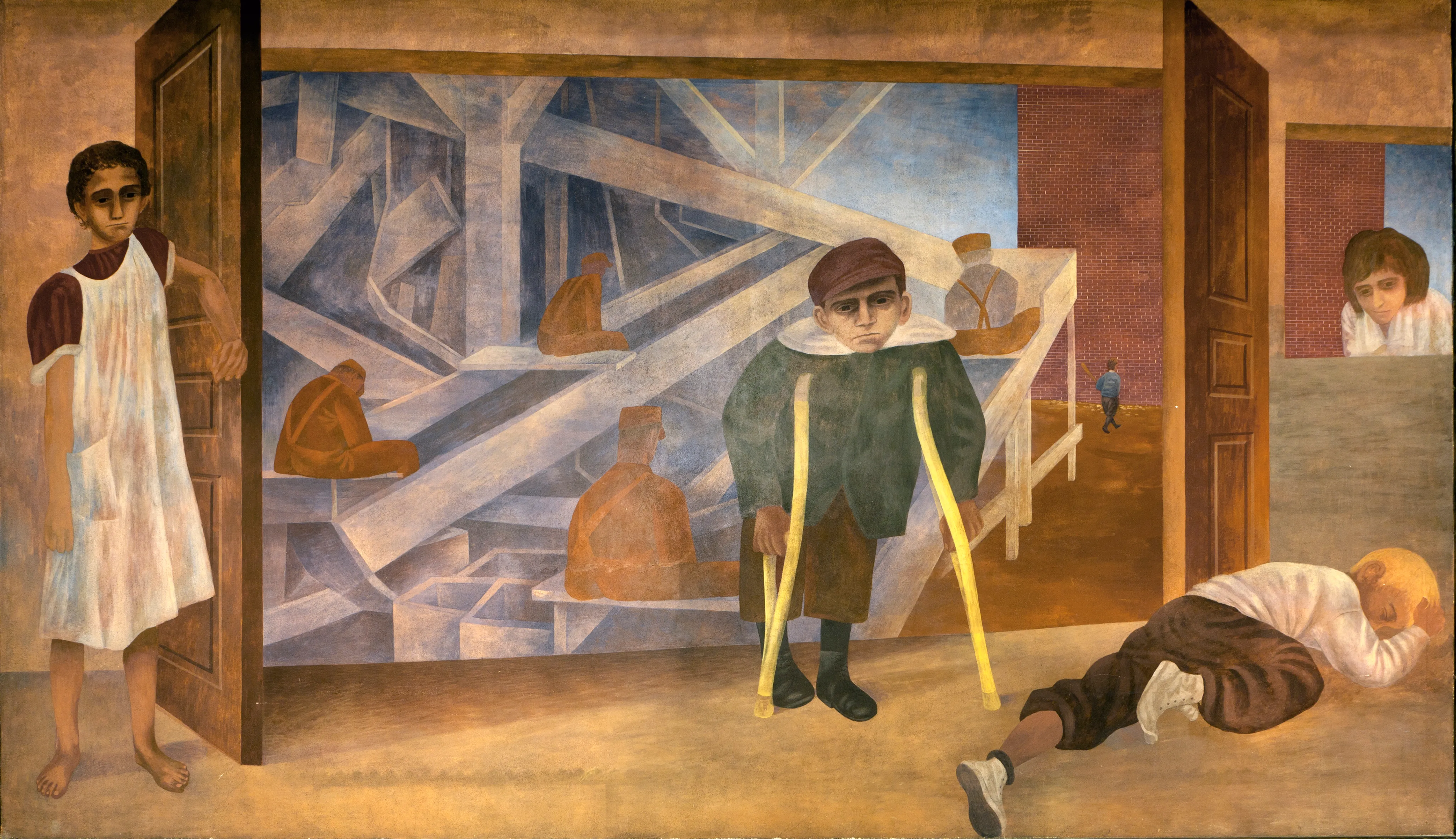

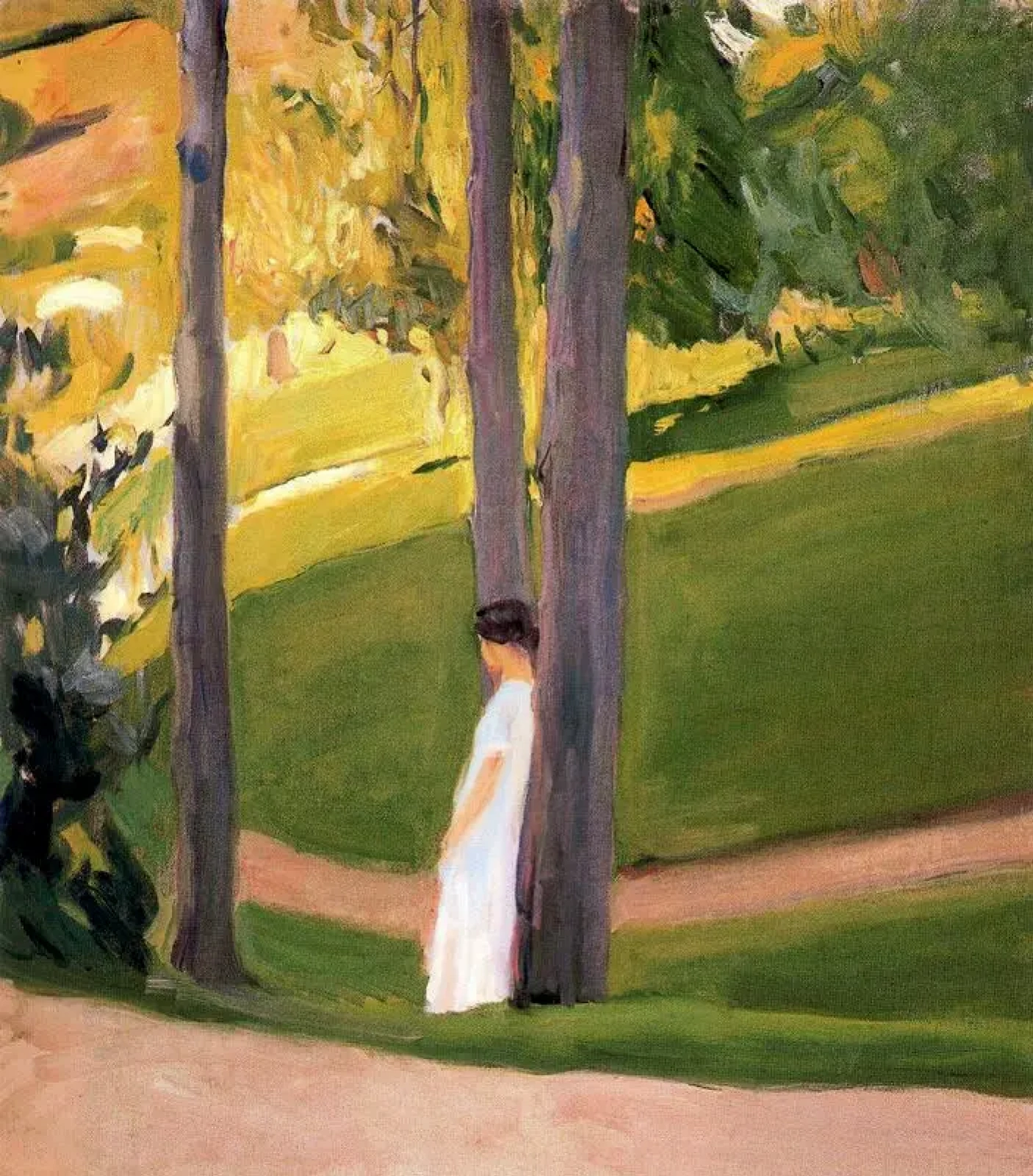
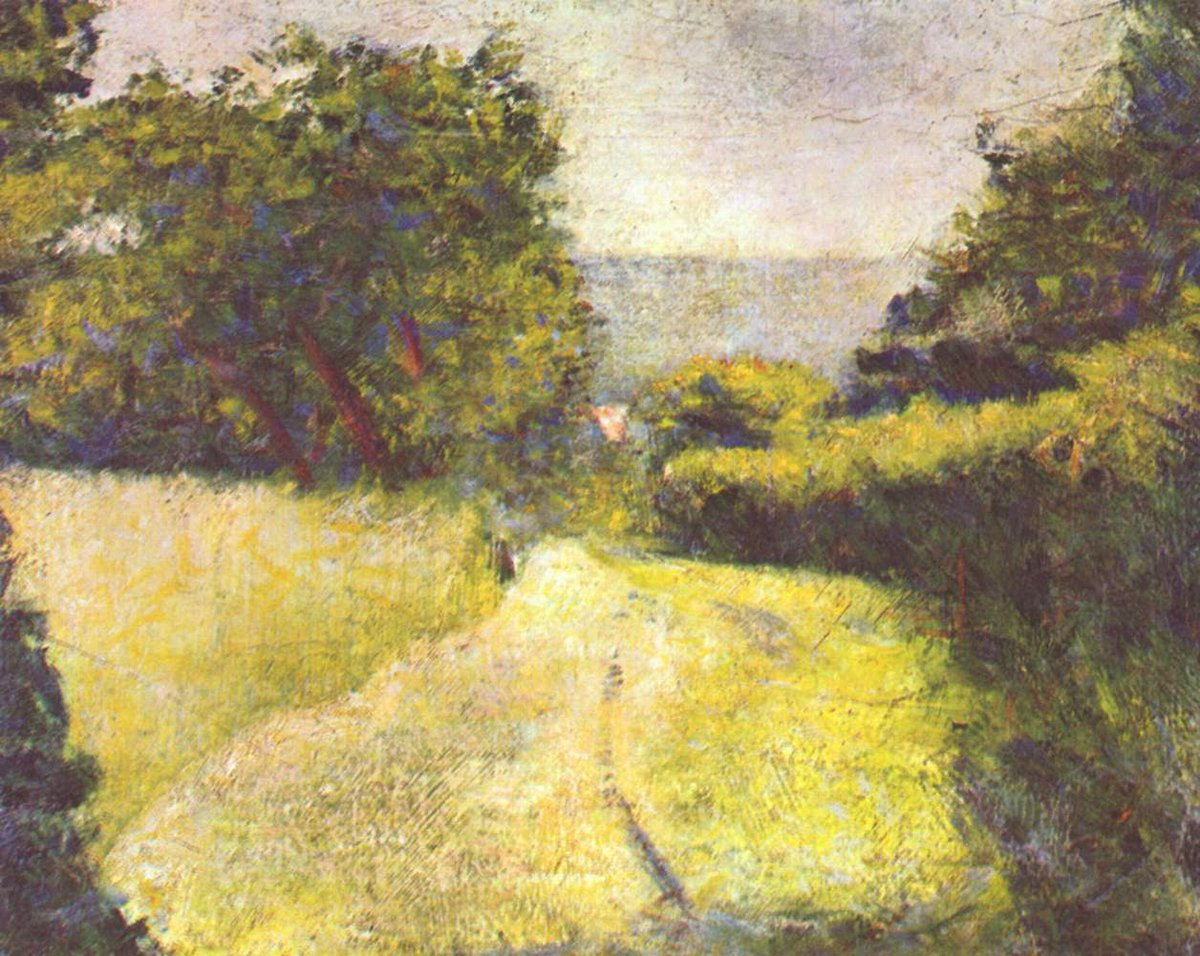








 Eiger, Mönch & Jungfrau