A Pure Soul: Robert Seethaler’s A Whole Life (2014)

I’m always urging my students to be governed by the principle of interpretive charity. I want them to take the text for what it is, not what it could or ought to be. I want them to be able to explain what makes the works they’re studying what they are. I exhort them not to smooth away the strangeness of the books we read. And although I believe our emotional responses to books matter a lot, I also think our primary task isn’t to grade them, to give them a thumbs up or thumbs down.

Usually I follow this advice here at the blog. Today I’m going to ignore it.

I can’t remember now where I first heard about Robert Seethaler’s Ein ganzes Leben, translated by Charlotte Collins as A Whole Life. Probably on Twitter, where else do I hear anything these days? As an Albertan of Swiss heritage, mountains run deep in my blood, so a novel about a man who with one important exception spends his entire life in a remote valley in the Austrian Alps seemed like just my thing.

So obviously I snapped up the book when I came across it on a recent trip to Canada—it will be published in the US later this year—and I read it in a couple of sittings this weekend. (It’s really a novella, not even 150 pp in this generously spaced edition.) Although the ominous words “The International Bestseller” on the front cover put me on my guard, I started the book, as I do almost every book, prepared to like it.

That didn’t last long.

A Whole Life is an example of my least favourite genre: worthy middlebrow pap. I can only imagine Thomas Bernhard, probably the greatest Austrian writer since the war, author of plenty of books set in the Alps, fulminating against it, though he’d probably decide it wasn’t even worth his time. It’s possible this book will soon disappear into the oblivion it deserves. But I can imagine it becoming a “surprise hit,” “the most talked-about book of the season,” “a darling of book clubs everywhere.” I’m the sort of person who burns with rage in anticipation of things that might not happen. I’m ready for people to tell me how moving and beautiful and life affirming they found A Whole Life, how I simply have to read it. I’m ready for the book to be an undeserved success. Hey, haters gonna hate.

s-l300

A Whole Life is about Andreas Egger, who arrives as a small child at the beginning of the 20th century in the unnamed alpine valley that becomes his home. The boy is unceremoniously deposited with a small-minded, vicious farmer named Hubert Kranzstocker. Egger is the child of one of Kranzstocker’s sisters-in-law, whose dissolute life in the city (which is to say, her life in the city) has led ineluctably to her death by consumption. Egger never really becomes part of his adopted family, he’s more hired hand than anything, which is lucky for Kranzstocker, whose other children aren’t very good at farm work and have besides a worry tendency to be felled by childhood diseases. Egger, by contrast, is strong, so strong that he survives the beatings Kranzstocker metes out to him, even when Kranzstocker goes too far and breaks the boy’s leg, an injury that leaves him crippled.

Seethaler has no time for lingering—the point of his book seems to be that everything passes if you’re stoic enough—and so before long we’re following the adult Egger as he builds a small home for himself high up the mountain on a bit of grass too rocky to pasture any animals on. In short order he tentatively courts the new serving girl at the inn, marries her, and takes on more permanent work with Bittermann & Sons, a construction and blasting company recently arrived in the valley to build its first cable car.

We’re in the early 1930s now and the most interesting parts of the book are the descriptions of Egger and his mates at their dangerous work of modernization. Unfortunately, Seethaler isn’t really interested in cable cars as anything more than a symbol, so these descriptions are far too cursory. Nothing here to match, for example, Philip Roth’s description of the glove-making factory in American Pastoral. You won’t learn how to build a cable car from this book.

After a terrible accident destroys his brief domestic happiness, Egger has nothing but his work to console and occupy him. His wife’s death sends him into a kind of fugue state that might be one way of explaining why we never hear any reference to events in the world beyond the valley until one evening Egger enters his boarding house to find his landlady crying before a silent wireless set, which is strange because “at this hour [it] was usually blasting out brass-band music or Adolf Hitler’s furious tirades.” War has been declared; Egger tries to join up (we’ve no idea why) but is rejected because of his leg.

But three years later even crippled men are being conscripted. Egger is sent to the Caucasus because of his expertise in mountain engineering. There he’s ordered to man a remote outpost where he never fires a shot, and which he leaves once his supplies are no longer replenished weekly, an ominous sign he rightly interprets as  an indication that things are not going well for his side. On the way back to the front, he’s captured by Soviet forces and spends several years as a POW.

Egger isn’t able to return home until 1951, but the years pass so briskly it doesn’t seem that much of a hardship. Here for example is Seethaler describing how nothing changes for Egger and his fellow prisoners once the war ends:

The work remained the same, the millet soup was thinner than ever, and the flies still circled unperturbed around the beams of the latrine.

A page and a half later we’re given this meager summary—laconic to the point of bathos—of these years: “It was almost another six years before Egger’s time in Russia came to an end.” His time in Russia: as if it were fated or preordained. Everything in this book is described in the same clipped, blasé manner. It’s just one damn thing after another.

Returning home, Egger finds things only a little changed. The mayor doesn’t display swastikas anymore, but he’s still the mayor. Franzstocker is still around, but older and frailer and he dies before long. Bittermann & Sons has gone belly up, but Egger makes do on a war pension until he stumbles into a new career guiding tourists, a new breed of people called into being by those cable cars (and postwar affluence). Egger has always loved the mountains, feels better when he’s on his feet all day, despite his limp. Sometimes the tourists are annoying or irritating, spoiled or sententious or smart alecky, but mostly they’re grateful for the beauty he shows him and besides we never have much sense of what Egger thinks other than that he apparently doesn’t think that much, not that he’s stupid, just not reflective.

Wankbahn_poster

Egger keeps getting older. He misses his late wife, almost gets involved with an older female teacher but can’t. (Her response to his spurning of her advances is the only moment of true emotion in this book. Too bad she disappears after only five pages.) Television is the latest thing, but it doesn’t do much for Egger. He remembers only two moments: one (sadly undeveloped, and not quite strange enough to be really interesting) showing Grace Kelly getting off a plane, the other the moon landing.

Egger gets too old to guide anymore and retreats to a little hut high above the village. One night in February, sitting by candlelight at his little table, thinking about the coming snowmelt, Egger is

overcome by a feeling of warmth at the thought of his leg, that piece of rotten wood that had carried him through the world for so long [a puzzling image, since his leg is not actually a prosthetic]. At the same time he was no longer sure whether he was still thinking this, or was already dreaming. He heard a sound, very close to his ear: a gentle whisper, as if someone were speaking to a little child. “I suppose it is late,” he heard himself say, and it was as if his own words hovered in the air in front of him for a few moments before bursting in the light of the little moon in the window. He felt a bright pain in his chest, and watched as his body sank slowly forwards and his head came to rest with his cheek on the tabletop. He heard his own heart. And he listened to the silence when it stopped beating. Patiently he waited for the next heartbeat. And when none came, he let go and died.

A good death for a good man. That “patiently” says it all, characterizes everything Seethaler wants to say about Egger. Not that he’s passive or a spectator in his life. (All the language of observing the self in this passage, all that out of body stuff, is actually quite unusual in the book, though again I don’t think Seethaler does anything much with it.) Egger’s end isn’t the book’s, though. Seethaler gives us a little coda, a story from a few months earlier, when Egger suddenly decides to take the bus to the town at the bottom of the valley. Here too nothing happens: he’s a bit disoriented, unsure what he’s done or why he’s come. After wandering aimlessly around the square for a minute, he is helped by the driver back on to the bus that takes him home and it’s not until he’s in the thinner air again that he recovers. Arriving home, he heads not for his hut but for the trails. He’s filled with a blurred nameless memory, probably of the opening scene, which describes a failed wintertime rescue of a different old man, one we are invited to see that Egger has become, an old man who deliberately lost himself in the snow rather than suffer any more. Egger responds to this “fleeting recollection of something very long ago, little more than a blurred image”: “ ‘Not just yet,’ he said, quietly.” And in this way the story of a good, unassuming life gets prolonged beyond its end. A quietly triumphant conclusion to this quiet book.

IMG_0318

Yet that very restraint seems to me nothing but self-satisfied bullshit. Take the book’s attitude towards history. I appreciate that it’s not constructed with the certainty of hindsight: this isn’t one of those historical novels where characters are always running into people or experiencing events that we’ve decided were significant. After all, what later generations decide to call history usually passes us by in the moment. So I’m willing to believe fascism passed Egger by. Well, I’m not, really–the almost total ellison of fascism is more than a little convenient. But what really gets me is the complete flattening away of history, the absence of any sense that what makes a life meaningful or what counts as suffering is historically inflected if not constructed. This absence makes the book so flat as to seem not even autistic, but catatonic. I can’t even tell if we’re meant to understand Egger as an average person, a representative man of the century. I think he’s supposed to be more than that, a kind of model we might aspire to if only we could make our own lives as simple as his. But it’s hard to know for sure because Egger is a total blank, not even interesting enough to be a cipher.

Seethaler’s narrative decisions are largely responsible for making Egger such a nonentity. We’re so seldom inside his head—so much so that I was drawn up short by this passage:

The weeks and months after the opening ceremony at the top station [the successful completion of the first cable car] were the happiest of Andreas Egger’s life. [The unnecessary use of his full name signals that what comes next might be free indirect discourse: we might be getting access to his interior life.] He saw himself as a small but not unimportant cog [that litotes doesn’t fit with his way of thinking and speaking—plus, a cog, get it? Just like he used in building the cable car!] in a gigantic machine called Progress, and sometimes, before falling asleep, he would picture himself sitting in the belly of this machine as it ploughed inexorably through forests and mountains, contributing, with the heat and sweat of his brow, to its ongoing advance. He had taken the words with the heat and sweat of his brow from a tattered magazine Marie has found under one of the benches in the inn, and from which she would sometimes read to him in the evenings.

That clumsy reference to “the heat and sweat of his brow,” that obstreperous explanation of how he came to use these words: this is the first time we’ve been led to believe that Egger himself is lending anything to the narration of the story. It feels unearned and unnecessary, a piece of authorial clumsiness that reminds me of the much later description of the day the schoolteacher rejected by Egger leaves the village:

One cold morning, before sunrise, she climbed aboard the post bus with two suitcases, sat down in the back seat, closed her eyes, and, as the driver later reported, didn’t open them again once throughout the journey.

Seethaler is so keen to make a point about the woman’s utter defeat—the possibility that those close eyes could indicate resistance never enters into the picture—that he’s willing to offer this implausible description: no one driving a bus down a mountain road would be looking at his passenger the whole time. The sentiment is uttered only for us; Seethaler doesn’t even try to make it organic to the story.

A Whole Life studiously rejects reflection—the closest we get is the dime-store existentialism of Egger’s sudden outburst to a tourist he’s had to rescue from near death, “Each one of us limps alone!” One night Egger awakes suddenly to find his window “clouded by hundreds of moths”: “For a moment Egger thought their appearance must be a sign, but he didn’t know what it was supposed to mean, so he closed his eyes and tried to go back to sleep.” I don’t think the book is poking even gentle fun at him here. It’s not that he’s dim, not that he’s missing out on some significant, even portentous moment. There’s really nothing to make of that evanescence.

In so steadily agreeing with Egger’s even-keeled banality, the book ends up presenting him as an exemplar of a life well lived. Early in his days on the cable car, Egger falls in with a would-be philosopher named Mattl. Mattl dies an absurd death—he falls asleep in a bath tub and catches pneumonia—and the foreman, who hardly knows him “cobble[s] together” a short funeral address, “which talked about the hard work on the mountain and Mattl’s pure soul.” The foreman is being disparaged here, but Seethaler ends up presenting exactly what he’s ironized, giving us a story of hard work on the mountains and Egger’s pure soul.

To paraphrase that peerless old New Yorker cartoon, I say A Whole Life is nothing but unearned redemption and I say the hell with it.


Tall Lady, Eating Sandwiches: The Pickwick Papers (Installment 1)

Behold the Stars has organized a readalong of The Pickwick Papers, timed to the publication of its first installment in March 1836. Readalongs and the academic schedule don’t mesh well, but the idea here is to read the book as it was first published, that is, according to its original publishing schedule. It means taking a year and a half to read the book, but I figure even I can manage the 50 pages or so each month.

So I’m giving it a try.

I’m hardly an expert in Dickens, having only read Great Expectations, Bleak House, Nicholas Nickleby and, long ago, so long ago I remember nothing but that 19th century Madoff Mr. Merdle, Little Dorritt. Oh, and the first third of Our Mutual Friend three times. (Story for another day.) Something about Pickwick always put me off. I had the impression it wasn’t really a novel, or that it was more like something from the 18th rather than the 19th-century. I thought it would be hard.

But I read the first two chapters—the opening installment—over the weekend. They’re wonderful! If the other 700 pages are anything like them, this has got to be one of the greatest English books.

We begin with the proceedings of the Pickwick Club from May 12, 1827, where Samuel Pickwick, Esq., has just triumphed with his presentation of a brilliant paper on the origins of the Hampstead ponds, along with some observations on the creature he calls tittlebats and others persist in calling sticklebacks. So that the Club might continue to promote similar contributions to the study of science, the membership approves the creation of a Corresponding Society, a traveling subset of club members who will report back on their findings and adventures. I assume the rest of the novel will comprise those exploits.

At the head of this group, of course, is Pickwick himself—who I can’t help but picture as Sydney Greenstreet in The Maltese Falcon, even though I don’t think there’s any suggestion that he’s fat. The one who is fat is Tracy Tupman, ardent yet hapless lover of women everywhere. Joining them are the dreamy poet Augustus Snodgrass and the impetuous sportsman Nathaniel Winkle.

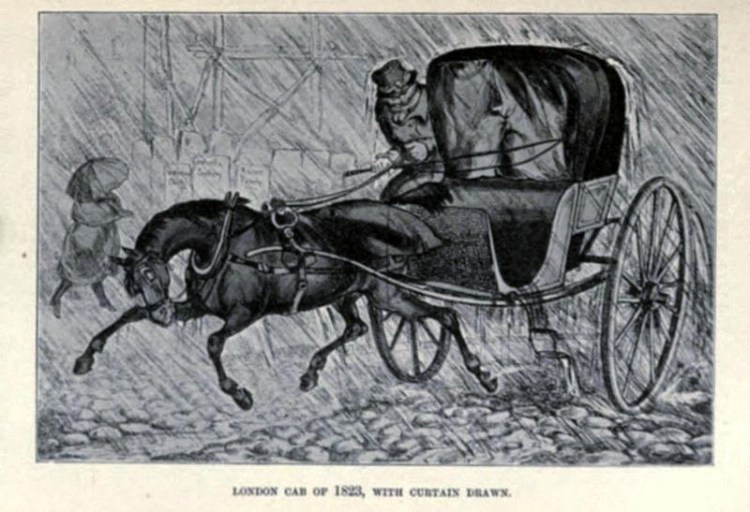
Things get off to a rousing start when the Club makes its first journey, to Rochester in Kent. Mishaps ensue even before they make it to the coaching inn: the cabbie takes exception when Pickwick records in his ever-present notebook the answers to the questions he’s posed to him, mistaking Pickwick’s dedication to increasing the store of human knowledge for the assiduity of an informer looking to find the cabbie in violation of the newly regulated hackney carriage business.

London+cab+c+1823+curtain+drawn-001

The cabbie, a nervous type, eventually challenges Pickwick and friends to a fight; a melee develops, from which our heroes are rescued only by a man known (so far, anyway) as the stranger, a man who, we learn in due course, is also, it turns out, traveling to Rochester. The stranger—I hope we learn his name, because I sure want him to stick around—has a richly elliptical way of speaking that is pure joy to read. Here he is reflecting, if that is the right word, on recent events at the coach-yard, which has a notoriously low archway:

Terrible place–dangerous work–other day–five children–mother–tall lady, eating sandwiches–forgot the arch–crash–knock–children look round–mother’s head off–sandwich in her hand–no mouth to put it in–head of a family off–shocking, shocking.

“Tall lady, eating sandwiches.” Perfect! The stranger, who might be a reprobate, or more likely simply blithely unconcerned by consequences, one of those people the world can’t seem to touch—maybe he’s a much more intelligent Skimpole?—joins the Club members for dinner once they arrive in Rochester.

A ball is about to begin in the room above the dining room and Tupman can’t stop thinking about the ladies who will soon be arriving. The wine flows freely, the stranger passing the bottle around at every opportunity. Eventually everyone but Tupman and the stranger fall into a stupour. The stranger admits that he too would like to go to the ball, but alas he has nothing to wear. (His belongings have been sent ahead of him; he is leaving England for some inscrutable reason, or maybe for a clearly stated reason that I can’t remember.) Tupman has a brainwave. Winkle has a new evening suit, made especially for members of the club, complete with a button bearing Pickwick’s visage and the letters P.C. to either side.

The suit fits the stranger just fine and the two have an excellent time, especially when the stranger cuts in on a little fat bald man, a Doctor Slammer, who has designs on a rich widow. As the stranger puts it: “Lots of money–old girl–pompous doctor–not a bad idea–good fun.” The stranger makes a fool of the brilliantly named Slammer, but Slammer gets his revenge when the next morning he sends a Second to the inn to challenge the man who insulted him. Of course, the stranger has disappeared and the Second, who doesn’t know the name of the man he wants, is able only to describe his unusual outfit. Said outfit is duly discovered in Winkle’s room, rather the worse for wear, as is Winkle, who can’t remember going to a ball or insulting anyone, but can only look at the state of the suit and assume the accusations are true.

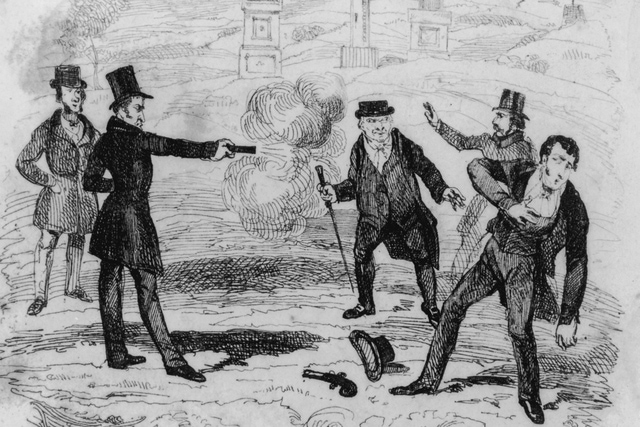
In a state of pitiable terror, Winkle acquiesces to the Second and prepares to fight a duel, which his own second, Snodgrass, feels confident about, given Winkle’s renown as a sportsman. Turns out, although Snodgrass never learns it, that Winkle doesn’t even know how to load a gun and the duel, which threatens to be very grim indeed, turns to comedy when, at the last minute, Slammer realizes that his opponent isn’t the man he wants. The men part amicably, with “cordial farewells,” even arranging to have dinner later. Perhaps the next chapter will include Slammer. Who cares if it doesn’t: Pickwick and the others are more than enough to go on.

Duel-19thcentury-crop

I’m sure I’m not saying anything new here, but reading Pickwick I suddenly realized: this is where P. G. Wodehouse comes from. (Wodehouse comes from other things too, of course: Jerome K. Jerome, Edwardian music halls, etc, etc.) There’s that same sense of a world that looks so much like our own but in which nothing bad can ever happen. Mishaps? Of course, there are plenty of those: mistaken identities, swindles, misunderstandings. But they all get resolved, and everything ends with a nice bit of supper. Of course, I could prove to be wrong about all of this. But the ironic narrative voice seems so Wodehousian (or, I suppose, Wodehouse so Dickensian, or, better, Pickwickian). Consider this sentence, for example. The stranger has just idly insulted Tupman, calling him a second-rate Bacchus:

Whether Mr Tupman was somewhat indignant at the peremptory tone in which he was desired to pass the wine which the stranger passed so quickly away; or whether he felt properly scandalized, at an influential member of the Pickwick club being ignominiously compared to a discounted Bacchus, is a fact not yet ascertained.

“An influential member of the Pickwick club,” “is a fact not yet ascertained”—the jokes are all the funnier for the gentleness of the expression here. We can see too that the novel is going to be interested in facts–what counts as one and what are they good for?


When Behold the Stars announced this readalong, Amateur Reader said it would be hard for participants to limit their reading only to the assigned chapters. Too true!

Let’s see if I have the willpower to stick to schedule.

“Even Stranger”: Two Serious Ladies

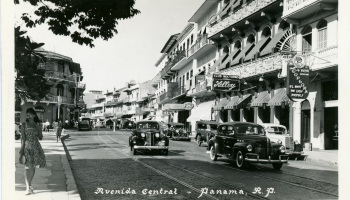
 Mr. and Mrs. Copperfield had gone over to Panama City for two days. The first day after lunch Mr. Copperfield proposed a walk towards the outskirts of the city. It was the first thing he always did when he arrived in a new place. Mrs. Copperfield hated to know what was around her, because it always turned out to be even stranger than she had feared.

Coming to Jane Bowles’s only novel, Two Serious Ladies, I didn’t fear it would be strange. But I certainly found it to be strange. I don’t think Bowles intended this passage, which for me centers on that comparative adjective “even stranger,” as a description of her novel, any more than Mrs. Copperfield is an advertisement for ignorance. It doesn’t take us long, after all, to see that Mr, Copperfield, like all the men in this novel, is caught up in his own brutish self-righteousness. His spirit of adventure is a lot less interesting than he thinks it is. It’s not that the novel is advocating being afraid, only that it admits that for women, even wealthy and eccentric women like the ladies of the title, there’s quite a lot to be afraid of, mostly men and their violence and neediness. Mrs. Copperfield, in other words, is much shrewder than almost anyone gives her credit for.

The Serious Ladies of the title are Christina Goering—impossible, in a novel published in 1943, not to hear an ominous echo of fanaticism in that name—and Frieda Copperfield. They know each other slightly, and near the beginning of the novel even meet at a party in New York. Mrs. Copperfield is about to leave on the trip to Panama referenced in the passage I’ve quoted above. Miss Goering has just taken on a female companion, a Miss Gamelon, who she will eventually be quite mean to. Goering and Copperfield run into each other again at the end of the book, but one of the things I liked about it is that it doesn’t spend much time making parallels between them, beginning with its narrative structure, which quite favours Goering’s story over Copperfield’s. I found that a pity, since I much preferred Mrs. Copperfield to Miss Goering, but I appreciated the (at least apparent but actually I think quite sincere) casualness, even haphazardness of the book’s structure.

I confess I’ve never actually understood what a picaresque novel (technically a solecism, I suppose—a picaresque isn’t a novel, it’s another literary form altogether, right?) but I think the term applies here. It really was never clear to me why characters did the things they did, this despite but perhaps ultimately in keeping with Miss Goering’s claim that something she is about to do “is against my code, but then, I have never even begun to use my code, although I judge everything by it.” There’s the sense here of a moral imperative, however inchoate, a desire to push established ways of behaving to a limit. Taken out of context, Goering’s comment about the code she never uses but judges everything by sounds a little arch, like something from Wilde. But the book isn’t arch at all. In fact, I’m not quite sure how to get a handle on its tone., and in the end that might be the thing that bothers me the most about it.

Miss Goering takes up with one man after another, each worse to her than the last, and leaves the city for increasingly precarious and transitory living situations. Mrs. Copperfield abandons her husband to live in a Panamanian brothel, befriending its alcoholic owner, Mrs. Quill, and one of the prostitutes who live there, Pacifica. In the loveliest scene in the book, Pacifica takes Mrs. Copperfield to an isolated beach where she tries to teach the terrified older woman how to swim. It’s an idyll of sorts in a book that doesn’t hold much truck with anything that gentle, though it’s also a sad scene, foreshadowing the falling out between the two women by the end of the book.

2013-8-44front


Two Serious Ladies quite bedeviled me. I’ve written before about the risks of thinking of books as sui generis. What that often means is that we haven’t valued their context highly enough. But even though neglected Anglophone women writers of the 20th Century are my bread and butter, as it were, nothing I knew helped me to categorize Bowles’s novel. So many of the writers I love—Jean Rhys, Barbara Comyns, Rebecca West, Penelope Fitzgerald—would seem to be close kin to Bowles. But I didn’t find that to be the case. Maybe it matters that Bowles was American and the others weren’t. I did compare her fleetingly to Kay Boyle, but the comparison is mostly to Bowles’s credit. She seems both more viscerally clear about the dangers of authoritarianism than Boyle (it took her a while to come around) and less obviously in thrall to an aesthetic of high modernist seriousness. As I think about it now, Bowles strikes me as much less invested in a tradition of literary realism than those other writers, even though they all, in their different ways, contested it, mostly by having recourse to the Gothic tradition that has always been the doppelganger of English-language realism. Bowles is doing something else, but I can’t figure out what. It matters a lot, I think, that unlike the women in Rhys and Comyns’s novels, especially, money insulates them from the patriarchy’s harshest depredations. Goering and Copperfield can be more overtly in control over their own lives than the protagonists of those other writers’ books. But just because they’re financially independent doesn’t mean they know who they are.

*

The longer I blog—and WordPress tells me it is exactly two years ago today, in fact—the more I’m convinced that I only really care to write about things I really like. And so I’m a bit hamstrung by Two Serious Ladies. If I hadn’t agreed to participate in Dolce Bellezza’s readalong I probably wouldn’t have written about it. And even then I don’t know if I would have had I not read Seraillon’s wonderful & intelligent piece.

It’s always a pleasure to read criticism where the subject clearly resonates with the critic. Although Scott’s post confirmed for me that Two Serious Ladies didn’t speak to me in that way, it also opened up the possibility that I might change my mind. Frankly, it’s unlikely I’ll read this book again anytime soon, but because of the carefulness of his reading I can imagine wanting to do so. All of which is to say, read his post, and those of the others taking part in the group. If you’re like me, you’ll be amazed and grateful that thanks to the glorious strangeness of the Internet you can always find someone out there who has understood something more richly than you have.

A Pattern of Magical Balances: Doris Lessing’s In Pursuit of the English

I just read In Pursuit of the English, a wonderful memoir-of-sorts by Doris Lessing. I think I liked it more than almost any of her books (and I’ve read quite a few, though by no means all, even most). I wonder why it’s not better known.

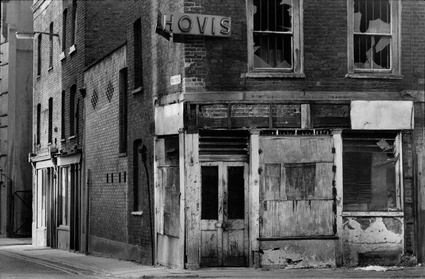
meHovis8ss-jpg

It’s about Lessing’s first year or so in England, where she arrived in 1950 with her little boy Peter from her home in Rhodesia. The English, we soon learn, are a fantasy or mirage that differs depending on one’s perspective. The English in Africa are one thing entirely—a unified presence with mores that puzzle Lessing even before she arrives—but the English in England are something else altogether. Especially since Lessing arrives in London, and Londoners, she learns, at least the East End Londoners she lives among, don’t consider themselves English.

Most of the book is about the boarding house she finds a room in. Which isn’t an easy to do in bombed-out London—even some of the floors in the place she ends up in are closed off and filled with rubble. Lessing becomes involved with the people who live in the house, especially the couple who own it. Although the welcome is for the most part warm, she finds she has to learn what the English novelist Henry Green once called “the half-tones of class.” As a colonial subject, she doesn’t quite know how to navigate in this new world

Throughout I kept thinking about the Maison Vauquer from Balzac’s Le Pere Goriot. Especially because perhaps even more than in Balzac the physical qualities of the building itself are important to Lessing—almost as much as the people who live in it.

All of which made me think about what kind of a book this is. For the most part it’s written in a realist mode, almost ethnographic. Calling it a memoir doesn’t really seem right, since Lessing is so reticent about herself. But at times it slips into a different mode, something more fantastic or magical. Here’s a passage that really struck me. Lessing has taken a cramped room in the attic—only later does she realize it’s really a garret—and she has her eye on a much better room three floors below. She enters into a tense war of nerves with the landlady. In the midst of these negotiations comes this surprising and beautiful description:

Under the roof it was like sitting on top of an anthill, a tall sharp peak of baked earth that seems abandoned, but which sounds, when one puts one’s ear to it, with a continuous vibrant humming. Even with the door shut, it was not long before the silence grew into an orchestra of sound. Beneath my floor a tap dripped softly all day, in a blithe duet with the dripping of the tap on the landing. Two floors down, there the Skeffingtons lived, was a radio. Sometimes she forgot it when she went to work, and, as the hours passed, the wavelength slipped, so that melodies and voices flowed upwards, blurring and mingling. This sound had for accompaniment the splashing water, like conversation heard through music and dripping rain. In the darkening afternoons I was taken back to a time when I lay alone at night and listened to people talking through several walls, while the rain streamed from the eaves. Sometimes it was as if the walls had dissolved, and I was left sitting under a tree, listening to birds talking from branch to branch, while the last fat drops of a shower spattered on the leaves, and a ploughman yelled encouragement to his beasts in the field over the hill. Sometimes I put my ear to the wall and heard how, as the trains went past and the buses rocked their weight along the street, shock after shock came up through brick and plaster, so that the solid wall had the fluidity of dancing atoms, and I felt the house, the street, the pavement, and all the miles and miles of houses and streets as a pattern of magical balances, a weight-less structure, as if this city hung on water, or on sound. Being alone in that little box of ceiling board and laths frightened me.

I love the way this passage slips between dream and reality, between present and past, between Africa and London, between gentleness and fear. Sometimes Lessing is a gruff writer, so matter of fact that her prose can be boring. But she’s so smart and sometimes that acuity is transferred to her prose. Everybody in London at this time knew only too well how solid building could dissolve, become as fluid as dancing atoms. The sociological despair of a very slowly rebuilding London is here transmuted into a psychological or private fear. I don’t know if that’s progress, but I like the way Lessing keeps things unsettled in this book. Houses, places to live in, are important in many of works, now that I think about it: The Fifth Child, The Good Terrorist, even her wonderful first novel, The Grass is Singing.

2015 Year in Reading

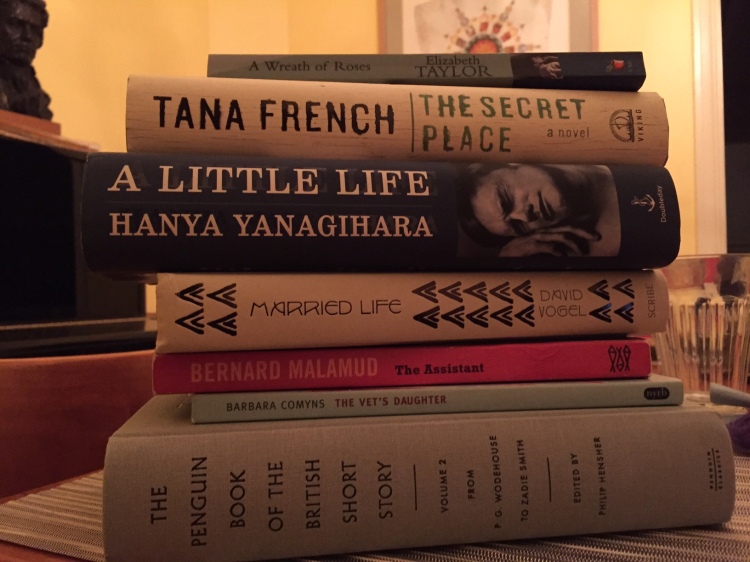
2015 was a good year in reading. Better than 2014, though nowhere near the annus mirabilis of 2013 (pre-blog, alas). I read 80+ books. Here are the ones that most stayed with me:

IMG_0288

A Little Life—Hanya Yanigahara

The reading event of the year for me. Everyone has an opinion about it, and they’re mostly strong opinions. I understand the main objections—it’s too long, it’s indulgent, it gets off on abusing its main character and even maybe its readers, its prose is sometimes clunky, even embarrassing—but I don’t feel them. These days I struggle to keep my attention away from my phone, social media, hockey scores, you name it. Sometimes I worry I don’t have the reading stamina I used to. In this regard, A Little Life was a gift: an intense, immersive reading experience that captivated me not just for the week of the reading but throughout the whole year. I wrote about it here.

Married Life—David Vogel

Written in Hebrew and published in Vienna in 1930, this is an extraordinary book that expands our sense of what European modernism was all about.

If I read Hebrew, I would write Vogel’s biography. Born in the Pale of Settlement, Vogel made his way via Vilnius and a brief stint as a yeshiva student to Vienna just in time to be interned as a Russian citizen during WWI. After the war he loafed, nearly penniless, in Vienna’s cafes, finding a little translation work and writing his first poems and novellas. He immigrated briefly to Palestine in the late 20s but Zionism never held much appeal for him and he returned to Europe, eventually finding his way to Paris in the early 30s. Tragically he was interned in the next war, this time as an Austrian citizen, and was deported via the infamous transit camp at Drancy to Auschwitz where he was murdered in 1944.

In Married Life the poor but promising writer Rudolph Gurweil meets the impoverished and rapacious aristocrat Thea von Takov and falls immediately under her spell even though he’s not sure he likes her very much. The two marry after only kowing each other for a few weeks and things go badly from the start. Thea converts to Judaism to marry Gurweil but among other things she’s a terrible anti-Semite. The novel is a drawn-out depiction of a disastrous marriage, but it’s also a glorious depiction of shabby Jewish Vienna.

I started a review and got sidetracked. I’d really like to finish it. If it got this book even one more reader it would be worth it.

Heartfelt thanks to heroic translator Dalya Bilu and to Australian-based Scribe for publishing this masterpiece, not least in such a gorgeous edition.

The Vet’s Daughter—Barbara Comyns

Wonderful, heartbreaking novel about a young woman who levitates. I wrote about it at length here and my appreciation only increased when I taught it this fall. Happily, my students loved it too; I received several excellent papers about it. I’m about to write more about Comyns myself. More on that soon, I hope.

The Heat of the Day—Elizabeth Bowen

The same students who enjoyed Comyns did magnificently with this marvelous novel of the Blitz and its aftermath. The course is on Experimental 20th-Century British Fiction, and I hadn’t taught Bowen for a while (six years, in fact), after my previous attempt at teaching her failed spectacularly. I finally worked up the courage to try Heat again, and am so glad I did. It helped, of course, that this was a particularly strong group of students. It was really fun helping them work through Bowen’s famously thorny sentences. To the North might still be my favourite Bowen, but this novel about lying to one’s self and to others is one of her best. I often grumble about how teaching gets in the way of reading. But sometimes the chance to return to the same set of books is a joy. As Roland Barthes once said, those who don’t re-read are doomed to read the same text over and over again.

Bernard Malamud

Another one from the teaching files, at least in part. I taught an introductory level course on short fiction this fall. (For a while I blogged about it regularly—the first installment is here, if you’re interested—but eventually I capitulated to the semester’s demands and gave up.) The touchstone text was Malamud’s first collection, The Magic Barrel. I’d taught these marvelous stories before but it had been a while and found I liked them even more this time.

I’ve always loved their enigmatic qualities, and had long been curious whether his novels were like that too. So I read The Assistant over Thanksgiving (I started a post on that too which I also failed to complete). It tells the story of Morris Bober’s struggle to eke out a living from his small grocery store in a poor part of New York, a struggle that only deepens when he takes on a drifter as a de facto assistant. It is also one of the most depressing books I’ve ever read, with a scene that genuinely shocked me. Malamud’s stories are hardly heartwarming, but they have a lightness missing from this novel. Absolutely worth reading, though.

Various short stories

The Penguin Book of the British Short Story—Philip Hensher, Ed.

As I said, I taught a lot of short stories this fall, and in the process I remembered how much I love the form. Edith Pearlman, Katherine Mansfield, and D. H. Lawrence were particular favourites. I also want to tip my hat to this wonderful two-volume edition of short stories edited by Philip Hensher. I’ve got volume 2 (they’re only available in the UK and a bit pricey but the production values are amazing) and I’ve only read a handful of the stories. But the roster is exciting; not just the usual suspects. Hensher plowed through a ton of late-19th and early-20th century magazines and has found some amazing stuff. I especially like one by “Malachi” (Marjorie) Whitaker, called “Courage”: it’s going straight on to the Spring syllabus. Hensher’s introduction makes a fascinating case for why Britain produced such good short fiction in the years 1890-1940 and why economic and structural conditions make it unlikely for the form to flourish in the same way again (which isn’t the same as saying there are no good instances of the form today: volume 2 goes from P. G. Wodehouse to Zadie Smith). Please Penguin, bring this out in the US.

The Book of Aron—Jim Shepard
A Brief Stop on the Road from Auschwitz—Göran Rosenberg

Holocaust literature is central to my teaching, and so also to my reading. These two books impressed me this year, the first a novel of the Warsaw Ghetto that I wrote about at Open Letters Monthly and the second a second-generation memoir that I reviewed at Words without Borders.

Death of a Man—Kay Boyle

Thanks to Tyler Malone of The Scofield I learned a lot about Kay Boyle this year. The best thing I read by her was a heartbreaking early story about failed pedagogy called “Life Being the Best” (read it!), but the book I spent the most time with was this 1936 novel about an American heiress who falls in with fascist sympathizers in pre-Anschluss Austria. I can’t say I liked the book all that much, but I was utterly fascinated by it and I enjoyed wrestling with its slippery politics. You can read my essay, along with many other wonderful pieces, here.

A Wreath of Roses and Blaming—Elizabeth Taylor

These are two of the best books I read this year, but they’re wrapped up in guilt for me because I promised someone a piece about them and never delivered. (Not yet, anyway…. I still want to, though!) I’ve loved everything I’ve read by Taylor, but these are the best of the bunch. Blaming (1976), her last book, is about what happens to a middle-aged woman after the unexpected death of her husband. It manages to be both rueful and acerbic. A Wreath of Roses (1949) is a masterpiece and if it were in print in the US I would have taught it this semester for sure. Less histrionic than Bowen’s Heat of the Day but similarly a novel of what the war did to England, it’s also a story of female friendship that earns its epigraph from Woolf’s The Waves. Genuinely haunting: I read it in June and still think about it regularly.

The Secret Place—Tana French

French doesn’t need me to sing her praises. Everyone already knows she’s the best crime writer today. Some thought this latest book—for some unaccountable reason I held off reading it for almost a year—in the Dublin Murder Squad series a falling off, but I adored it. I especially loved the echoes of Josephine Tey’s Miss Pym Disposes. French is such a genius because she writes super suspenseful books that are ultimately about something quite different: they are fascinated to the point of obsession with the idea of friendship—interestingly, romance or sex features hardly at all—especially how friendship intersects with the partnership between detectives. Yet again French proves she writes vulnerable men better than anyone.

 *

Other good things: Vivian Gornick’s The Odd Woman and the City is a brilliant essay-memoir and I would have written more about it here but it’s late and I’m tired (the Open Letters piece is good, though); The Hare with Amber Eyes (again, everyone already knows it’s amazing—I most liked a surprising Arkansas connection!); Emma (enjoyed re-reading this and wrote about the experience here and here); bits of Balzac (the last 100 pp of Pere Goriot, which practically had me in tears; the scene in Eugenie Grandet when Eugenie wakes at night to see her father and his servant taking his gold downstairs: hallucinatory); Wilkie Collins (I liked both The Dead Secret and The Law and the Lady). Also, good light reading: Ben Aaronovitch’s Rivers of London (urban fantasy—smart and funny: read the first two this year and mean to finish the series in 2016); Hans Olav Lahlum’s K2 books (engaging Norwegian homage to Golden Age crimes, locked room mysteries and the like); Ellis Peter’s Cadfael books (read the first: surely the beginning of a beautiful friendship).

 *

Reading is a passionately solitary experience, but also a joyously communal one. That’s true (mostly) in my classroom and, increasingly, on social media and the Internet more generally. Sometimes I find the constant stream of books to read that come through my Twitter feed a little daunting, but mostly I’m thrilled to know that so much reading is going on, so vigorously and passionately.

Thanks to everyone who read this blog in 2015, especially those who encouraged me and prompted me to think harder or differently about the books. It is wonderfully strange for me to speak so much with people I haven’t for the most part even met about something so important to me.

Thanks too to those who published me this year, especially the wonderful people at Open Letters Monthly. Here’s to more writing next year, and of course to more reading.

Blunders: Emma, Volume II & III

More Emma. After stalling out for a few days in Book II—distracted mostly by Vivian Gornick: excellent, you should read her—I read the last 250 odd pages in two long sessions. Here are some thoughts on Volumes II & III, in unorganized sections since it’s late in the day, late in the year.

*

Something I noticed the first time I read Emma and which I’ve not seen elsewhere is the use of quotation marks around reported speech. I’m sure this simply betrays my lack of familiarity with 18th & early 19th Century literature. Here’s an example of what I mean:

“He [Frank Churchill] had seen a group of old acquaintance in the street as he passed—he had not stopped, he would not stop for more than a word—but he had the vanity to think they would be disappointed if he did not call, and much as he wished to stay longer at Hartfield, he must hurry off.”

I noted at least three instances of this quoted indirect speech, and I probably missed others. Is this technique specific to Austen (though I don’t remember it in any text except this one)? Or is it common to the period? If the latter, as I suspect, when did it go away? Does anyone know? Jenny? Rohan?

*

Frank Churchill is an interesting variant of a type we see elsewhere in Austen: the gallant charmer who turns out to be a cad. I’m thinking of Willoughby in Sense & Sensibility and Wickham in Pride & Prejudice. He’s not as bad as those two, he has more redeeming qualities, but he likes to talk, he’s vain (he goes to London to get his hair cut), he’s frivolous. Worst of all, he puts Jane Fairfax in the position of having to remain silent about their engagement and it’s hard to see how that marriage can succeed, despite various characters’ claims that Jane’s deep (and fairly annoying) goodness will leaven his lack of seriousness.

Churchill is good to Mrs. Weston, and I think we’re meant to take that as a mark in his favour. But Mrs. Weston’s discrimination is shown at times to be wanting. In that sense, she’s a good match for her husband, who I find an intriguingly ambiguous character. He’s a gossip, though not in a mean-spirited way, he just can’t keep anything to himself. He’s a little hasty when it comes to considering the consequences of actions or outcomes. (His wish that Frank and Emma get together is unable to come to terms with what the lovers would do with Mr. Woodhouse—his airy dismissal that young love will find a way isn’t very helpful.) But he dotes on his wife, and he seems to have earned his position in the world through hard work.

What I most wonder about Mr. Weston is why he’s so willing to let the Churchills take his son, to the point of letting them give the boy their name. I’m sure I’m being anachronistic in being a little shocked by this—what was the young widower to do with the boy? Yet of course the novel offers us a direct contrast in the figure of Mr. Woodhouse. He didn’t farm his children out when his wife died, though of course there is no family as rich as the Churchills in the picture. I suppose what I wonder is whether we ought to judge Mr. Weston for his decision—to see it as intimating his fecklessness—or to praise him for his practicality.

*

Emma wants us to think a lot about visibility and legibility. The two seldom map on to each other. Everyone sees everything, but they can’t read or make sense of what they see. Or, more accurately perhaps, they think they see everything, and this self-assurance is the reason they are often so blind. “Misunderstood,” “duped,” “mistaken”: these words and their variants reappear regularly. As does the word “blunder,” which, in a line I cannot find just now, Emma explicitly links to blindness—indeed, these words are apparently etymologically related.

austen_watsons_1-400x284

“Blunder” of course appears in the anagram scene, a private message Churchill sends Jane. But that isn’t it first appearance: we had already been introduced to it in a passage from Volume I I quoted last time, describing Emma’s dismissal of John Knightley’s suggestion that Elton is about to propose to her: “the blunders which often arise from a partial knowledge of circumstances.” By now we can see this phrase as something like the book’s motto.

I’m trying to get a handle on what blundering means for the novel. A blunder is a stupid mistake—and it’s the stupid part I’m wondering about. The coarseness or gaucherie that blunder connotes seems pretty judgmental. What sense of decorum, what ideal of grace and order is transgressed in a blunder? No doubt people have made something of the relationship between the highly structured dancing of the period and the social order or behavioural conventions that get trampled when someone makes a blunder. It’s probably important that a sure sign of Knightley’s decency is his willingness to dance with Harriet when Elton won’t.

*

I wondered last time whether our feelings about Emma would change as the book went on. And they do. We see Emma chastened. But do we see her subdued? She gets the man that long experience of reading novels, especially Jane Austen’s novels, will have prepared us to see is the right one for her. Our doubts about this May-December romance are in part alleviated when we see Knightley himself admitting to Emma that she could easily and rightly been put off by his lecturing her on how to behave. But only in part. There’s a disquieting sense, for me at least, no matter how much I like Knightley, and I like him a lot, we’re meant to after all, that he is there to school Emma. I think the novel manages to avoid this outcome, though only just.

As I said last time, Emma’s love for her father, whom it would have been so easy to dislike or leave behind, is always a clue to us that there is more to Emma than her self-regard and love of ordering others’ lives might suggest. I’m glad Emma isn’t totally redeemed, either. Austen handles the growing distance between her and Harriet brilliantly. Even when amends are made, wrongs redressed, there are some things that can’t be undone or made good. Whether Emma herself sees this is less clear. We’re left with a few suggestions that she doesn’t have full self-knowledge (though of course, she’s only 20): she manages to clear the air for her cruel behaviour to Miss Bates without ever directly apologizing. (We see the difference between Austen and Dickens in a character like Miss Bates: whereas Dickens would caricature her, Austen makes us sympathize with her even if we agree with Emma’s intemperate description of her on the ill-fated Box Hill excursion.) And she maintains a perhaps surprising degree of conservatism about class distinctions, though surprising perhaps only to us and not to Austen’s first readers. Here is Emma reflecting on what she calls Harriet’s “presumption” in thinking Knightley might be interested in her:

Who had been at pains to give Harriet notions of self-consequence but herself?—Who but herself had taught her, that she was to elevate herself if possible, and that her claims were great to a high worldly establishment?—If Harriet, from being humble, were grown vain, it was her doing too.

This criticism is supposedly directed at Emma herself but in actuality seems mostly directed at Harriet. (In a similar vein, I think Knightley gets off a little easy for not having to acknowledge that he might have encouraged Harriet, or, at least, that he might need to respond to or even acknowledge her misreading of his interactions with him. Harriet, in the end, simply doesn’t matter to Knightley, and the novel has no problem with that.) I don’t mean to suggest that Austen succeeded—if it ever was her aim—in giving us a heroine that nobody could like. But not liking Emma, or not liking her all the way, is one of the interesting results of the novel.

*

According to Juliette Wells in her uninspiring introduction—I really don’t think much of this edition, beyond the lovely cover—Austen advised her niece Anna on the latter’s own attempts at novel writing. Among other things, she encouraged Anna to restrict her focus: “3 or 4 families in a Country village is the very thing to work on.” On the face of it this seems a good description of Austen’s own work, Emma included. Highbury seems a closed society. Recall that isolation and insularity is what Emma fears at the beginning of the novel when her former governess leaves her. But it isn’t long before this self-contained community is breached by a number of outsiders: Jane, Frank, Mrs. Elton.

I want to end these overlong reflections with another breach, because it’s the hardest for me to get my head around. I refer to Harriet’s encounter with a group of gypsies as she and a friend walk home from the ball.

mandel-gypsies-color

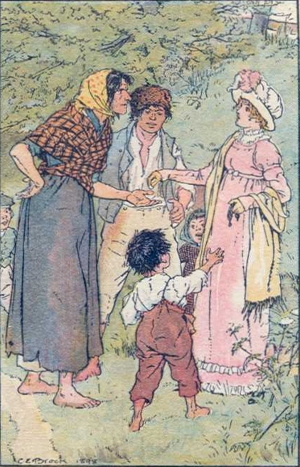
Emma’s not present: the first she knows anything about it is when Frank carries a nearly insensible Harriet into the grounds of Hartfield. We hear the story indirectly, how the girls came across the gypsies on an isolated stretch of roadway, how a child came out to beg, how the friend screamed and ran away but how Harriet could not because of a cramp in her leg from all the dancing, how Harriet was soon “assailed” by half a dozen children and how her decision to take out her purse and give them a shilling proved “too tempting”: soon “she was followed, or rather surrounded, by the whole gang, demanding more.” We hear too that just then Frank happened upon the scene; he terrorized the gypsies just as much as they had her. The outsiders run away and Frank brings her to safety.

Having only just appeared, and only indirectly at that, the gypsies disappear for good. Their only function is to provoke more of Emma’s misreadings: she is convinced that the encounter is a sign that Harriet ought to get together with Frank. But he is only on the scene because he is making his way to Miss Bates’s to return a pair of scissors he had borrowed the night before, a surprising suggestion even on a first reading, the full spuriousness of which we don’t realize until later, when we understand that he must have been trying to see that lady’s niece, his secret fiancée Jane Fairfax.

Noodling around online about this scene I came across this reading by Miriam Mandel, which emphasizes what Emma makes of the scene she didn’t experience. Emma announces that its meaning would be plain even to someone as imaginatively insensitive as a linguist, a grammarian, or a mathematician. And since she is herself a self-described “imaginist” she believes herself that much more likely to read the scene correctly, as foretelling a romance between Frank and Harriet:

It was a very extraordinary thing! Nothing of the sort had ever occurred before to any young ladies in the place, within her memory; no rencontre, no alarm of the kind;–and now it had happened to the very person, and at the very hour, when the other very person was chancing to pass by to rescue her!—It certainly was very extraordinary!

Mandel nicely points out the shifting referent of “it” in this passage. The first “it” is the encounter with the gypsies. The second is a more generalized “alarm.” The last exclamation might be the same as the first but the third “it,” Mandel plausibly suggests, refers to “the fortuitous conjunction of events and persons,” that is, to Emma’s own plotting.

But what, I wonder, does it mean for the story-teller, for the one who arranges events into an order that reveals a meaning imposed by the teller herself, to think so insistently about her own story? What does it mean that she arranges events so falsely? What does it mean for a story (Emma) to feature a story-teller (Emma) who keeps getting things wrong? And what does it mean for the audience to be complicit in these blunders? Everyone in the neighbourhood soon forgets about the gypsies—everyone except Emma and her little nephews: “Henry and John were still asking every day for the story of Harriet and the gipsies, and still tenaciously setting her right if she varied in the slightest particular from the original recital.”

The suggestion seems to be that as readers we are implicated in Emma’s failures. Does that mean we too mature by the novel’s end? And what, most importantly, about the gypsies themselves? They “did not wait for the operations of justice; they took themselves off in a hurry.” Just one of many instances in 19th Century British literature when gypsies are summarily dispatched after serving a narrative function—Maggie Tuller’s encounter in George Eliot’s The Mill on the Floss comes immediately to mind, but I bet there are plenty of others. I can’t help but feel, though, that the gypsies have been wronged in this story-telling. Unlike in other instances, the true story of the gypsies is never revealed. By which I mean, their side of the story goes untold. Here is another instance of a wrong that can’t be made right—but unlike Emma’s inability to apologize to Miss Bates or to Harriet, this time the book itself doesn’t see it as such, doesn’t even see it as a wrong at all.

A melancholy note on which to end. But fitting, maybe. Emma is delightful at times, and sprightly, and droll, and very smart. But it’s also melancholic and its happy ending feels quite muted to me.

Thanks to Dolce Bellazza for organizing this readalong.


Kevin Barry-Beatlebone (2015)

Do you hear whispers from back there, Cornelius?

Ah I would do. Yes.

You mean from an old life?

Back arse of time, he says, and gestures grandly with a sweep of imperious paw.

For a long time, like many people, I was obsessed with The Beatles. I don’t think I listened to anything else between the ages of 12-15 or so. Although I always knew which album was my favourite (Rubber Soul, natch), I wasn’t so sure about my favourite Beatle. Ringo was impossible, Paul sympathetic but in the end too sweet, George the one I eventually decided upon but only because it seemed a more recherché choice than the one who was from the beginning my actual favourite, John. He was the smartest, the funniest, the prickliest, the most sarcastic, the one who deadpanned his responses to the press: “How do you find America?” “Turn left at Greenland.” I loved him because he wasn’t easy to love.

Thinking back on it now, I wonder if the reason he would come to have a hold on me was that the announcement of his death was one of the first world-historical, if I can put it that way, events I remember. I was eight, and a friend of our family, the father of my best friend in my young childhood, the girl who taught me English, in fact, or so goes the family lore anyway, came to our house, presumably to pick her up but oddly I have no memory of her being there. Instead I remember him coming solemnly into our kitchen with his omnipresent cigarette and telling us Lennon had been shot and my mother giving a gasp and even—could this be right, it seems a bit melodramatic—crying a little.

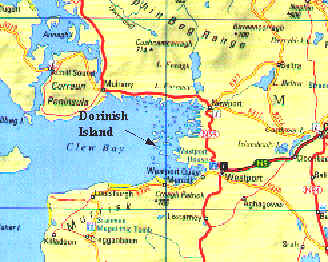
I’m telling you all this because I’m wondering if any of it unconsciously prompted my decision to read Beatlebone, the new novel from Irish writer Kevin Barry. It’s about a visit Lennon took in 1978 to the small Irish island he had bought on a whim in the 60s. The island, Dorinish, is real. And Lennon really bought it, in 1967 for £1550. Lennon visited the island a handful of times before turning it over to a group of hippies who lived on it in the early 70s.

DorinishMore

The trip described in the novel is fictional, but the story is based on aspects of Lennon’s life from that time. Barry imagines that Lennon has slipped away from his new family and life in New York to visit the island and have a scream (Lennon & Yoko Ono had undergone primal therapy with its founder, Arthur Janov, in 1970) in the hopes of getting through a fallow creative period.

I still like the Beatles well enough, though I hardly ever listen to them anymore. It’s enough that they inspired so much of the pop music I came to love later in life. Maybe I’ll come back to them if my daughter discovers them for herself one day. I used to know a lot about them, as much as one could pre-internet. But I’m no Beatles expert and in general I’m turned off by intense fandom.

I think that made me an ideal reader of Beatlebone. The novel has a pleasingly oblique relationship to its protagonist. It’s sympathetic but not hagiographic. Barry’s Lennon seems plausible. I can imagine this Lennon as the real John Lennon, and for some reason that matters though I don’t know why. There’s something interesting about what Barry does that I can’t quite put my finger on. I was always shuttling back and forth between things I knew about Lennon and this character. On the one hand, this Lennon was simply the novel’s John and I took him on his own terms. But on the other I could never forget the historical John Lennon. I don’t do this with other historical novels, maybe because I don’t know anything about Henry VIII or Thomas Cromwell, say, other than what I know from Hilary Mantel.

Something about this book is licensed—though how I couldn’t say—by our sense of the historical John Lennon. Certainly the knowledge of his death hangs over the book, not least because Lennon feels himself, at 37, as old and maybe even a bit finished, although Barry fortunately does not have him imagining or foreshadowing his own death. Maybe the reason for the uncertainty I’m feeling but struggling with naming is that Barry’s Lennon is always so unsure about his own identity.

The novel is mostly composed in dialogue, with some interior monologue and almost no narrative exposition. Much of its success comes from this structure, since it avoids the clunky integration of facts that bogs down most historical fiction. John’s life as a Beatle is rarely referenced. A brief reference to the Cavern Club in Liverpool aside, John doesn’t flash back to some moment with the band in the studio or on tour. What matters is his present life—he’s become a New Yorker, a stay-at-home dad, a man unsure whether he has any music left in him—and the distant past: his childhood and adolescence in Liverpool, and, perhaps most importantly, the time before his birth when his parents first met.

In other words, Barry manages to keep the Beatles (almost) out of his book. And when they do appear it’s as a joke: at the end of his Irish sojourn, on a country road in County Mayo, John meets a 112-year-old woman. He’s introduced to her as Kenneth, the alias he’s been traveling under, but she sees through him:

Have you been on the television?

Maybe I have.

When you were younger, she says.

Well this is it.

I’d recognise the nose, she says. You’ve a bit of weight gone off you since?

I’ve gone macrobiotic now.

There were four of ye, she says.

There were.

The leader was a beautiful-looking boy, she says. The big eyes like saucers and the song about the blackbird.

As this passage suggests, the glory of this novel is its dialogue. I kept hearing bits of Beckett, which is perhaps just to say that I kept hearing Irishness. Indeed, the novel cares a lot about what the Situationists called psychogeography, the effect of geography on our emotions and behaviour. In the first scene, Lennon abandons his chauffeured car in the middle of the countryside and lies face down in the soft rich dirt before turning to watch the coming of dawn: “John lies saddled on the warm earth and he listens to its bones.”  Bones are important to the novel. Bones are a source of meaning; in fact, they are a synonym for source, for ancestry. But bones are also remnants, signs of death and loss. Lennon’s father was Irish and Barry argues that Lennon was preoccupied with his Irish roots. But what John keeps thinking about while actually in Ireland is the way it calls up his hometown across the Irish Sea. He tastes the foods of his childhood—things he’s given up now that he’s “gone macrobiotic”—and hears hints of Scouse in the Irish accent.

The novel’s deepest and weirdest belief is that there are certain places where people can slip through time and enter the past. Lennon finds himself not just imagining but actually attending the scene of his parents’ courtship. Most startling is an admission Barry himself makes. About three-quarters of the way through the book he breaks from the story, incorporating a section about his process of writing of the book, which was premised on his desire “to spring a story from its places… from Dorinish itself—if I could figure out how to get there—and to be guided as purely as possible by the feelings that are trapped within these places, and by the feelings trapped within.” Places are like psyches—intense feelings are locked within each.

After a description of a notorious “time slip” on Bold Street in Liverpool—apparently dozens of people have reported being transported back to the street as it was in the 1950s—Barrry describes his own otherwordly vision in the near-deserted villages along the Irish coast. He saw a coven of women dressed in black materialize from thin air and wade through the waves, the mirror of a vision he has John remember having with Yoko the first time they visited Dorinish together.

8189968855_0779243d93_o_d

I’m not sure this section is entirely successful: it has a whiff of the sub-Sebaldian, complete with studiously artless black and white photographs. But I do think the book’s commitment to irrational, out-of-body experiences is fascinating. One scene is representative of this tendency: on the way to Dorinish, John’s handler, Cornelius O’Grady, deposits him on Achill Island to wait out a storm. The island is deserted except for an ancient hotel named the Amethyst now inhabited only by a Svengali-like guru and an impressionable young couple who are careering through a perverse (aka satanic) version of something like Janov’s primal therapy. In the book’s most amazing scene the trio seeks to convince Lennon to take part in their ritual. They alternate between seduction and menace: the whole thing is hair-raisingly ominous, like something from some of the stranger sections of Lessing’s The Golden Notebook.

dorini2

The guru and his followers are a more compelling but dangerous version of the journalists who have got wind of Lennon’s presence and are hunting him down. To escape these predators, Lennon strikes out alone on the island and ends up in a cave where he has a vision of all the creatures whose bones he imagines are buried in the sand—“Elkbone Wolfbone Sealbone.” Suddenly he has a vision of a new album, Beatlebone, nine perfect songs that will put his musical past to rest. We later get a glimpse of the recording sessions for this imagined album: nothing good seems to be coming from them, which is an odd note for the novel to strike, given how much it otherwise upholds the value of visionary experience. What would it mean for the product of Lennon’s ultimate artistic vision to be nothing but dull screeching?

This bathos is of a piece with the self-deprecation and irony that characterizes so much of the novel.

Take this conversation between Cornelius and John. Cornelius is describing a period in his life when he was addicted to cough syrup:

Jesus Christ. What does six cough bottles down the hatch feel like?

Like an eiderdown wrapped around yourself. It feels like goose feathers. It feels like mother’s love. No matter how hard or cruel the world or the night might be you’re… like a baby… kind of… What’s the word I’m after, John?

Swaddled?

Is right. Against all the harshness of the world.

Were there hallucinations, Cornelius?

Were there fucken what. I had a firm belief—this went on for months unending that a particular gap in the hill on the road towards the Highwood was a kind of wink at me. In the night, as I drove through. As if the mountain was marking the passage of time for me in a sort of cheeky way.

The gap in the hill was a wink?

Just so. In the headlights as I drove though

Cornelius?

John?

Oh nothing.

John’s inability to tell Cornelius about the extraordinary things he’s been experiencing—the landscape similarly alive and seeming to signal to him, the revelations about his distant past, his conviction that he is on the way to artistic renewal—fits with the book’s appealing modesty. Irrational power is everywhere, but it’s nothing to make a fuss about. We see Lennon scorn the idea that coming to terms with the death of his mother and the abuse from his father will help him to live as an adult in the present. But we also see Lennon turn again and again, and at the very end of the novel, too, to his parents, especially his love for his mother. We see any number of mystic or non-rational occurrences, but we also see a casualness about them, even a dismissal of them.

In the end, Beatlebone convinces readers that John’s time in Ireland, though hardly idyllic, is genuinely restorative. It is for readers, at any rate. This has everything to do with Cornelius, one of the most compelling characters I’ve come across in a while. Sometimes the novel hints that Cornelius is a figment of Lennon’s imagination, another part of him, maybe a better part, something like the nurturing parent to his vulnerable inner child. But happily the hints stay that way. Mostly we’re to believe in his reality, even if he is larger than life. He’s funny:

Could you handle a shave yourself, maybe?

I think maybe I could.

I see you go reddish in the beard?

When it comes through, yeah. I’m a gingerbeard.

I’m sorry for your troubles, John.

And he’s poignant. Here he is describing his father’s death:

How did it happen, Cornelius?

Well. In the same way that an old dog gets to a certain age and a level of disregard for itself and it just takes off some night into the bushes. My father heard what was coming for him. And we didn’t find him after, in the way you wouldn’t find an old dog—you just wouldn’t—because my father, I have no doubt, put himself in the sea. It was all his life nearby and it would have been an idea always of a way out. He would not have been the type to string himself from the rafter of a barn. He was considerate. There was no show in the man.

There was no show in the man. Beatlebone gives us one of the twentieth century’s greatest showmen—great because he was so ambivalent about the show, seeming to disdain it. Barry’s John is at times as unshow-y as Cornelius’s father, with whom he is associated because he’s forced to wear the dead man’s suit when his other clothes are ruined. At other times he is the petulant star, spoiled, frightened, at an impasse in his life, resentful of the Kate Bush hit that’s always on the radio and wondering if The Muppet Show will ever come calling again.


I don’t know what to say about this novel, exactly. I’m not sure it will stay with me for the ages, but I was absolutely absorbed in it while reading. I will say, though, that something of its belief in psychogeography worked its magic on me. In the past days I’ve returned again and again to our old kitchen, with its brown stools and ochre tile, and me sitting there watching my mother cook dinner and Ronnie, my friend’s dad, coming in and saying, with a kind of grim paranoiac fatalism that seems now as much a part of the 70s as the kitchen’s drab hues, “They shot John. They shot John too.”

One of Our Small Eggs Will Not Hurt You: Emma, Volume I

Dolce Belezza has organized a readalong of Emma to celebrate the 200th anniversary of its publication on December 23, 1815.

I’m a notorious bailer on readalongs: they always sound so exciting, especially as they often legitimate my buying yet another book. Then the demands of life and my seemingly constitutive inability to follow a reading plan—which is pretty rich coming from someone who designs syllabi for a living—get in the way. But this one coincides with the end of the semester, so I’m crossing my fingers I’ll actually keep up with it.

IMG_0281

Emma is divided into three volumes. Here are a few thoughts on the first.

I’ve read Emma before, quite a while ago now, thirteen years ago in fact. I know exactly because I read it in the weeks before I married my wife in August 2002. I don’t ever remember thinking it directly at the time, but now I fancy I must have made some unconscious connection between the weddings in Austen’s novels and my own. At any rate, I remember spending several pleasurable lazy days—of the kind available only to grad students, when you have almost nothing to do for years except of course for one big thing, a thing so terrifying it makes almost anything else seem a much better idea that must be pursued immediately—I remember several hot sticky air-conditioner-less days reading this novel on an old couch in the apartment that was about to become our apartment.

My memory of reading Emma is vivid. But my memory of Emma itself is not.

Maybe that’s because, as is clear to me now, Emma is a story about the failure of interpretation. It’s about missed clues and mistaken impressions. Which means it is made to be re-read even more than it is to be read.

It’s possible, of course, to see already on a first reading how closely the novel hews to its heroine’s point of view and that this point of view is dangerously misguided. It’s possible, in other words, already on a first go round to read against Emma rather than with her. But it’s impossible not to do so on a second.

That might seem a weird thing to say, since it’s not as though Austen is shy about Emma’s faults. Already on the first page, we read:

The real evils indeed of Emma’s situation were the power of having rather too much her own way, and a disposition to think a little too well of herself; these were the disadvantages which threatened alloy to her many enjoyments. The danger, however, was at present so unperceived, that they did not by any means rank as misfortunes with her.

Here the narrative voice is unusually distinct from Emma’s. It practically promises a comeuppance. We feel the full force of that famous Austen wit, gentle and forbearing but with a sting to it. “Real evils” isn’t just the pleasant exaggeration it might first seem. Emma has the power to do real harm, as we see takes on as a kind of protégé the young and naïve Harriet Smith and urges her to turn down a proposal from one Robert Martin, a man Emma deems beneath Harriet. For someone like Harriet, an illegitimate child of unknown parents, the loss of such a match, not least to someone as seemingly good-natured and besotted with her as Martin, is a serious loss. I say “seemingly’ not because I suspect he is in fact a bad guy but because I can’t remember the novel well enough to know if our opinion of him is going to change—and I’m always wary with Austen because our opinions of her characters are often forced to change. First impressions are usually wrong in Austen.

Emma has someone else in mind for Harriet, Mr. Elton, the unctuous and prepossessing local vicar. Emma is emboldened in her matchmaking by what she takes to have been her success at marrying her former governess, Miss Taylor, to a kindly, middle-aged widower, Mr. Weston. (Their marriage, and her leaving the Woodhouse establishment, much to Emma’s father’s mournful chagrin, is the book’s precipitating event.) It’s unclear whether Emma really had much to do with the success of the match, and so we should be suspicious of her efforts this time around. She’s easily able to get Harriet to fall for Elton, but it doesn’t take too long for us to realize—at least it didn’t take me long, this time around—that Elton cares for Emma herself, not Harriet. She devises all sorts of ploys to get the two of them together and never realizes they aren’t working.

For example, she allows herself to be persuaded to take up drawing again, in order to make a portrait of Harriet while Elton watches. She’d given up drawing, she says, when her attempt to draw her brother-in-law failed, before adding: “But for Harriet’s sake, or rather for my own, and as there are no husbands and wives in the case at present, I will break my resolution now.”

What follows is a classic instance of Austen’s irony:

Mr. Elton seemed very properly struck and delighted by the idea, and was repeating, “No husbands and wives in the case at present indeed, as you observe. Exactly so. No husbands and wives,” with so interesting a consciousness, that Emma began to consider whether she had not better leave them together at once. But as she wanted to be drawing, the declaration must wait a little longer.

I can’t decide whether the last line makes me like Emma more, or less. On the one hand, her selfishness—she wants to be drawing—is such that it gets in the way even of her plan. But on the other, her interest in the match isn’t purely mercenary, hasn’t consumed her entirely. What begins as mere stratagem becomes something she loses herself in. Here as elsewhere we see that figuring out how to understand Emma is our main task as readers.

If we don’t see these critiques of Emma the first time around—and maybe we do, they seem so obvious to me now, but I fear I missed them the first time—we are eventually helped by the novel to see that Emma is, in fact, misled about Elton. Her brother-in-law, the one who fussed about having his portrait done, tells her that Elton is behaving as though he is love with her. Emma brushes off the suggestion:

she walked on, amusing herself in the consideration of the blunders which often arise from a partial knowledge of circumstances, of the mistakes which people of high pretensions to judgment [her brother-in-law is a lawyer] are for ever falling into; and not very well pleased with her brother[-in-law] for imagining her blind and ignorant, and in want of counsel.

The joke of course is on Emma and Volume I ends with a lovely set piece at Christmastime, when the characters spend the evening with the Westons. It begins to snow and in all the haste of a hurried departure—everyone wanting to get home before the weather gets bad—Emma and Elton find themselves alone in a carriage. He wastes no time in proposing and each is equally amazed and hurt to find how the other has understood matters.

Austen is not always so overt in her narrative irony—and part of me wonders whether the passage about “the blunders which arise from a partial knowledge of circumstances” won’t later be subjected to further revision. That is, will we be led to read this passage in yet another way, in light of events yet to come? Will Emma prove to be a better interpreter of the world than this initial interpretation suggests? How subtly Austen’s works open up to reveal a vertiginous landscape of dizzying epistemological uncertainty!

I’ll offer just one more example of how destabilizing her prose can be. In the early scene in which Emma talks Harriet out of accepting Martin’s proposal, we read this heartbreaking response to the scorn Emma heaps on the young farmer (“I had no idea he could be so very clownish”):

“To be sure,” said Harriet, in a mortified voice, “he is not so genteel as a real gentleman.”

It’s that “mortified” that gets me. Mostly this is the so-called omniscient narrator, gently but devastatingly pointing out how terribly Emma is behaving. (Famously, Austen said of the book, “I am going to take a heroine whom no-one but myself will much like.”) But it’s also possible that we’re still getting Emma’s perspective here: that Emma recognizes—and, presumably, approves of—Harriet’s mortification. It might be nice to take our distance from a character who is behaving badly. But are we allowed to?

I’m looking forward to seeing how the novel answers this question.

images-1

Next time I’ll say more about some of the other characters, especially Emma’s father, Mr. Woodhouse, who is one of the most delightful characters in English fiction and, I increasingly suspect, central to making this novel work. Tom wrote some wonderful stuff about him here.

Mr. Woodhouse is a hypochondriac, a fussbudget, a man so thoroughly convinced of the rightness of his way of living that he could be a monster if he weren’t so gentle, or so gently portrayed. His constitution is so delicate that he’s frightened to eat almost everything, and he fears for the constitutions of others. Here he is advising an old acquaintance what she should take for tea:

Mrs. Bates, let me propose your venturing on one of these eggs. An egg boiled very soft is not unwholesome. Serle [their cook] understands boiling an egg better than any body. I would not recommend an egg boiled by any body else—but you need not be afraid—they are very small, you see—one of our small eggs will not hurt you.

I’ll have more to say about how the novel portrays Woodhouse. But for now the important thing to note is his relationship to Emma. She dotes on him—but also disparages him a little, makes a little fun of him, all while humouring him or seeming to. She quietly makes sure her guests get proper-sized portions of grown-up food. This is important because it makes us see Emma as shrewd and, more importantly, kind. Emma’s kindness opens up the possibility that we might follow Austen in liking her.


Short Fiction Week 9: Lahiri

It’s been a long two weeks. We’re deep into the semester now: we’re tired and harried but we’ve still a long way to go.

I still can’t figure this group out. It’s one step forward, one step back with them. Some days I feel heartened: the vibe in the room is different, a little looser. The class feels like a group. But then the next time we meet we’re back to silence, hesitancy, the students’ heads down, their expressions silently shouting, “Don’t ask me anything!”

I even took the step of giving out a pop quiz last week to check if they’re reading the stories. Judging from the results almost all of them are. So it’s not that they’re slacking. It’s more that they still don’t seem sure how to do it, how to read a text. Admittedly, it’s not easy. One thing I’ve noticed these past two weeks, however, is that the class has started to stratify: there are those who are really starting to get it, and there are those who aren’t. Usually that separation happens sooner in the semester. I don’t know what it says about this group, or about my teaching of them, that they’ve either stayed together this long or that it’s taken some this long to pull away.

I thought for a while about writing about a bad class. But then I just couldn’t bring myself to do it. So here is a good one instead. In week 9 of the course, we considered three stories. One was Mansfield’s “A Cup of Tea” (a winner every time I’ve taught in, no matter what the context—but not this year). One was Joyce’s “Eveline,” though we hardly said anything about it since at the last minute I substituted a writing exercise that took a long time but that I think was worth it—we went over a strong student paper, highlighting each sentence as either description or analysis: the arrangement of the different colours offered visual learners a way to think about structure. I’d taught both of those stories many times before. But we also considered one I hadn’t: the week’s third story was Jhumpa Lahiri’s “The Treatment of Bibi Haldar.”

I confess that although I’ve read most of Lahiri’s books, I haven’t cared for them much beyond her first collection, The Interpreter of Maladies, which is where “Bibi” can be found. Peparing the class this summer I decided I wanted a story told in the first-person plural—a google search led me to “Bibi.”

Since it was the first day after Fall Break, I started by reminding students of some of the things we’d learned about narrative voice.

We had studied Lawrence’s use of third person narration in “The Last Straw,” noting how he privileged first one character’s point of view and then another’s, and sometimes a point of view attached to no character at all. This served his interest in conflict between individuals.

We had studied Pearlman’s use of first person in “Binocular Vision,” noting how this technique limited our perspective so that we knew only what the narrator knew (which, we learned, was quite different from what her parents knew). First person narration gave us intimacy with the character but consigned us to her blind spots. Only with difficulty could we read “against” her.

Bibi Haldar is a woman, no longer so young, who lives near Calcutta at an unspecified time—I place it in the 70s or 80s but the story doesn’t tell us for sure. She suffers from a mysterious illness that sounds like epilepsy but that has resisted every attempt at a cure. Bibi lives on sufferance with her cousin and his wife in an apartment above their small cosmetics shop, but she is most often found in the storage room on the roof of the building, where she records inventory for the shopkeeper. The narrators are an unspecified group of neighbourhood women, who have known Bibi since she was a child. Unlike her, however, they are married with children.

It seems at first that Bibi wants nothing more than to be like them. As she says, in a voice that “was louder that necessary, as if she were speaking to a deaf person, “‘Is it wrong to envy you, all brides and mothers, busy with lives and cares? Wrong to want to shade my eyes, scent my hair? To raise a child and teach him sweet from sour, good from bad?’”

Everyone seems to want this for her too. An exasperated doctor, finding nothing wrong with Bibi, dismisses her with a classic chauvinist prescription: “a marriage would cure her.” “The Treatment of Bibi Haldar” is an odd story in that not much happens for a long time, and then a lot happens quickly right near the end. For most of the story, Bibi bemoans her fate, suffers debilitating spells of illness, is consoled or advised, more or less, by the narrators. I say more or less because already in that early claim that she “spoke louder than necessary” we see that the narrators might be ambivalent about Bibi. When the cousin’s wife gets pregnant, she becomes convinced that Bibi is bad luck, eventually banishing her to the rooftop. The narrators respond with indignation and take their “only revenge”: they boycott the cousin’s store. This tactic is successful enough that before long the cousin and his wife and child move away, leaving only an envelope with 300 rupees.

The narrators try to look in on Bibi but their attention fades: they send the children by to make sure she hasn’t had a seizure; they leave plates of rice and glasses of tea at her makeshift door. But they no longer see much of her, catching only occasional glimpse of her walking the perimeter of the rooftop. Months pass and not until vomit is found by the cistern several days running do the women search out Bibi: “We found her lying on the camp cot. She was about four months pregnant.” Bibi refuses to explain what happened. She has the baby, a son, and with the money left by her cousin she reopens the shop to great success. The story ends:

In this manner she raised the boy and ran a business in the storage room, and we did what we could to help. For years afterward, we wondered who in our town had disgraced her. A few of our servants were questioned, and in tea stalls and bus stands, possible suspects were debated and dismissed. But there was no point carrying out an investigation. She was, to the best of our knowledge, cured.

I began by asking the class to write for a few minutes about the first-person plural narrator. What is the effect of this choice? How does it ask us to read the story? They had to reference at least one passage from the story in their writing. I gave them five minutes or so to work on this—some time I’ll write an essay about what it feels like in those peaceful but also rather guilt-inducing moments (I always feel like I should be doing something) when I’m wandering the aisles, looking out the window, watching them turn pages and scribble furiously and stare blankly—before making them exchange their writing with a partner. They discussed their writing for a few minutes, an exercise that brought a lot of energy into the room. Hoping to sustain the vibe I decided not to take up the specific questions I’d asked: sometimes students have a hard time returning to a group discussion after talking in small groups, even though they usually have lots to say to each other there, it’s as if they feel they’d said all they had to say already to their partner. Instead I asked something much more general: What is Bibi like?

The first answers—tellingly: this story is all about how women look—were about her appearance. The narrators flatly say she isn’t pretty, and even their ostensibly neutral descriptions feel unpleasantly judgmental: “her shins were hairless, and sprayed with a generous number of pallid freckles.” (“Sprayed” and “pallid” undo the work done by “generous.”) Then came other answers: she’s not like everyone else, she’s not part of the group, she’s an outsider.

IMG_0253

But she wants to be part of the group, someone piped up. She’s conventional, I said, summarizing tendentiously. How do you know? I pursued. The student replied by pointing to this passage: “Like the rest of us, she wanted to serve suppers, and scold servants, and set aside money in her almari to have her eyebrows threaded every three weeks at the Chinese beauty parlor.” (The students could even tell me what an almari is—Hindi for a free-standing wardrobe—which given my earlier struggles in this regard I regarded as a victory.) Notice, though, that the narrators are the ones providing this information. They judge her to be “like the rest of us.” (Incidentally, that phrasing suggests the narrators might themselves want this—that is, they might not have attained the life they think they ought to have.) We are back in Pearlman territory, I said, where people see only what they want to see, only what confirms their world-view: Bibi must want to be like us.

What’s wrong with her? I asked. Why does she need to be treated? No one knows, the students said. She’s sick, they said. She’s tried all kinds of cures and been to all kinds of doctors. Nothing works. Then, something more interesting: she doesn’t know how to be like everyone else. The narrators try to teach her, though: they “began to coach her in wifely ways,” preparing her for a suitor that never comes, not least after her cousin, having been pestered by Bibi and the narrators, puts her on the marriage market, even arranging to have her photo taken, ready to be circulated in the homes of eligible men, a process that culminates in a terse advertisement in the town newspaper designed to repel rather than attract: “GIRL, UNSTABLE, HEIGHT 152 CENTIMETERS, SEEKS HUSBAND.” We didn’t linger over this ad as much as we might have: had we considered the cataloguing function of its absurd specificity about her height we might have been able to connect this moment to a lengthy passage later in the text, which we only came to late in the class period and couldn’t do justice to, a wonderful and enigmatic and disturbing description of Bibi’s late father, a math teacher, who, we learn, had “kept assiduous track of Bibi’s illness in hopes of determining some logic to her condition,” but who is able to find out nothing more than the number of attacks and that they were more likely to happen in summer than in winter: meager conclusions considering his near-constant monitoring. In this he is rather like the narrators, who watch her all the time, it seems, but don’t know her very well.

Needless to say, the ad gets Bibi nowhere, but what I wanted the students to see was the way the story was showing us, here as elsewhere in the story, how being a woman in the world of this story (as, of course, in our own) is learned rather than natural. Bibi’s “unnatural” qualities are not outliers to a norm, but rather evidence of that norm, of behaviour that all women in the story must undergo. In this way, every woman in the story is unnatural.

If Bibi really is the exception that proves a patriarchal rule, then you might be able to guess where I was going with my next question, Do the narrators like Bibi?

This proved to be a good question: easy enough for students to access, but not that easy once we got talking about it. Some students said yes, pointing out how the narrators cared for Bibi when her relatives didn’t, how they took her under their wing, how they worked with her apparently unprepossessing material to shape her into a form some man might find acceptable. Most pertinently, they pointed to the scene of solidarity where the women run the cousin out of town by boycotting his business. These students seized on the text’s use of the word “revenge” to support their belief that the narrators care for Bibi—assuming, of course, that it is Bibi, and not themselves, their status as women, that they are avenging.

But other students disagreed. (How nice to have a disagreement! Hendrix students don’t much like disagreeing with each other.) These students argued that the narrators don’t really like Bibi at all, that they treat her like a kid sister or a doll that they grow tired of, as we see in this sentence: “Some days, after siesta, we combed out her hair, remembering now and then to change the part in her scalp so that it would not grow too broad.” A lot depends on how we read that “now and then”—is it normal to change the part only once in a while or are they giving us a sign that they’ve forgotten or can’t be bothered? Most triumphantly, these students pointed to a passage about the narrators’ relief at not being like Bibi: “We consoled her; when she was convinced a man was giving her the eye, we humored her and agreed. But she was not our responsibility, and in our private moments we were thankful for it.”

“In our private moments we were thankful for it.” I’m interested in this phrasing because it seems contradictory. In what way can a group, a “we,” have private moments? Only by excluding others, of course. One of the paradoxes of the first-person plural narrative, I noted, returning to my opening questions to the class about what effect the story’s narrative voice has on our understanding of its events, is that first-person plural suggests solidarity and unity but often ends up presenting separation and discord. (It’s also not much good at presenting single or individual events—things that happen once; it’s much better at presenting representative or general events—things that happen repeatedly. One of the most brilliant investigations of this tendency is Jeffrey Eugenides’s novel The Virgin Suicides (1993), which makes much of the tension between its first-person plural narration and its detective-like investigation of a series of deaths. I hadn’t really thought this distinction through before class—still haven’t now, in fact, so I didn’t bring it up, and anyway our conversation went in a different direction. But maybe someone here has something smart to say about it.)

27monsoon1a

The question of whether the narrators like Bibi is best answered by looking at the end of the story. When her cousin exiles her to the rooftop to keep her away from his child, Bibi tries to reassure the narrators: “‘The world begins at the bottom of the stairs. Now I am free to discover life as I please.’” We’re led to believe—because the narrators do—that this is plaintive, unconvincing bravado. For as soon as she says it, Bibi shuts herself off from the world. All the more shocking, then, to the narrators and to us when Bibi gets pregnant. What they say when they discover the state of things is quite revealing.

I spent a long time close reading this passage with the class:

She said she could not remember what had happened. She would not tell us who had done it. We prepared her semolina with hot milk and raisins; still she would not reveal the man’s identity. In vain we searched for traces of the assault, some sign of the intrusion, but the room was swept and in order. On the floor beside the cot, her inventory ledger, open to a fresh page, contained a list of names.

The first two sentences are presented as near synonyms. But they’re not the same. How are they different? I asked. One is about what she couldn’t do, and the other about what she wouldn’t. What difference does that difference make? The first is about inability, the second about refusal. In both cases, the narrators assume Bibi has been raped, and of course that is a strong, depressing possibility. Yet we mustn’t overlook how much the narrators want that to be the case. They can’t imagine any other possibility: the only suggestion that there might be another way to read the situation lies in how strongly they refuse to countenance that possibility. They simply can’t imagine that a man might have wanted Bibi, and that she might have wanted him. So intent are they on confirming their lurid speculation that they even try to bribe her, preparing her a dish presumably intended to soothe her morning sickness—but “still she would not reveal the man’s identity” (my emphasis).

They want assault, intrusion, violation, but they search for it in vain; they find only cleanliness and order. The ledger, “open to a new page,” offers an image of a fresh start, a new kind of inventory to replace the cosmetics that were so unsatisfying to Bibi.

The doctor, it turns out, was wrong. Bibi didn’t need a man; she just needed some sperm. Or, she did need a man, but a son rather than a lover or husband. The narrators pass over Bibi’s newfound success rather hastily in the story’s final paragraph, preferring to harp on what they admit they will never find: the identity of the man they insist has disgraced her. But in the final sentences they admit defeat: “But there was no point carrying out an investigation. She was, to the best of our knowledge, cured.” The qualifying clause inserted into the last sentence holds out the possibility—the hope, even—that they might be wrong. Not to mention the conviction that something was wrong with Bibi. But to be right, in the world of this story, at least for women like our narrators, is to be reduced to a sameness, to live through the expectations and desires of others.

An interesting thing about this story is that there are almost no men in it. It’s a sign of how insidiously patriarchy works that women can do their own policing. We see, then, I said in the last minute of class, that the story’s title must be read in two ways. The treatment of Bibi Haldar refers to the various medical and cultural and psychological treatments she undergoes, especially, ironically, the “treatment” of becoming pregnant, having a child, and becoming a person for whom there are no other models in this story, and therefore a person decidedly at odds with the “we” who narrates it. But the treatment of Bibi Haldar is also the attitude or disposition of those narrators to Bibi. And the way they treat her is ultimately not very pleasant. It seems, however, that by refusing to be “like the rest of us,” Bibi finds a surprising escape from that treatment.

This wasn’t a story I knew well before I taught it. I’d read it once, years ago, and then skimmed it when I put it on the syllabus. Re-reading it the night before class I was sure I had nothing to say about it. But it proved more surprising than I’d credited. In the end I don’t love this story, it doesn’t have a hold on me the way many of the course texts do. And the reading I came to with the students is perhaps not the most sophisticated. But it worked for them, it hit a kind of interpretive sweet spot: they were left understanding the story in a new way, but that way wasn’t so difficult or abstruse that they couldn’t find a point of entry into it.

Sometimes, on good days, a class period ends with a tangible feeling of appreciation and accomplishment. That’s what happened on that Monday, and not even the let down of the Wednesday that followed can take that feeling away.

Next time: Malamud!

Short Fiction 2015 Week 8: Pearlman

As I mentioned last time, after discussing Lawrence we launched into three days of writing workshops, in advance of the first paper, due yesterday. Of course this isn’t the first writing they’ve done: they’ve each turned in two (of four) two-page reading responses.

I use these writing workshops to force students to start writing earlier—and to recognize that writing means rewriting. Most Hendrix students did very well in high school, often with minimal effort. My students regularly admit—and this group is no different—that they typically wrote their high school papers the night before, and that worked out just fine for them. But it doesn’t work any more.

For this first paper, I’d given the students prompts to choose from. (The next one will be quite different.) Before the first workshop, I asked students to do two things. First, find five passages from the story they had chosen to write about that they thought they might use in the paper. Second, complete a timed writing exercise adapted from the writing guru Peter Elbow. The instructions were: write for fifteen minutes without stopping about whatever comes to mind about your topic. Then revise lightly for five minutes. Set the writing aside for a day. Read it over, open a new document, write again for fifteen minutes, and revise again for five.

Students emailed me the second document by midnight the day before class, and brought their quotes to class. I organized the class into pairs (putting stronger and weaker students together where possible) and instructed students to arrange their partner’s passages in different combinations to suggest different interpretations. In addition they had to choose one passage to close read (to mark up with suggestions about how the way something is said affects what it says). Even though we do nothing but close read in our class discussions, students still struggle with this task. I sat in with a couple of groups who seemed to be finished far too quickly and worked through a passage with them.

In the last third of the class, I passed out one of the fifteen-minute writing paragraphs students had sent me, one that seemed representative of where most students were at in their writing process (having removed the author’s name, of course). What advice would they give the writer about how to proceed? My first question in such exercises is always the same: What is the best moment in this piece of writing? Where is the writing most alive, most compelling? Students are usually pretty good at pointing that out. They just need help knowing what to do with it once they’ve found it. I teach students how to extract the kernel of their writing—the key idea, invariably confused and under-developed at this point—and make it the basis for their draft.

A draft is what they needed for the next class, which wasn’t a class, but an individual meeting with me. (That took most of one day and part of the next.) Those meetings are quite draining for me—although at least I’ve managed to train myself to read the draft in the meeting itself: I used to do all that beforehand—but the results are worth it. At a certain point, students need individual attention to their writing, and they’re not good enough yet to peer review each others’ drafts usefully.

All of this took us through the end of last week. On Monday we met as a group to talk about citation and line editing. I addressed a few recurring mistakes and stylistic issues before passing out a sheet with sample sentences from the writing they’d already done that semester. I asked students to revise these sentences for clarity. Some of the sentences had grammatical mistakes, but that wasn’t the real problem with most of them. These students don’t struggle with mechanics; they struggle with having something to say. The sample sentences either (a) didn’t say much of anything at all, which became clear when we cut the redundancies and wordiness or (b) weren’t sure what they wanted to say. Most problems in writing, I explained, are problems in thinking.

I’ll find out soon whether these workshops helped: I have the stack of papers in front of me. Even at first glance, though, they look better than the drafts. Undoubtedly many will still be mediocre. But I’ll be happy if none of them are terrible, and even happier if one or two of them are great.

Yesterday, then, was the first time in a while that we talked about a story. I knew the students wouldn’t be good for much: their papers were due that day, they had assignments or papers or exams in most of their other classes too, and it was the day before Fall Break. That’s why I had scheduled a very short story by Edith Pearlman called “Binocular Vision.”

106-EP-sitting

For some reason every semester I usually assign one text I’ve never read before. Mostly this habit is self defeating, forcing me to scramble madly to get up to speed on something I know little or nothing about. But sometimes it’s helpful: when my knowledge isn’t that much greater than my students’ I tend to be a more accepting teacher, and there’s also the thrill of pulling off a pedagogical high wire act.

So it was for me with “Binocular Vision.” I’d read about Pearlman when she broke through into mainstream critical acceptance a few years ago (she’d published a few collections with small presses before that, but interestingly didn’t begin publishing until quite late in life—she’s born in 1936, and I think the first published stories are from the 1980s). Learning that she was Jewish only made me more interested. But I still hadn’t read anything by her.

When I made the course syllabus I was drawn to this story because it was the title story of the collection, because it was short (five pages), and because it was in first person (something I wanted to focus on, and that I would compare to the unusual second person address of an upcoming story by Jhumpa Lahiri). My hunch paid off. “Binocular Vision” is terrific, and a good story to teach on a difficult “last class before break” day.

The story is told by an unnamed narrator, a ten-year-old child living with parents and sibling in Connecticut at an unspecified time that is probably the late 1950s, for we learn “There was no television, of course—only rich show-offs had televisions then.” In addition to giving us a clue about setting, that sentence also tells us that the time of the telling is later than the time of the events (“only rich show-offs had television then”). In a few weeks I’ll remind students of Pearlman’s use of a narrator who reflects on life, for this strategy will recur in our unit on the theme of childhood. For reasons that will become clear in a minute, Pearlman stays quite close to her narrator’s child perspective, seldom pointing out the disparity between then and now.

The story takes place in December over the school holidays. The narrator’s father, an ophthalmologist, has been given a pair of binoculars as a fortieth birthday present but he never uses them. One day the narrator idly takes them up and begins spying on the Simons, the neighbours in the apartment next door. Mrs. Simon is at home all day without much to do beyond tidying, running errands, and cooking supper. (“Serious cleaning was done once a week by a regal mulatto woman.”) The narrator sometimes runs across Mrs. Simon in the neighbourhood and shyly whispers a greeting but the elderly woman never replies. The most exciting part of Mrs. Simon’s day, and, before long, the narrator’s, is Mr. Simon’s return home from unspecified work. The narrator can’t see their greeting; the door is blocked from view. But after dinner, the child watches as Mr. Simon reads the newspaper with great deliberation and Mrs. Simon knits and talks and laughs without pause.

School starts again. The narrator has less time to watch the Simons, even starts to lose interest a little. But it comes as a shock when two policemen knock at the door one February morning to ask that the doctor accompany them next door. When he returns he explains to his wife and children that Mr. Simon has committed suicide in his car. Here’s the end of the story:

“Did he drive it off a cliff?”

My parents exchanged frowns and shrugs. Such a child, their looks said, all curiosity and no sympathy—and this the teachers call gifted? Then, still in a patient voice, my father explained that Mr. Simon had driven into his garage, closed the door from inside, stuffed the cracks with newspapers, reentered his car, and turned on the motor.

The next day, in the obituary section, I could find no hint of suicide, unless suddenly was the code word. But the final sentence was a shocker. “Mr. Simon, a bachelor, is survived by his mother.”

I raced to my own mother. “I thought she was his wife!”

“So did she,” my mother said, admitting me abruptly into the complicated world of adults, making me understand what I had until then only seen.

I began class by making the students move to different seats (they always sit in exactly the same configuration). They couldn’t sit in the same place on the opposite side of the room, and they couldn’t sit next to someone they always sit next too. This went exactly as it always does: first it livened them up, but before long it quieted them down. I think it was worth doing because I’m hoping that what has happened in the past will happen again this time: some students will be bold enough to start sitting in different places, which means they are more comfortable in the room, which is good for group morale. We’ll see. Today I was able to add that the exercise was relevant to our impending discussion, since the story is about how we think differently about things depending on the position we see them from.

Once the students had shuffled, half-grumpily, half-excitedly, to new seats, I had them work with their new neighbours to find passages from the story that they understood differently now than they did when they first read them. There were plenty to choose from. One group pointed to the description of the Simons’ apartment. When the narrator sees “a double bed with an afghan at its foot, folded into a perfect right triangle” we assume the Simons sleep in it together—but that must not be the case, unless things are even stranger between mother and son than the story otherwise suggests.

Another group mentioned the narrator’s description of what happens when Mr. Simon comes home at night: “He’d pass a hand over his gray hair, raise the door of the garage, get back into the car, and drive it into the garage. He usually sat there for a while, giving me a chance to inspect his license plate.” (This scene brought back childhood memories of having to get out of the car, always, in my memory, in deepest winter, to open the garage door for my parents. I refrained from forcing this sepia-toned Canadiana on the class.) Once we know how Mr. Simon dies, his choosing to sit for a while in the car seems ominous.

That’s not the only ominous thing here. The narrator’s voyeurism gave the students pause. He’s just watching him doing nothing, one said, indignantly. Why do you say “he,” I asked? Is the narrator a boy or a girl? A boy, the class chorused, or, rather, mumbled. Why do you say that, I asked? Does the story ever tell us?

It’s because he’s staring at them all the time, one student said, a student whose work has improved recently and who I have great hopes for. Why, is staring something boys do? I asked. My little brother likes to do it… she said, before faltering amid general laughter. There’s a reason we say Peeping Tom, not Peeping Tina, said another student, valiantly keeping us on task. But we know she’s a girl, said a third student, the one who, I recently learned, had been planning to be an English major until he took a class he really disliked last year and who I am desperate to return to the fold. Aha! I said. How do you know? It says so, he answered, on the second last page.

We turned to the passage:

How I yearned to witness Mr. Simon’s return. Alas, it always took place in that inner hall. It must be like my father’s homecoming: the woman hurrying to the door; the man bringing in a gust of weather and excitement; the hug, affectionate and sometimes annoyingly long; and finally the separation, so that two little girls rushing downstairs could be caught in those overcoated arms.

I tried to keep the narrator’s gender a secret when I summarized the story, though my contorted phrasing probably gave it away. But the story seems to want to keep it a secret too. How strange, I observed to the class, that the narrator narrates this scene almost in third person. Only the possessive phrase “my father’s homecoming” tells us that this scene is reality rather than fantasy. (There is fantasy here: but it’s of something the narrator can’t see: Mr. Simon’s homecoming.) As a class, we didn’t decide why Pearlman makes this choice, although seeing how she plays with expectations in this story, I’m inclined to think she wants us to assume the narrator is a boy and then to have to reverse our expectation.

If I’m anything to go by, though, Pearlman might not succeed in this. I assumed the narrator was a boy, too, even after having read this passage. (I was taken in by its odd phrasing.) It wasn’t until I read an article that referenced the ten-year-old girl who narrates the story that I even imagined it could be otherwise. Perhaps I’d succumbed to sexism (assuming male as default gender). Or perhaps like my students I too unconsciously gender voyeurism male.

When I teach the story again next semester—and I will, it’s a keeper—I’ll try to make more sense of its reticence in this regard. What I concentrated on this time was the first part of the sentence describing the narrator’s father’s homecoming. “It must,” she says. Crucially, these words reveal the narrator’s assumption that other people’s lives must be like her own. If she thought about it for even a second, though, she’d know that couldn’t be right. After all, the Simons don’t have any children. They’re not even, she learns, the Simons.

I said before that the story doesn’t emphasize the difference between the time of the events and the time of the telling. I returned to this topic by turning us to the story’s final paragraphs. I’m not sure how to understand that description of the parents silently communing over their daughter’s head when she asks whether Mr. Simon drove his car off a cliff—“Such a child, their looks said, all curiosity and no sympathy—and this the teachers call gifted?” There is no indication here that the narrator is retrospectively making sense of that moment, bringing her adult experience to bear on a fleeting but meaningful moment. But how could the child get all that from a single look? She doesn’t seem preternaturally acute. The reference, however ironic, to her being gifted is the first we are invited to see her as particularly sensitive. I’m also interested in the ventriloquism of what the parents are imagined to have been thinking to each other—“and this the teachers call gifted?” The syntax and that idiomatic use of “this,” surely spoken with a rising emphasis and intonation, is the only place in the story that Jewishness makes itself felt. But I’m already worried the class is finding the class too Jewish, so I let these observations pass unspoken.

But the oddness of this moment—in which we can’t pin down whether the child or the adult narrator is speaking—might make more sense when we think about the story’s conclusion. I observed that in reading the obituary the child makes her own use of the newspaper, less devastatingly than Mr. Simon, perhaps, but no less dramatically. Suicide isn’t mentioned, unless through the code word “suddenly.” The reference to code reminds us that the child has been playing detective, and in this sense acts even more than any first person narrator would as a stand-in for readers. “But the final sentence was a shocker.” Pearlman’s joke is pretty neat: the same could be said for this story’s (almost) final sentence.

IMG_0244

“‘Mr. Simon, a bachelor, is survived by his mother.’” There’s another code word in this sentence, I said to the class, maybe the real code word. What’s a bachelor? An unmarried man, someone was kind enough to answer. I briefly sketched the difference between denotation and connotation. What does “bachelor” connote, I asked, convinced it would be obvious where I was going. I can’t even remember now how they answered, but nothing they said was remotely in line with what I was thinking. What about the way people might have said, “He’s a bachelor, wink wink, nudge nudge”? Blank stares. Exasperated, I said, People used to use “bachelor” as code for gay. Haven’t you ever heard that? They hadn’t. I told them I considered that a great victory but the difference between their experience and my own suddenly seemed dispiritingly vast. It made me doubt my reading. But for me this story takes place in Todd Haynes territory, tragically closeted life in the 50s.

screen-shot-2013-09-29-at-7-15-12-pm

Unnerved by the failure of this last gambit, I attempted to forge ahead. Look what she says next: “I raced to my own mother.” Note how that phrasing, that use of “own,” suggests how abruptly she has been shown to be like Mr. Simon in ways neither she nor we could have anticipated just moments before. Indeed, the word “abruptly” appears in the story’s final sentence, naming a mode, a change, an experience the story performs as much as describes.

Why, I wanted to know, is the story called “Binocular Vision”? Silence, that eternal silence of this class! I tried a left-field approach. I asked, Is anyone taking anatomy? Alas, the answer was no. So I explained what I had just learned the night before: binocular vision results from eyes with overlapping fields of view, which allows for depth perception. Prey animals have eyes on the sides of their heads, which means they have a wide field of vision (almost 360 degrees) but little depth of vision (their eyes’ visual fields barely overlap). Predator animals have eyes in the front of their heads. Their visual field is narrower, but their depth perception is much better.

How can you use that information to make sense of the story? More silence. I waited. But time was running short and I was losing faith in myself. Is the question too obvious, is that why you don’t want to answer? Amazingly, a student said yes. I’ve been thinking about her reply ever since. Maybe my problem with this class is that whenever I’ve been asking what I think are real questions they’ve been hearing nothing but rhetorical ones. Since I pride myself on asking good questions, I was hurt. And I wasn’t so sure the question was that obvious. Quietly I said, Tell me anyway. The student obliged: She learns how to see with depth. She learns what’s really going on.

Yes, I said, that’s right. But that’s only half the story. The title has another meaning too. Binocular vision also means the vision you get through binoculars. In principle that means better vision—I referred to a passage early describing the girl’s difficulty in getting objects into focus—but it also means narrow vision, blinkered vision. The narrator sees only what she wants to see, doesn’t see what the story allows us to recognize, that she is confusing real lives, presumably rather desperate ones, for a show. She has no television, but she has the Simons. After all, she calls the evenings in the living room—the man with his newspaper, the woman with her knitting, his silence, her talk—her favorite scene. The narrator marvels at how unceasingly the woman can talk, the same woman who won’t even greet her when they pass on the street. “Talking. Laughing. Talking again.” How desperate, even hysterical those actions seem once we re-read them in light of the story’s final events.

But before we condemn the narrator too quickly, before we judge her for projecting her own experiences on to others, before we conclude that the difference between understanding and seeing offered in the story’s final sentence is the difference between adults and children, and that this child has seen everything but understood nothing—before doing so, I warned, let’s think about ourselves. Let’s remember our experience of reading the text. Let’s be mindful that we too made assumptions and saw only what we wanted to see.

We’re adults. Yet we read the story, we saw everything, and we didn’t understand a damn thing.

Class dismissed. Enjoy your break.