Today’s reflection on her year in reading, her second annual contribution, is by NancyKay Shapiro (@NancyKayShapiro). NancyKay lives in New York, and reads a whole shit-ton.
Look for more reflections from a wonderful assortment of readers every day this week and into next. It’s a stellar lineup. Remember, you can always add your thoughts to the mix. Just let me know, either in the comments or on Twitter (@ds228).
Edward Hopper, New York Corner (Corner Saloon), 1913
The notorious year, the second of the Big Pandemic here in New York City, was, for me, the year I really settled into the idea of being retired from my freelance ad biz career (which I’d declared at the beginning of ’20 in a wishful fingers-crossed kind of way), found other things to do than work, got my elderly mom vaccinated twice, myself vaccinated three times, counted lots of blessings, lost said elderly mom at age 89 (not to Covid), and busied myself then grieving and dealing with her estate.
I read or listened to 84 books. Looking back over the list, I find that very little has stuck with me with especial vividness, probably because there was a flatness to my emotional life for most of the year, and then, when Mom passed in early September, the whole emotional tenor changed, and everything leading up to the day of her death seemed like a decade rather than a handful of days and weeks ago.
So, having said that, let’s see which books I want to recommend from those 84.
The first book I read in 2021 was The Last Samurai by Helen DeWitt, which I only picked up because of Book Twitter, and which I hated and kept telling Dorian I was going to chuck, because it seemed to be about an overly academically precocious child and an overly clever but useless-at-life mother. I thought I saw where it was going and that was to an ever-more annoying place. I would have chucked it if not for his encouragement, and I only appreciated it when I got to the last fourth or so of the text and could see what the whole thing was amounting to. [Ed. – Let this be a lesson to you all.] In the end I was glad I’d read it, breaking a habit I have of not persevering with books that, a hundred pages in, aren’t giving me much reading pleasure. The pleasure was retroactive.
Rob Sheffield, the music critic, wrote a book called Dreaming The Beatles: A Love Story of One Band and The Whole World. I’m a lifelong fan, but hadn’t thought about them much in recent years; this book delighted me because it wasn’t so much a band bio as a story of how the Beatles are perceived, and adored, across time, by their admirers. Lots of fun, gave me some new perspectives on these old favorites that sent me back to the music; a sprightly winter time read.
Quenching my desire to read dark books about grim and squalid Northern British things was Alma Cogan, a novel by Gordon Burn, in which he writes a fictional autobiography of Cogan, a singer popular in England in the 50s and early 60s, whose career was steamrollered by rock’n’roll, and who died young. In this novel she doesn’t die young, and she spills all the tea. Great and ghastly.
No One Is Talking About This by Patricia Lockwood really lit me up when I was reading it. It had an air of sui generis-icity about it that was exciting; its emotional roller-coaster effects were earned. Lockwood is very clever in the good ways of being clever, and this novel, which starts out being about online-ness, ends up being about emotions of great tenderness and subtlety. Full of surprise. A must. Just read it without reading anything about it first.
Over the summer I got into the way of wanting short stories by Anton Chekhov and William Trevor, and read great gobs of them, in the form of The Portable Chekhov and Trevor’s Collected Stories. I feel, looking back, as if I sat through hundreds of hand-wringing playlets, each story totally absorbing, a world in itself in a way that even the best novels are not, because you’re not reading them in a single sitting.
Also over the summer I had an urge to reread John O’Hara, and revisited Butterfield 8, Appointment in Samara, and 10 North Frederick. O’Hara’s merciless dissection of the manners and mores of upper-class Americans in the late 19th and 20th century is a genre unto itself for me. I can’t get enough of his snobs and tragically unself-aware nobs, all floating in cold martinis.
A wonderful discovery was the Chinese writer Eileen Chang, whose books are reprinted by the wonderful New York Review Books. I read Little Reunions for a class at the Center For Fiction, then went on to Love In A Fallen City. She writes about romance and family life in Hong Kong and Shanghai in the mid 20th century, with the political restrictions of these places hidden beneath the carefully articulated actions and thoughts of her heroines.
At the end of 2021 I listened to the audio of a new biography of poet Sylvia Plath, Red Comet: The Short Life and Blazing Art of Sylvia Plath by Heather Clark, an exhaustive but never exhausting account of the accomplishments and anxieties of Plath’s amazing life, which lasted just 30 years. I’m always fascinated by the lives of writers. Plath was, though a genius, also exemplary of all the things society puts in the way of young women—the pressures to be pretty, nice, quiet, maternal, agreeable, nurturing. This bio impressed me afresh with her struggle to be both a great artist and a successful woman, by the standards of mid-century America and Britain.
Finally, my least-liked—really, flat-out disliked, book of 2021: The Wind-Up Bird Chronicle by Haruki Murakami. The first novel by him I’ve read, and it’ll be the last. I only finished it because I’d been taught by The Last Samurai that things might turn around in the final third, but in this case, not so much. I know a few people who adore him and this book, but I can’t see it. [Ed. – I did not recommend this book, just FYI.]
Edward Hopper, Blackwell’s Island, 1928
Other stand-out books I read:
Mayflies by Andrew O’Hagan
Piranesiby Susannah Clarke
Broken Greek: A Story of Chip Shops and Pop Songs by Pete Paphides
Odd Girl Out by Elizabeth Jane Howard
Harlem Shuffleby Colson Whitehead
Alec by William DiCanzio
How To Hide An Empire by Daniel Immerwahr
Bosnian Chronicleby Ivo Andric
Life of a Klansman: A Family History In White Supremacy by Edward Ball
Today’s reflection on her year in reading, her second annual contribution, is by Anja Willner. Anja insists on reading Russian books in the original even though it takes her way longer than in English or her native German. She lives and works in Munich, and tweets @WillnerAnja.
Look for more reflections from a wonderful assortment of readers every day this week and into next. It’s a stellar lineup. Remember, you can always add your thoughts to the mix. Just let me know, either in the comments or on Twitter (@ds228).
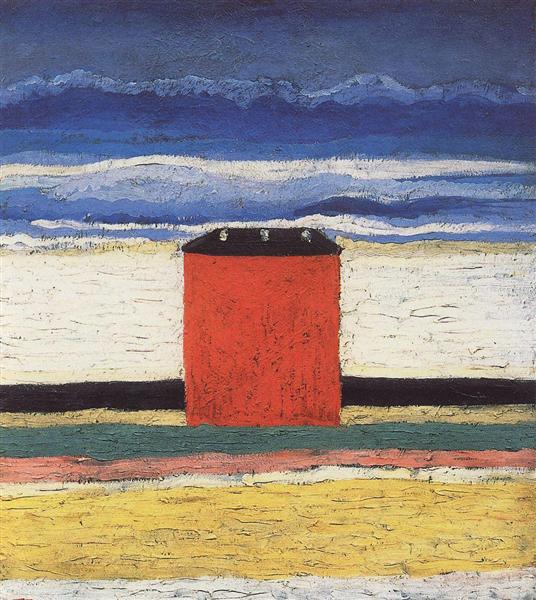
Kazimir Malevich, Red House, 1932
I’ve always thought of myself as a reader. Ever since I was able to read on my own, I’ve been a fan of libraries, reading, and books. It took only two pandemic years to question this identity. I mean, how many brain fog afternoons, Netflix hours (and we’re not talking the documentaries I still pretend to myself I will someday watch), minutes spent staring into the void or at my cats grooming themselves (very soothing, can recommend) until I must stop calling myself a reader?
Maybe I will find the answer this year and maybe I will find it on Twitter making silly jokes, writing lists of book recommendations, and losing them.
As to 2021, I finished 66 books read for pleasure and some more for not-so-much pleasure. That sounds like a lot to the non-readers in my life (greetings to my fellow guilty pleasure streamers and starers into the void) and is probably somewhere in the middle for Book Twitter.
It might be more telling to offer the number of books abandoned, unfinished or purchased but still unread, but I never counted these. Probably better for my peace of mind! One almost successful rereading project was Crime and Punishment with about 200 pages of maybe 600 read, curiously on a smartphone.
Reading C&P while waiting for the metro or having home office lunch staring on a rather small screen seemed weird but also strangely suitable. If living in a pandemic taught me one thing, it is this: Sometimes things you used to do with ease are just not possible anymore. Some of these things will come back, some will not. And that is probably okay.
Anyway, some reading projects did work out in 2021 and I’m all the more thankful for these experiences. Some of my highlights:
Minae Mizumura – A True Novel (translation: Juliet Winters)
Thank you, Dorian and Jules (who decided to tackle ‘A True Novel’ in the original Japanese!) [Ed. – Jules; not me], for pointing me towards this novel! Mizumura brought back that pure pleasure of childhood reading. I remember how I had entirely different plans when it was delivered but could not stop reading once I opened the package, so I just stayed on the floor of my apartment with book one (of two) for hours.
I now feel under pressure – but think of the loveliest, tiniest, tenderest kind of pressure you can imagine – to finally read Wuthering Heights, which the novel is loosely modeled on.
Mikhail Bulgakov – Flight, The White Guard, The Days of the Turbins
I’ve been meaning to read The White Guard ever since being the only person during a tour of Bulgakov’s family’s former apartment in Kyiv who didn’t know the novel intimately. I’m not even exaggerating: It was a Russian-language tour and I’m quite sure everybody who went to school in Ukraine or Russia is familiar with the novel. Finally reading it in 2021, I understood three things:
1. Why everyone on the tour went “ah” (the satisfied, approving kind of “ah”) when the guide switched off the lights in the apartment.
2. Why everyone who read the novel is absolutely crazy about it.
3. That recommending The White Guard to readers I consider worthy might be what fate had in mind for me.
Only joking! Well, half-joking. The White Guard is one of those books I want to start reading again right after finishing them. And then again, again, and again. The many layers, the adorable and not-so adorable characters, the (often bitter) jokes, the apocalyptic atmosphere. The understanding that huge changes we read about in history books mean mostly confusion and often bloodshed for the people experiencing them. The wild mixture of Russian, Ukrainian and everything in between, a nightmare for any translator. A language at times so hypnotizing you forget there is a world outside, making you want to memorize parts or read entire passages out loud.
If you want to give Bulgakov a try in 2022 but are more into plays and have less time, The Days of the Turbins is practically the same story with funnier dialogue. It was said to be Stalin’s favorite play until it wasn’t, causing a lot of trouble for Bulgakov. But that’s already a different story.
Flight, another play, has memorable main characters and is darkly funny but might be difficult to get at times if you are not familiar with a) the early parts of Soviet history and b) the language of orthodoxy. But you still have The White Guard or you can turn to the available film adaptions, so you’re not entirely lost for my cause!
Louise Kapp Howe – Pink Collar Workers
This is not a novel, but after the many academic papers I had to read last year Howe’s study of women who work in low-paid and underestimated jobs was such a relief that I have to share it with you. Howe watched women work and talked to them. A lot. It took months and she even worked a retail job to better understand the conditions there. It might be cliché, but I think every (male) reporter turning such experiences into a book would boast about them.
Howe does not do that. She tells the stories of the women she encountered. And she does not care for ‘scientific’ language or the kind of approach that is usually expected for such studies.
Howe in her own words:
[The women I have talked to] included nurses, receptionists, keypunch operators, legal secretaries, domestic workers, medical technologists, teachers, dental assistants, sewers, telephone operators, supermarket cashiers, among others in female-dominated jobs. … I can’t tell you how many there were because I never kept count. Maybe there were 123. Maybe 180. Maybe 206. It doesn’t really matter, does it? They’re women, not data.
The book is from the 1970s and of course not every single sentence has aged well. I like to think that Howe – if she were alive today – would reconsider the way she describes women hitting their children to teach them a lesson. (Note to my fellow readers of medium-ancient books: there is at least no trace of the kind of blatant racism one often encounters in books from that period.)
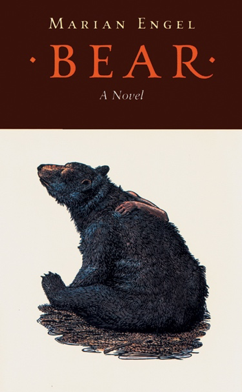
Marian Engel – Bear
Ah yes, that one – the bear sex book Dorian keeps raving about! [Ed. – I do.] And what can I say, the man is right. [Ed. – she really makes a good point.] Sign me up for the Cult of Bear! [Ed. – Another satisfied customer!] This was lovely, raw, weird and had me google the wildest things. Yes, there is real bear sex, there are a lot of books mentioned for intertextual fun, there is a heroine liberating herself and great nature writing, there is thinking about what it means to lead a successful life, to be remembered, what literature can do. I love it when a book is so thickly layered (but not overloaded language-wise!) that it can convey more on less than 200 pages than some doorstop will after some 700 pages. [Ed. – I did not coach Anja to say any of these things. Genuine testimonial.]
Ivan Turgenev – Asya
Speaking of short: if you feel like you need some good old 19th century reading but your pandemic brain cannot stomach the ‘great’ novels by Tolstoy, Dostoevsky and the like, go for Asya, a novella by Turgenev. There are all the ingredients one loves (or does not, depends) about 19th century literature: sad love story, passive hero you can project all your negative feelings onto, better kitchen psychology, great but not too much nature writing, social critique – but all within just a couple of pages. Meaning you will be able to finish reading it quickly. Plus, you won’t have to remember 127 names, only three main characters and even fewer minor ones. Double win!
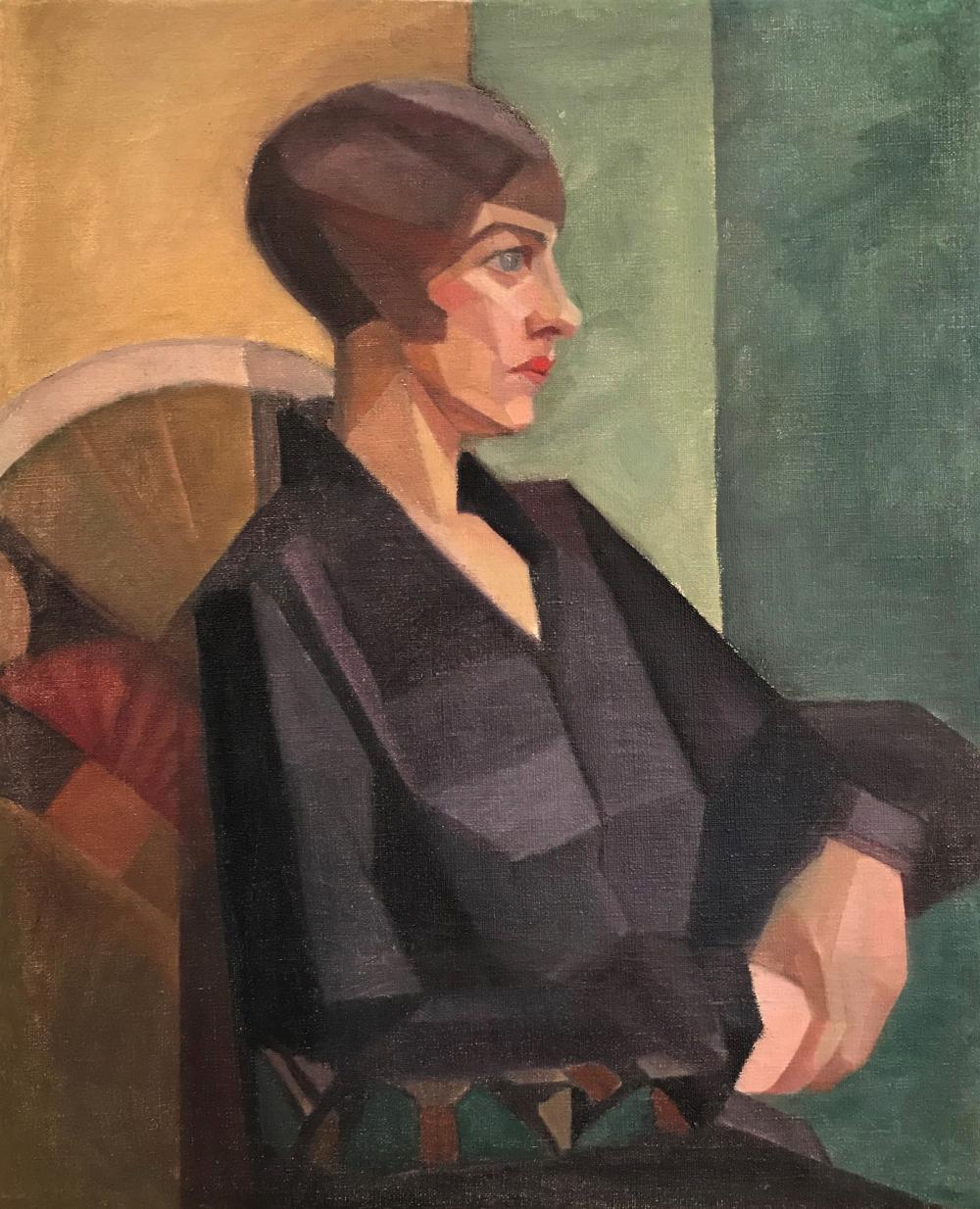
Unknown Ukrainian cubist artist, Portrait of Woman, 1920s — 30s
I’m looking forward to another year of discussing books, chasing after books, and sometimes – when I’m in the right head space, let’s face it – even reading them.
In the next week or so I’ll be writing up my reflections on my 2021 reading year. In the meantime, I’ve solicited guest posts from friends and fellow book lovers about their own literary highlights. I’m always looking for contributors; let me know here or on Twitter (@ds228) if you have something you want to share.
First up is my old friend Keith Bresnahan (@designhist, follow him, he’s funny and awesome), who’s previously contributed severalterrificpieces on Zola. You can read his 2020 reflections here. Keith lives and works in Toronto.
2021, in a nutshell:
This year was strange, obviously. I was lucky, avoiding any serious effects of the pandemic: I kept my job, as did everyone in my family; no one I knew got seriously ill or passed away with Covid. But time and space felt flat. I didn’t go anywhere, and the repetitive sameness of days was best reflected in this popular image I kept seeing re-posted on Twitter. Perhaps this is why when Dorian initially nudged me to look back on my year of reading, I felt like I hadn’t read much at all: there was little to situate my reading in association with specific places or other things that were happening around me while I read them. As it happens, judging by my admittedly imperfect reconstruction (I have sworn to be better at keeping track this year!), I found I actually read 50-odd books for pleasure in 2021, not counting the 15 or so others I read for teaching and academic research. Not bad.
Here are a few of the more memorable ones.
Philip Marsden, The Summer Isles
I read this early in the year; details have faded, but my memory of reading it is of being carried along on gentle sea-waves; it’s that kind of book. A first-person travelogue of Marsden alone in a wooden boat, traversing waters up the west coast of Ireland toward the titular isles in northern Scotland, it also contains a good deal of reflection on historical lore, spiritual journeys, and local geographies. Much of the sailing-vocabulary was lost on me, but it didn’t seem to matter. Both learned and meditative, it was perhaps the most calming book I read this year. I passed it on to a good friend who owns a boat.
Enrique Vila-Matas, Never Any End to Paris (Trans. Anne McLean)
I found out about Vila-Matas this year, like most of the other authors I come across these days, from people I follow on “Book Twitter” (regular Twitter, just a nice corner of it populated by book-obsessed folks). A wry memoir of Vila-Matas’s youthful days in Paris as an aspiring writer and Ernest Hemingway wannabe. I loved it. He somehow rents a garret from Marguerite Duras, encounters Georges Perec and Roland Barthes, dates a woman who suggests he fling himself off the Eiffel Tower while on an acid trip, fends off parental intervention, and generally fails to write anything of substance. In a year where I couldn’t go anywhere, the descriptions of Paris were more than welcome. Looking forward to reading more by Vila-Matas soon, starting with Dublinesque, a kind of Joycean dream, apparently. Perfect for the centenary of Ulysses this year? (I’m also planning to give that one another shot)
Larry McMurtry, Lonesome Dove.
An 800-plus-page western. A western? Cowboys? A cattle drive? I left central Alberta for a reason, dude. But many folks who know better than me loved it, so I gave it a shot. Holy shit is this book great. An out-and-out masterpiece. At times it felt like magic realism – did the bull actually fight that bear? Was the cook actually back there banging the same bell with the same crowbar? Did Blue Duck fly? The book’s Indigenous characters are barely fleshed out (although McMurtry does show sympathy for their plight) — but then this is really the story of the others, the damaged settlers moving against a nascent American backcloth, seeking and grasping for any purchase with little to guide or protect them. At its heart is an emotionally blocked friendship between two former Texas rangers, and the women who speak truth to them (and whom they largely fail to understand). Plus an impressive cast of secondary characters, all memorable creations. Did I mention it’s more than 800 pages and somehow feels too short?
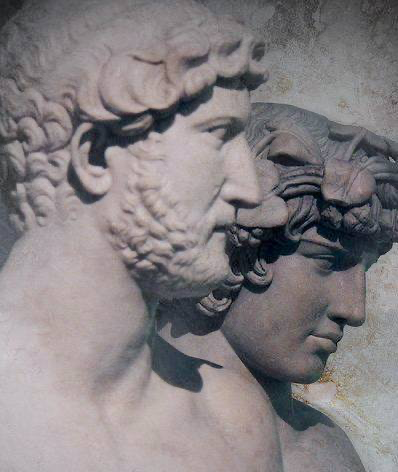
Marguerite Yourcenar, Memoirs of Hadrian (Trans. Grace Fick)
Another masterpiece. The best fictional evocation of the classical world I’ve ever read. Dreamlike and imagistic, with lessons on life and death to spare. I’m waiting to read more Yourcenar until the memory of this one’s brilliance fades a bit.
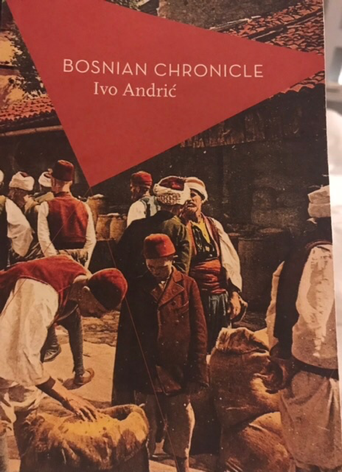
Ivo Andrić, Bosnian Chronicle(Trans. Celia Hawkesworth in collaboration with Bogdan Rakić)
A newish edition from Apollo Classics (Head of Zeus), this is a very long book, first published in 1945, about a French consul during the Napoleonic era living in a small Bosnian town on the extreme fringes of world events. Not much happens. I adored it.
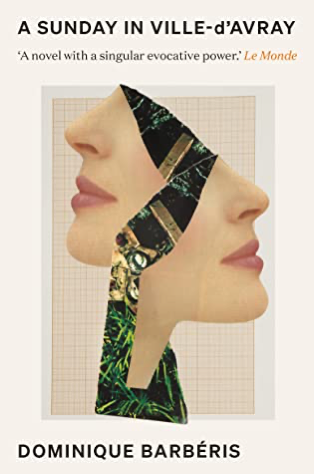
Dominique Barbéris, A Sunday in Ville-d’Avray (Trans. John Cullen)
This was great — a short, stylish account of two sisters, one recounting to the other a past entanglement with a strange man. Felt to me at times like watching a French film from the 1970s. Enigmatic, and atmospheric as all get-out.
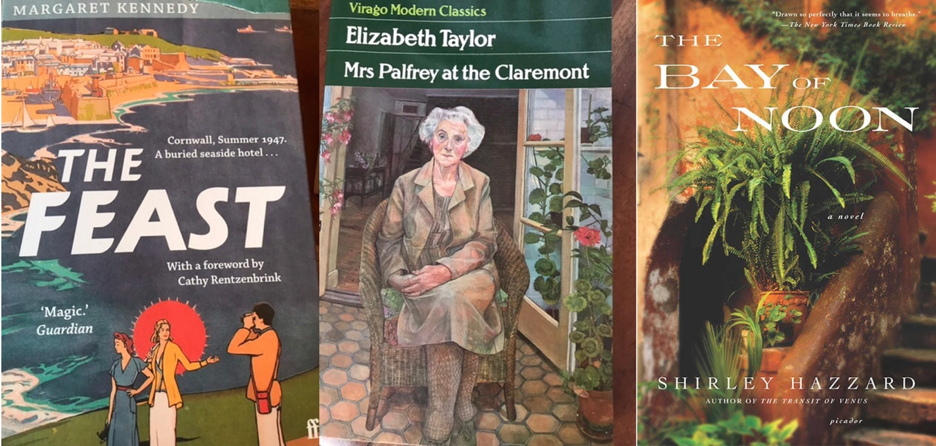
Three books in the “how-did-I-not-know-about-these?” category:
Margaret Kennedy, The Feast
A number of families cram into a seaside hotel in Cornwall for a week in the summer, their conflicts and idiosyncrasies build to a climax, then half of them are killed when a cliff falls on them. We know this part from the outset, though not who dies, so I’m not giving anything away. Apparently there’s a whole structure here about the 7 deadly sins, but I missed this while reading it, and it didn’t matter. Great fun. Made me want to read more Kennedy, and soon.
Elizabeth Taylor, Mrs. Palfrey at the Claremont
An older woman moves into a retirement hotel in London. The plot? Not much. But I found it utterly charming, even its descriptions of the depredations of old age, and very funny, too. Others, I’ve since learned, found it bleak. [Ed. – raises hand] Not me. Mrs. Palfrey is a plucky heroine, if a little self-deceiving (aren’t we all), and even the end, coming as it must, didn’t feel sad. I picked up a used Virago copy of this book on a whim, and then coincidentally read it the same week that it came out in a new NYRB classics edition. For once my finger was right on that pulse. More from Taylor in my near reading future.
Shirley Hazzard, The Bay of Noon
A young English woman in Naples in the 1950s falls in with a Neapolitan woman, Giaconda, and her Roman lover, Gianni. This was both evocative and restrained, with a powerful sense of the unspoken and unshown behind the minimal plot. Reminded me a bit of Antonioni, in a good way. Also made me long to revisit Naples (some strong compensatory travel-thrills in my readings this year!). My first Hazzard, won’t be my last.
Yasunari Kawabata, The Sound of the Mountain (Trans. Edward G. Seidensticker)
Junichiro Tanizaki, The Makioka Sisters (Trans. Edward G. Seidensticker)
Akimitsu Takagi, The Informer (Trans. Sadako Mizugushi)
Akimitsu Takagi, Honeymoon to Nowhere (Trans. Sadako Mizugushi)
Yuko Tsushima, Territory of Light (Trans. Geraldine Harcourt)
Kobo Abe, The Woman in the Dunes (Trans. E. Dale Saunders)
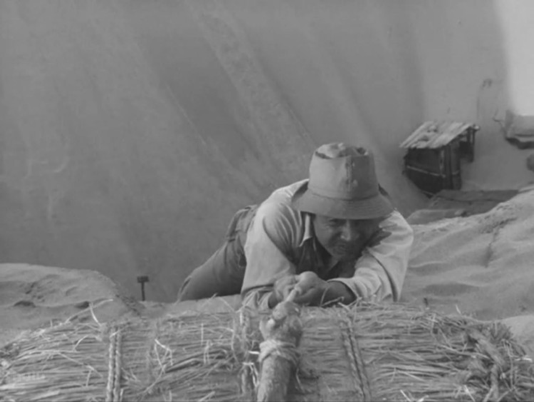
I enjoyed all the books translated from Japanese that I read this year, especially The Informer and Territory of Light. But it was Abe’s Woman in the Dunes that was the real revelation. A distressing, tense, fever-dream of a book, I’d put this existentialist fable of bizarre confinement, Sisyphean futility, and struggles of the will up against Camus any day of the week. I won’t be reading it again anytime soon, but I’m glad I did. Haven’t brought myself to watch the movie, but here’s an image from it anyway.
Raymond Chandler, The Big Sleep
Another existentialist hero, this time Philip Marlowe probing some family funny-business in sunny California. Noir perfection. I realized I’d previously conflated Chandler and Dashiell Hammett, whose hard-boiled shtick I could never really get past [Ed. – I am allowing this heresy on my blog, but I don’t like it], but this is glorious, witty stuff. The film, with Bogart and Bacall, is a deserved classic.
Muriel Spark, The Girls of Slender Means
My first Spark! I loved this small tale of young women living together and negotiating wartime, nascent loves, work, and rooftop escapes. A near-perfect short read.
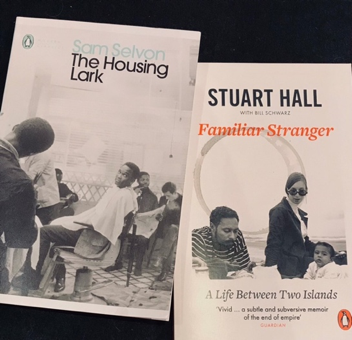
Sam Selvon, The Housing Lark
Stuart Hall, Familiar Stranger
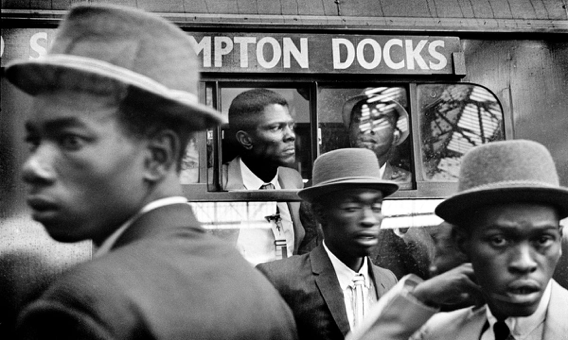
Two takes on the West Indian experience in 1950s – 60s England. The Housing Lark, by the criminally under-appreciated Sam Selvon, is a sort of sequel to his better-known The Lonely Londoners; if anything, I liked this one better. Hall’s autobiography takes him from Jamaica to Oxford to the founding of cultural studies and the New Left in the 1960s—on the one hand, a world apart from Selvon’s hustling hardscrabble immigrants, and on the other not so different, negotiating displacements and identities among the so-called Windrush generation. Suggest watching Steve McQueen’s remarkable Small Axe series alongside.
Graham Greene, The Quiet American
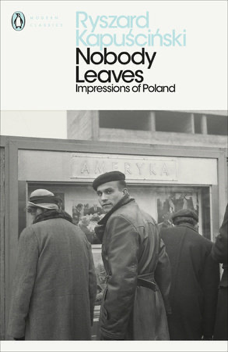
Ryszard Kapusćiński, Nobody Leaves: Impressions of Poland (Trans. William Brand)
Sergio Pitol, The Journey (Trans. George Henson)
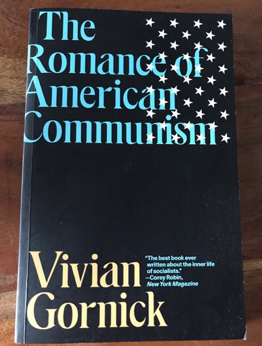
Vivian Gornick, The Romance of American Communism
Amor Towles, A Gentleman in Moscow
Purely by accident, I ended up reading a number of books this year highlighting historical communism and Cold War politics seen through individual lives. Graham Greene’s The Quiet American, a scathing indictment of Western intervention in Southeast Asia, with its shockingly amoral conclusion, was among the best books I read this year. Ryszard Kapusćiński’s Nobody Leaves, a collection of short journalistic pieces from his native Poland around 1960, is episodic, strange and beautiful, and generally short on hope. Sergio Pitol’s The Journey, has the Mexican writer traveling around literary circles in Moscow, Leningrad, and Tbilisi during two weeks in 1986, just as glasnost and perestroika were starting to peek through. It was a highly personable travelogue that makes me want to read more by him (I’ve already ordered Pitol’s The Love Parade, out in translation early this year). He writes a lot about Marina Tsvetaeva, which makes me think I should read her. In non-fiction, I was taken with Vivian Gornick’s The Romance of American Communism, recently republished by Verso. Originally from 1977, it’s an oral history of American communists from the 1920s through the 1950s and their breaks with the Party following the revelations of the 1950s. Gornick’s subjects are angry and wounded, prone to self-importance, self-deception, and self-critique, and her book is wonderful at conveying how people form passionate attachments to ideological movements, and what happens when that falls apart. Amor Towles’ A Gentleman in Moscow, a cream-puff fantasy of a hotel-bound aristocrat suffering minor inconveniences during the same decades of Soviet history, which I read at a cottage just after Gornick’s bracing book, felt too tidy and cute by half. I might have enjoyed it more at another time.
James Salter, Light Years
Probably my favourite book of 2021. A couple raises two kids in a country house not far from New York City. They have affairs, they divorce, their kids grow up, they meet artists, actors, go to parties, discuss the theatre, they remarry, get ill, die. It recalled the 1970s cinematic and literary middle-class dramas I was enthralled by as a child (this was what life was, or so I thought then). Now in my own middle age, I’m both less sanguine about this stuff than I used to be, and intuitively drawn to it. Nostalgia for that insular worldview? Dunno. Whatever it was, I found it perfectly, achingly beautiful, and sad. A book I know I’ll revisit. I also read Salter’s A Sport and a Pastime, which I liked but not nearly as much as this one.
In the last days of 2021, I read three quietly resonant books:
Paul Griffiths, The Tomb Guardians
I’m not sure how to classify this short book, which shifts constantly between two conversations: in the first, two figures discuss a series of three (real-life) paintings in a museum showing the sleeping guards charged with protecting Christ’s tomb; in the second, we hear the voices of the Roman guards themselves, having woken up to find one of their party missing and the stone from the tomb entrance moved. It’s clever and light, achieved with erudition and evident skill; as a professional art historian, I wish I’d written it myself.
Louise Glück, Winter Recipes from the Collective
Nobel winner of 2020. Quiet and studious poems. Felt snowy, and cold. Some folks are saying this book shows a diminution of Glück’s energies, which bodes well for her earlier work, I’d say. I’ve just bought her first four books of poems.
Aidan Higgins, Langrishe, Go Down
Another Apollo Classics reprint, first published in 1966. A woman on the cusp of middle age, living with her unmarried sisters in a declining Irish great house, has an ill-fated affair with a German scholar of no means. Just go read it already. One of my books of the year. There’s a film, too, with Jeremy Irons and Judi Dench.
One more, for Dorian:
Marian Engel, Bear. Technically a re-read, since I first read this when I was 18. But that was some time ago, and I was 18, so let’s call it a new book for 2021. Is it the great Canadian novel? Sure. [Ed. — Hmm… this is not the expression of explosive joy I’d hoped for, but I’ll take it.]
Some predictions for 2022:
– Nature-books: I’ve got a bunch of these on the shelf, and this is the year! Birds, mountains, wild swimming, I’m your man.
– More 20th-century reprints, mostly from UK writers: I’ve gathered a small heap of books from Virago Modern Classics, Persephone, Apollo Classics and others, and am eager to dive in.
– Finishing the Penguin Maigret books. I’ve got 10 left to read in this 75-volume set, and the last one has just arrived by post.
– Following a prompt from a Twitter mutual, I’ve signed on to read all the extant plays of classical Greece. Ambitious, but they’re short, right?
I had quite a bit of free time this month, especially when I wasn’t writing the things I should be writing. But it didn’t feel especially restful: living amid the continual, not-so-slow erosion of a functioning civil society takes a toll. Plus I had a lot of leaves to rake. Like, a lot. (Corner lot, seven pin oaks.) I did read some books, though.
William Steig, New Yorker, October 14, 1967
Elizabeth Taylor, Mrs. Palfrey at the Claremont (1971)
In his odd and to my mind often unsatisfactory but certainly never dull introduction to this excellent novel, Michael Hofmann suggests that Saul Bellow struck a fatal blow to its chances at winning the Booker prize because he thought it sounded like a book with a lot of ladies sipping tea. (Apparently he hadn’t even read it? Which ugh Saul not a good look.) As Hofmann notes, almost no tea is sipped in this novel, there’s nothing cute or sweet or twee about it. It’s a late novel by a writer now finally getting her due as one of the best England produced in the 20th Century and by this point in her career Taylor really knew what she was on about.
What she’s specifically on about in this novel is death, and the loneliness that leads to it. Mrs. Palfrey, recently widowed and unwilling to stay with her daughter in Scotland, where she does not feel particularly welcome anyway, chances on an advertisement for the Claremont Hotel in London. “Reduced Winter Rates. Excellent cuisine.” Mrs. Palfrey is no dummy, she knows the latter is unlikely but she has the idea that London could be exciting and seizes the chance to strike out on her own. She arrives on a Sunday afternoon in January, and although the events take place over the course of the most of the rest of that year, it feels a wintry book to me.
Mrs. Palfrey finds the Claremont to be populated mostly by people as old as herself (rather than the bewildered, moneyed American tourists the manager much prefers), all of whom have nothing much to do other than to mark out their days and husband their dwindling resources. Mrs. Palfrey brags about her grandson, who works at the British Museum, implying he will soon visit; his failure to do so causes her much embarrassment. So when she takes a fall while on a walk (pacing out the time, duration, and direction of the daily walk being one of her important occupations) and is helped by a young man who lives in the basement flat opposite the accident, she is happy to pass him off as her grandson. The young man, Ludo (not quite as playful as his name suggests), is happy to oblige, as he is writing a novel and living on next to nothing (he writes at Harrod’s where he can sit in the warmth for nothing) and is always up for a free meal, even at a place where the cuisine is decidedly as non-excellent as the Claremont Hotel.
All the elements are in place for a farce—pretending Ludo is her grandson proves trickier than Mrs. Palfrey had anticipated, especially when the real one shows up—but the novel is dark rather than sparkling. Ludo is not a bad man, exactly, but he uses Mrs. Palfrey’s infatuation with him, not so much for financial gain as artistic material—he uses the milieu of the boarding hotel and its status as an antechamber to death for his novel and is generally more contemptuous of Mrs. P than he lets on. He’s not just a chancer, and does much more for the woman than her actual family, so it’s all interestingly complicated.
In one sense, Mrs. Palfrey at the Claremont is about the definition of family. Can the community of those who are thrown together be more powerful than the connections between blood or marital ties? The answer might not be yes, but the novel doesn’t have any nostalgia for those conventional ties, either. When one of the residents, the only man, proposes to her, Mrs. Palfrey is horrified. The most indelible scene in the novel, for me, is when the man refuses to wash his hands after using the toilet but runs the water briefly so that people will think he did. This is funny but also grim—and that gets the tone of the book, for me.
There’s a lot more to say about this novel—much more interesting than the film, which I saw many years ago and remember as cloying, an interpretation that kept me from reading the book for years, alas—which punches above its short length and too-easily dismissed subject matter (old people, especially women). Shout-out to NYRB Classics for publishing this in the US. I especially approve of their cover choice. Would have been easy to go for something with more chintz. That’s what Saul would’ve done.
Garry Disher, Peace (2019)
The second Hirsch novel is even better than the first. Disher evens out the ambivalence of Hirsch’s character, making Peace the more conventional book, but maybe I just want to be comforted—this book really worked for me. I love how Hirsch is as much social worker as cop: much of his job involves visiting shut-ins or otherwise marginalized figures who live on the out of the way farms or properties that seem to almost exclusively comprise his far-flung district. Eventually the plot coalesces into a central investigation, but this is a pleasingly loose-limbed novel.
John Le Carré, Silverview (2021)
At some point I might have to conclude I’m a Le Carré philistine. He’s just not my guy. The story of a man—a former finance guy who’s left the City and opened a bookshop in a seaside town in East Anglia—who meets and becomes entangled with another—a broken former spy offers a promising narrative structure is promising, lending itself to indirection and the juxtaposition of private and public secrets. But the bookseller character feels cursory and implausible, which means that his interest in the second man is hard to figure out. It’s a book written by someone who feels betrayed by the turn his country has taken—I read it as an anti-Brexit novel; I assume the otherwise odd extended references to Sebald’s The Rings of Saturn are meant symbolize an idea of Britain as inextricable from Europe—but the betrayal at the heart of the novel is confusing. Are we supposed to accept, even admire its consequences? In the end, Silverview left barely an impression on me.
Garry Disher, Consolation (2020)
Third Hirsch novel, best of the lot. Like most actual cops (I assume), Hirsch usually has a number of cases, many minor, barely worthy of the term, on the go at once. Consolation is a procedural, so inevitably a number of these strands end up coming together, but I like what Disher is doing in these books a lot. They’re generous, maybe a little regressive, but I prefer “cop doing his best” to “burnt-out obsessive with his demons.” Can’t we all use some generosity these days? I found the ending as satisfying as the title promises. It would be fine to end the series here, but I gather a fourth’s on the way and I’ll read it for sure.
Claire Keegan, Small Things Like These (2021)
Beautiful novella set in Ireland in 1985—I was surprised when the date was first mentioned, I thought it might be the 50s, but as a friend told me the 80s in Ireland were the 50s elsewhere—about the Magdalene Laundries. That makes it sound worthy and dour, but it’s not, it’s a quiet heartbreaker in the William Trevor or Alice Munro mold.
Bill Furlong runs a coal delivery service—I loved the details of the business scattered throughout—and in the weeks leading up to Christmas he becomes aware of something terrible at the local convent. He finds a terrified young woman hiding in the convent’s coal shed, she begs him to take her with him, he doesn’t, even bringing her back to the nuns, but as soon as he does he knows he shouldn’t have, the nuns treat her kindly and with concern but he knows something is wrong and worries about what’s happened to her once he left. When he enquires into the situation he gets messages, some subtle and some not, that he shouldn’t mix himself in the nuns’ business, it’ll only end badly for him. In a moving conclusion, Furlong has the chance to right his previous wrong and Keegan leaves us poised on a knife edge—exultant that the right thing has been done but dreading what will likely be the terrible consequences of his decision. Furlong is a magnificent creation—Gabriel Conroy with self-knowledge (maybe a fanciful comparison, but the snow storm of the final pages had me thinking of snow being general over Ireland)—but one of many extraordinary things about the book is Keegan’s facility with characters. Especially fascinating, to me, was Furlong’s upbringing, being raised by a single mother, a domestic at the local Big House, whose welfare was taken in hand by the local Protestant grandee. (It tells you how much is going on in this little book that I haven’t even mentioned what Furlong learns about his paternity.) Equally brilliant is how these events are told: the prose is so careful, so infused with the rhythms of speech, so crafted without being labored or poetic. I read somewhere that Keegan revised the book forty times, and it shows—without ever being showy.
Everyone loves Small Things Like These, it was on half of the TLS contributors’ year in review lists, and I get it. It’ll be on mine too.
Paula Fox, The Coldest Winter: A Stringer in Liberated Europe (2005)
“I knew so little, and the little I did know, I didn’t understand.” That’s how Paula Fox describes her barely adult self when she sailed for Southampton in the summer of 1946. After a few weeks in bombed-out London she finagled a gig as a stringer and headed for Paris, Prague, and then, in the snows of December, to Poland. As in the novels that would make her name, the memoir is good with telling details: a woman’s clenched knuckles appearing white through the worn cloth of her apron signifies her trauma more than anything she says; a couple struggling with their wartime losses slowly press their cheeks together, the pained ritual “more intimate… than a passionate kiss would have been.” The point of the Poland trip was to observe the first post-war election, though given the Soviet-backed communist takeover, the results were a foregone conclusion. Fox is accordingly more interested in her fellow journalists, especially Helen Grassner, a Midwestern matron sent by an American Jewish organization to see what Poland was doing for its surviving Jews. Fox is fascinated by and disparaging of Grassner, a mixture mostly born of the contempt young people have for anyone they think of as old but a smidge of antisemitism is evident too. Fox reports with respectful bewilderment Grassner’s painful despair at not having lost anyone to the Holocaust (“When they have no dead, people feel it worse, somehow,” one of her colleagues notes) and records, first with dismay but eventually with respect, the woman’s affair with a younger Czech reporter.
Fox all but admits the book is slight, an addendum to her much-better known memoir Borrowed Finery, which I plan to read soon. The Coldest Winter feels like a sketch, missing the reflection that characterizes the best memoirs. Two of its most interesting moments—a memory of seeing Paul Robeson at Grand Central Station and a description of the torment she experienced as a puzzlingly fair-haired child of Spanish immigrants in a New York public school populated by Irish Catholics—are also the most retrospective, the older, experienced writer reflecting on and therefore shaping those moments. Still, an interesting glimpse into the rubble, hunger, and cold of Europe right after the war.
David A. Robertson, The Barren Grounds (2020)
Bought this book for my daughter for Hanukkah 2020, with the idea that the whole family might read it together. Which we did, for a while, but then my daughter lost interest (I think she found it a bit scary), and so it sat on the nightstand until my wife and I decided that we would finish it.
The easy summary is that this is Narnia told through Cree traditions: two indigenous kids fostered by a white couple in Winnipeg, Manitoba, find a portal to another world populated by humanoid animals who are suffering from a curse that has turned their lands into the barren grounds of the title. I enjoyed the first half or two-thirds of this middle-grade novel: the present-day framing material is poignant (no surprise that I, a well-meaning white liberal, was drawn to the kids’ struggles with their well-meaning white liberal foster parents), and the initial description of the alternate world is enticing. (Robertson is good on cold.) I also appreciated how the author matter-of-factly sprinkles Cree words and expressions throughout. But when the inevitable quest takes center stage (which, to be fair, is pretty interesting, as the villain is, as the kids realize, just a sad little ordinary white man, which doesn’t make his damage less powerful), the book takes on the mannerisms of an action movie, most gratingly the mechanical use of quips and sarcasm to punctuate the tension. In general, everything gets hasty, as if the book were rushed to meet a deadline. I’m not the intended audience, so whatever right, but I won’t be rushing to read volume two.
Charlotte Carter, Rhode Island Red (1997)
Breezy crime novel starring Nanette Hayes, “more or less a Grace Jones lookalike in terms of coloring and body type (she has the better waist, I win for tits).” Nanette plays saxophone on the streets of New York while putting her degree in French to use by translating Verlaine and dreaming of escaping to Paris. One day she takes home a fellow busker; when she wakes up he’s dead, leading her to discover that he was an undercover cop who has left 60K in her sax: predictably Nanette is caught up in some bad shit. The mystery is implausible, but the book’s worth reading for its style. Nanette on her investigation is funny—“It didn’t make sense. But on the other hand, it didn’t make no sense”—and self-aware: “This had all the elements of a film student’s low-budget homage to Godard.”
I read Rhode Island Red in a battered, smelly 90s mass market edition from the library, but I heard about it because Vintage has reissued the three Hayes novels in stylish new editions. Since the library here doesn’t have volumes two and three, I probably need to buy them, right?
K. C. Constantine, The Rocksburg Railroad Murders (1972)
Tom convinced me to give this long-running series a try—a kind of American Sjöwall & Wahlöö set in the fictional western Pennsylvanian town of Rocksburg. Chief of Police Mario Belzic, Italian-Serbian-American, is diverted from the thankless task of directing post-Friday night football traffic and desultory hooliganism to investigate the death of a man found bludgeoned to death at the local train station. (The train station! Where passenger trains regularly come and go! The victim takes the train to work at the night shift of the nearby mill! We once had a better country!) Some series take a while to hit their stride; on the basis of The Rocksburg Railroad Murders, the Belzic books arrive fully formed. The lead is great but Belzic is joined by several good minor characters: his deputies; the head of the local detachment of the State Troopers; the DA; a crime reporter; and, best of all, his wife, Ruth, his two teenage daughters, and his infirm and lovable mother. I hope Belzic’s family life will continue to feature prominently. Ruth is especially great—it’s a treat to read a crime novel about a cop whose relationships are not only not terrible but even loving. Mario and Ruth been married a long time and still have the hots for each other. At one point, Ruth is embarrassed to kiss him first thing in the morning because her breath smells. Cute!
The most surprising thing about the book, though, is how skeptical Belzic is about the police. (I mean, Nixon was President when this thing was published!) He believes cops shouldn’t carry guns:
“Nobody thinks twice about sending out a meter maid without a gun or a school crossing guard—why the hell do guys doing practically the same job—giving tickets or directing traffic—why the hell does everybody think they need a gun?”
It’s not the same, retorts his colleague.
“The hell it’s not. You’re just brainwashed, that’s all. You just can’t picture a man cop without a gun, but you see meter maids without them, and you don’t even think about it.”
The mystery itself is more psychological than suspenseful, more why than who, and that stuff felt dated, but as the quote about taking guns away from cops shows the book’s real interest is sociological. And for me, anyway, life in a small-town largely Catholic rust-belt town in the 1970s is fascinating—one of the important characters, a good friend of Belzics, is a priest, who, along with most everyone else in the book, enjoys late night card games and plenty of drinking, though it’s more convivial than desperate and includes local wine (!). Belzic himself is a fan of a late-night snack of provolone and banana peppers washed down with a beer.
His creator seems himself to be a figure of mystery—Wikipedia speculates Constantine may have been a minor-league baseball player, which would account for the matter-of-fact way the sport threads its way through the dialogue—and so maybe he is as laconic and gimlet-eyed as his protagonist. Here’s Belzic lamenting breaking a personal rule:
“It’s one I made about six, seven years ago when I made lieutenant. I told myself that whenever I don’t know what to do, I’d never make the mistake of doing something.” Advice more of us should follow.
And here he is with a bleak one-liner:
“Well, Mario, how’s it feel to be right?”
“Shitty.”
I laughed when I read this exchange; if you did too, give these books a try. K. C. Constantine revival 2022, I say!
Leigh Bardugo, Ninth House (2019)
Fantasy novel about New Haven as a nexus of magic, the secrets of which are lorded over by Yale’s Societies—and it fucking slaps. Haven’t enjoyed a book this much in ages, so grateful to the brilliant former student who told me about it. Strong Secret History / Prep vibes, but with more social criticism and a hell of a lot more ghosts. Even if you are a person who does not read fantasy, doesn’t want to hear the word “portal,” and could care less about the idea that some people see the remnants of those who’ve died, you should try this book. The world-building is so clever, the prose is impressive, and the commentary on the way privileged classes expand who gets accepted to them only to protect themselves is spot on. That utterly rare thing, in other words, a great campus novel.
Tadeusz Borowski, Here in Our Auschwitz and Other Stories Trans. Madeline G. Levine (2021)
More on this new translation of these indispensable stories in another venue before long.
Maurice Utrillo, Winter Scene
That was December—and another year. Soon I’ll drop my Year in Review piece, but not before I present similar reflections from some other readers. If you’d like to be included, just let me know. And tell me about your December reading, please!




 Eiger, Mönch & Jungfrau